
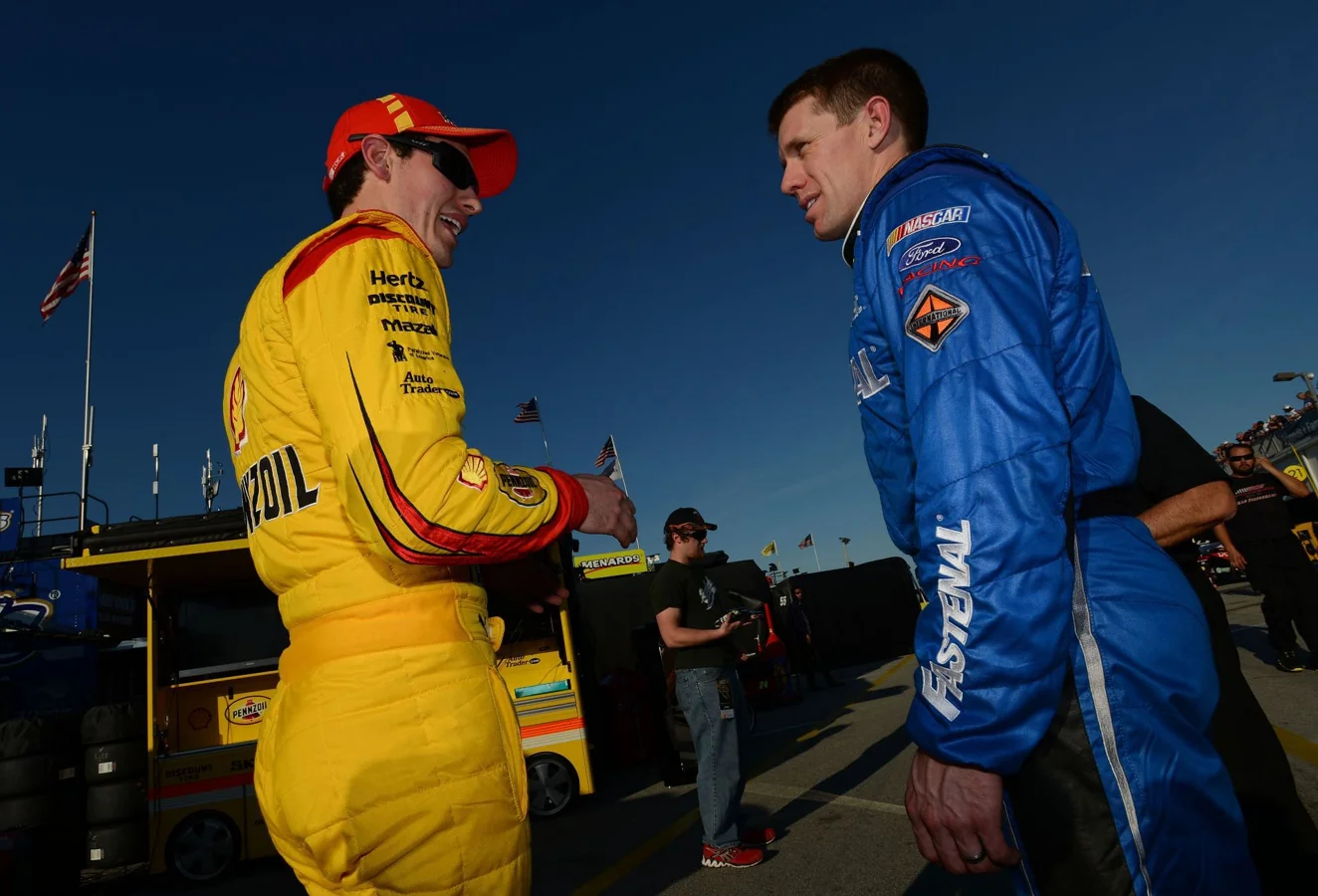

Joey Logano, a three-time NASCAR Cup Series champion and a seasoned driver for Team Penske Racing, has built a reputation as one of the most talented and aggressive racers in stock car history. His forceful approach on the track often sparks debate, as many fans and fellow drivers misinterpret his intensity for negative personal traits. Before the recent Pocono race, Logano openly addressed these criticisms, explaining that his aggressive racing does not reflect his true character off the track, a point he shared while speaking to Amazon Prime broadcaster Carl Edwards, who encountered similar misunderstandings during his racing career.
How Joey Logano Relates to Carl Edwards’ Public Perception
Logano pointed out that just as Edwards was often viewed as insincere or “fake” due to his hard-driving style, fans and competitors struggle to grasp that racers must switch between their on-track and off-track personas. He emphasized the difficulty people have in understanding the dual nature of a driver’s personality in competition.
“I feel like we can relate a lot to that. Because I feel like when you were racing, everyone looked at Carl as fake…It makes sense to be that way, it’s just hard for people to understand that, I think, right? Not just fans to understand, I think it’s hard for competitors to understand, there can be a switch that you turn on and off.” —Joey Logano, via Amazon Prime.
The No. 22 Ford Mustang driver insists that maintaining this separation is essential not only for his own well-being but for the broader racing community, suggesting that without it, racers would be unfairly labeled as overly harsh or unlikeable.
“And it’s really healthy to have that because if not, if you were the type of person you were on track, off the track, you’d be a real jerk. You know what I mean? It’s not good. So, you’ve gotta find that balance, that balance is really important for me to be able to do that.” —Joey Logano
The Necessity of Aggression in NASCAR Competition
Logano explained that the competitive pressure inside the NASCAR garage compels drivers to adopt aggressive strategies during races. Every competitor aims to win, and this high-stakes environment requires a mindset that embraces risk and assertiveness on the track. According to Logano, this “switch” to aggressiveness is how drivers protect their chances of success amid intense rivalry.
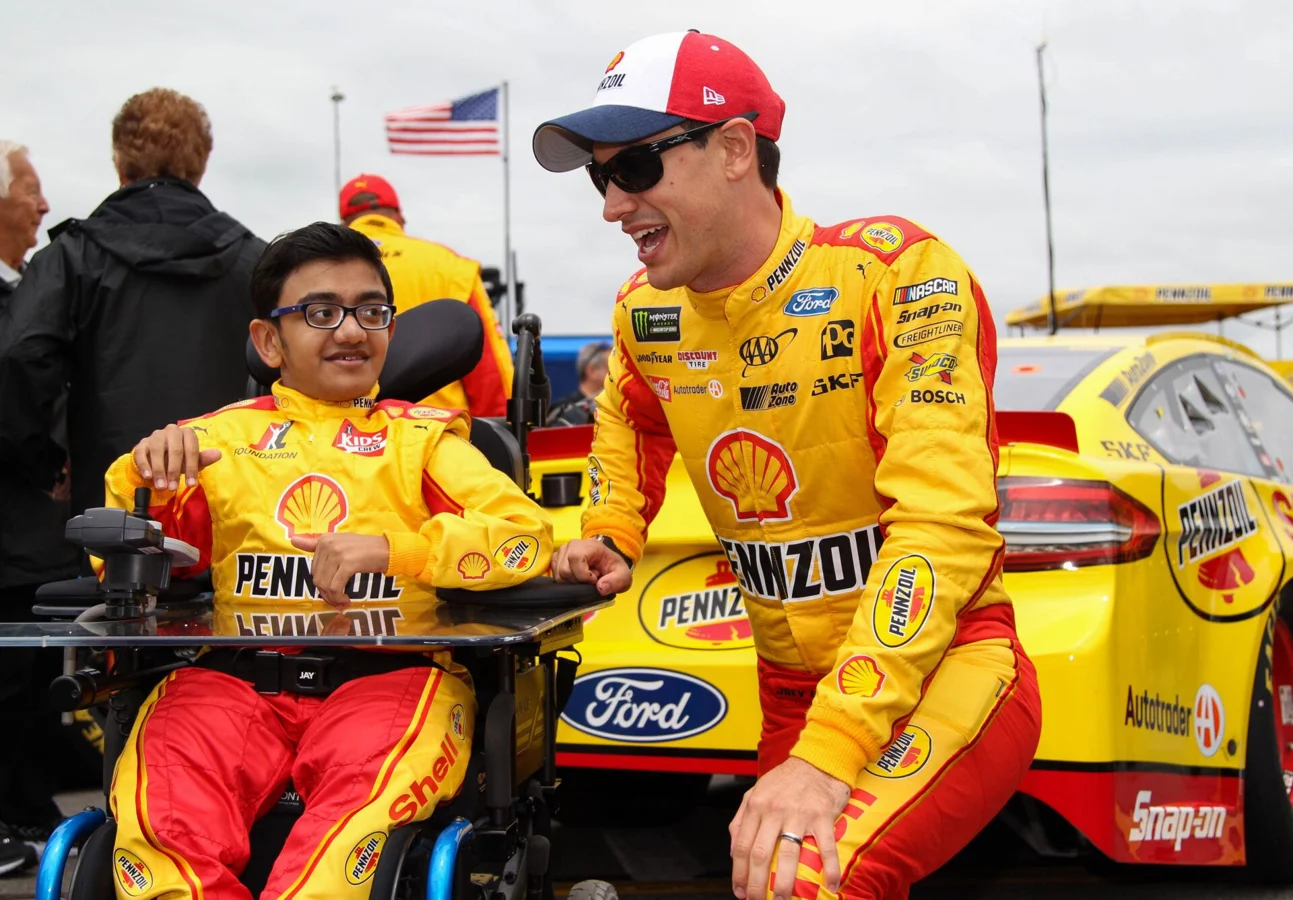
“Yeah, the expectation is always to go out there and win, right? Your competitors are very competitive people within this garage area, it’s what you want to do.” —Joey Logano
The Understanding Behind Carl Edwards’ Misunderstood Reputation
Logano further delved into how Edwards was misjudged for the contrast between his courteous nature off the track and fierce demeanor during races. Logano recounted that seeing Edwards in his rearview mirror during competitions was intimidating precisely because Edwards drove with such intensity and skill.
“‘He’s not authentic, he’s not real,’ right? You went through the same thing. Because you were really nice off the race track, and then you were a pretty fierce competitor. You didn’t want to see Carl in your mirror, you’re like, ‘Oh, here we go.’ Like, it wasn’t an easy car to pass and not supposed to be, right? I thought we were racing.” —Joey Logano
The Broader Implications for NASCAR and Its Fans
Logano’s remarks underscore the complex dynamic between a driver’s racing style and public perception, reflecting a larger pattern within NASCAR where aggressive driving is often misinterpreted as poor character. His willingness to confront these misconceptions highlights the importance of understanding the mental and emotional challenges drivers face. Fans and fellow competitors may need time to fully appreciate the necessity of such aggression to succeed in a sport defined by competition and risk.
The NASCAR community benefits from having drivers like Joey Logano who can fiercely compete without losing sight of sportsmanship outside the track. How long it takes for the broader audience to reconcile Logano’s dual nature remains to be seen, but his openness provides a meaningful step toward shifting fan perspectives.