
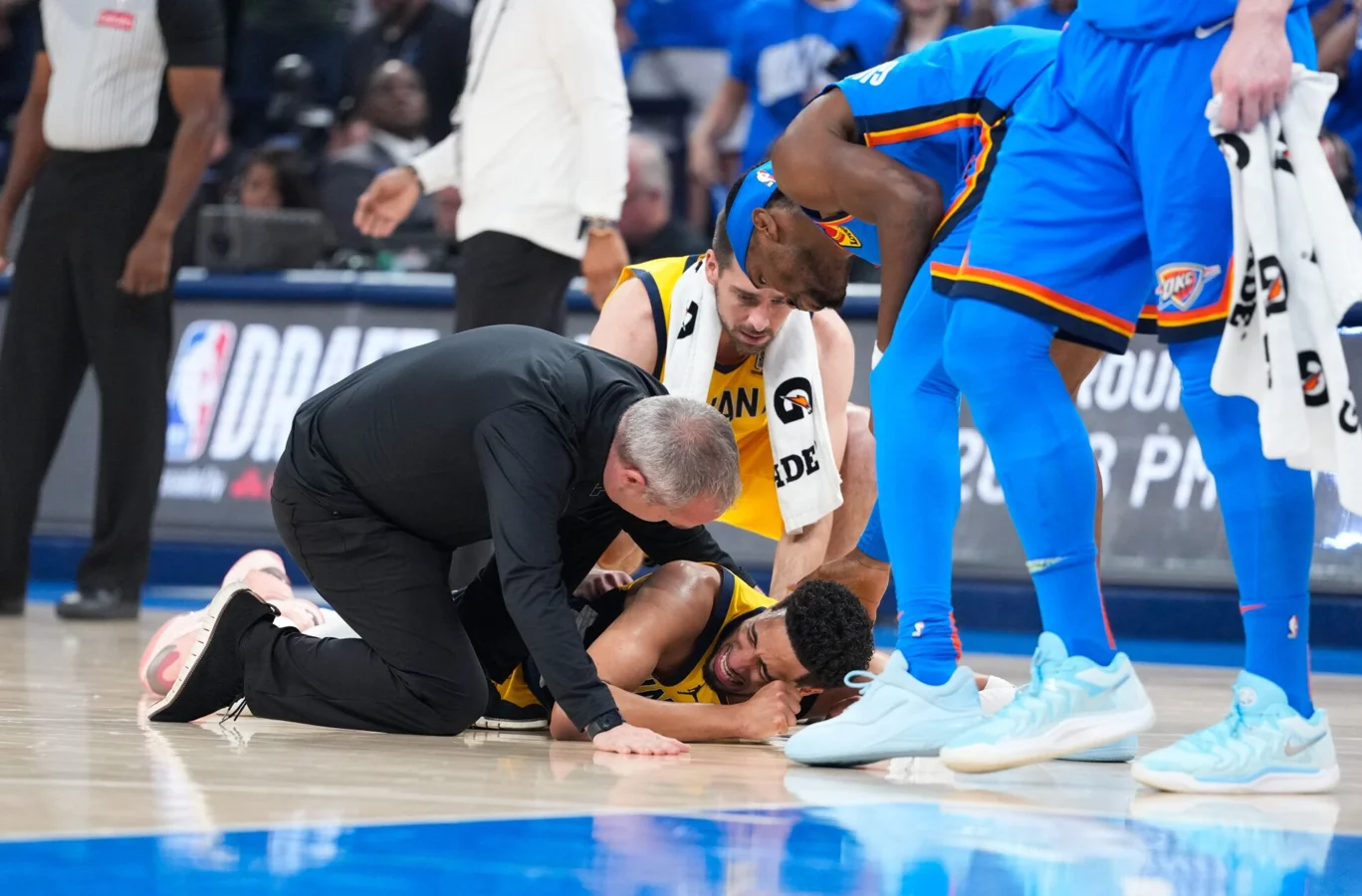

The Oklahoma City Thunder clinched the 2025 NBA championship on Sunday, completing an extraordinary 84-win season. However, the final victory was marred by Tyrese Haliburton’s devastating Achilles injury early in Game 7, a blow that abruptly ended the Indiana Pacers’ inspiring Finals run. Haliburton suffered the injury in the first quarter, bringing the intense game and the Pacers’ hopes to a heart-wrenching standstill.
While no official confirmation has emerged, it is widely accepted that Haliburton suffered a torn Achilles tendon. The severity of the injury was clear from his anguished reaction on the court, where he banged the floor in pain before being helped off with a towel over his head. This moment stunned the basketball world and immediately changed the trajectory of the final showdown.
Pacers’ valiant fight undermined by Haliburton’s absence and Thunder’s resilience
Despite losing their star player, the Pacers remained competitive through the remainder of the game, demonstrating grit and determination. Yet, the Oklahoma City defense proved impenetrable, and when the Thunder began sinking threes, Indiana’s offense faltered without Haliburton’s leadership. His absence was deeply felt on both ends of the court as the Pacers struggled to generate the same level of scoring and control.
Haliburton had started the game on fire, hitting three 3-pointers in the first five minutes, signaling the Pacers’ readiness to seize the moment. His injury, therefore, not only robbed the team of a player but also removed their vital spark. The abrupt loss in such a critical moment was more than just a setback; it was a crushing blow that erased every ounce of hope for an upset triumph.
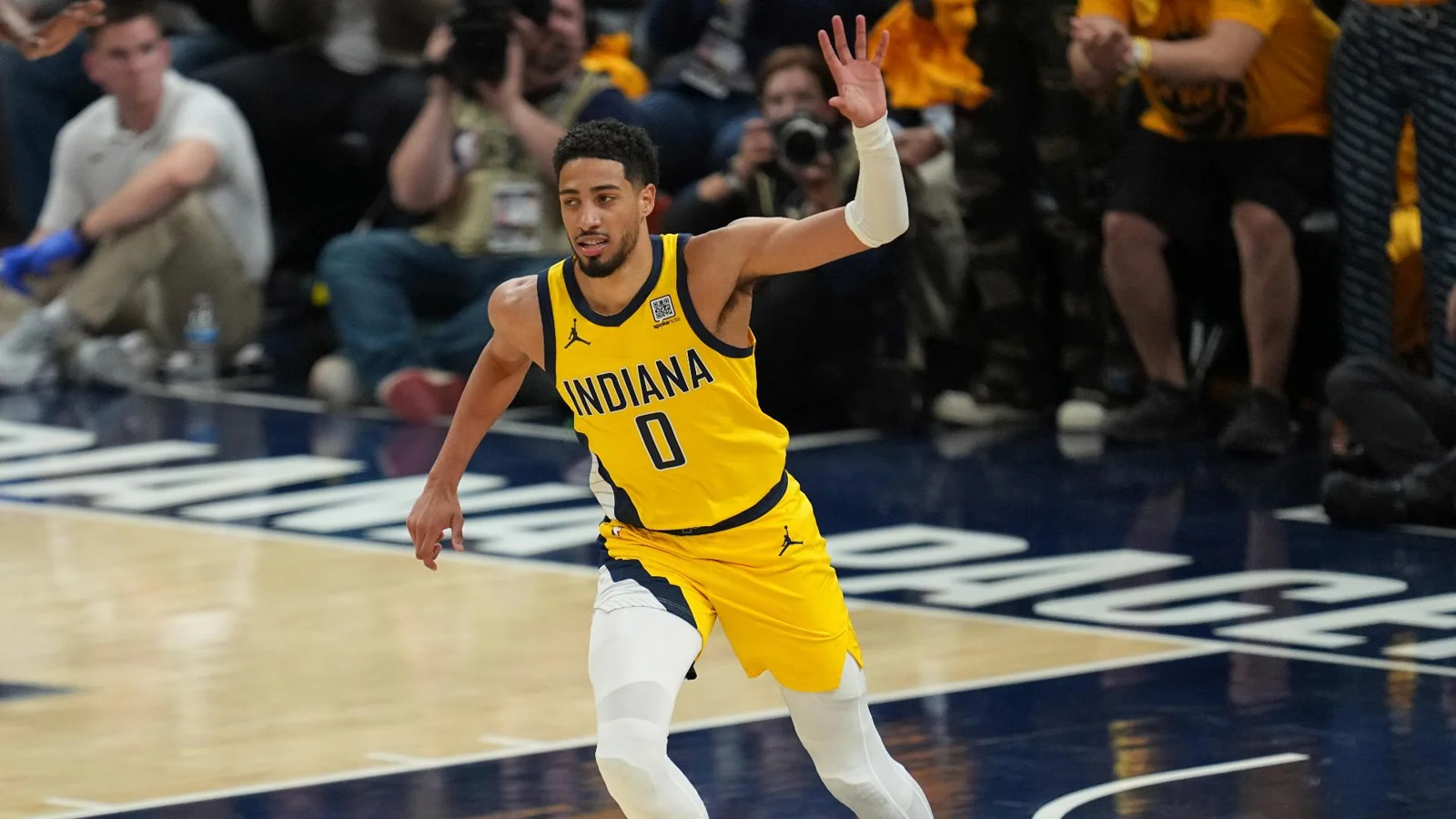
Debate intensifies over whether Haliburton should have played with prior injury
The injury has ignited a contentious discussion about whether Haliburton should have been on the court at all during Game 7. He had suffered a calf strain in Game 5, which severely limited his effectiveness. Although the Pacers subjected him to mobility tests and clearing procedures, he was ultimately deemed fit to play, leading to his stellar performance in Game 6 and the decision to start him in the Finals decider.
Such determination to play is common in championship situations, especially from competitors like Haliburton, who know these moments may not come again. As one former NBA coach reflected, keeping Haliburton off the court would have been nearly impossible. The question remains, however, whether the calf strain increased his risk of sustaining the devastating Achilles tear.
Experts weigh in on the link between calf strains and Achilles tears
Prominent NBA figures, including Donovan Mitchell and Isaiah Thomas, have publicly expressed concern about the risks associated with playing through calf injuries. Isaiah Thomas tweeted his sympathy for Haliburton and cautioned about the severity of calf strains, hinting at the potential for more serious complications.
Them calf strains are nothing to play with. The next thing if not healed right is always Achilles. Man I feel bad for bro!!— Isaiah Thomas (@isaiahthomas) June 23, 2025
The connection between calf strains and Achilles tears was last spotlighted when Kevin Durant tore his Achilles during the 2019 NBA Finals, following a calf strain that sidelined him for weeks. While many have drawn parallels, medical experts emphasize that direct causation is not clearly supported by scientific research. An anonymous orthopedic surgeon told CBS Sports that although literature does not firmly link the two injuries, the biomechanics of the calf muscle and Achilles tendon are closely related, and injuries can lead to additional strain along this structure.
It’s true, the literature doesn’t support a direct link between a calf injury and an Achilles tear,
the surgeon noted.
But there’s a common sense aspect to this, and for all injuries, in the sense that it’s along the same structure (the calf muscle and Achilles tendon), and any time one thing is weakened, the whole support system surrounding it kind of has to pick up more slack. … If you’re playing on an injured knee, you might be more apt to sprain your ankle. Compensation down the chain has to be considered.
Dr. Alan Beyer of the Hoag Orthopedic Institute concurred with these observations, acknowledging the anatomical connection but cautioning against assuming a direct cause. He clarified that severe calf strains might extend into the musculotendinous junction—the transition zone between calf muscle and Achilles tendon—possibly increasing vulnerability.
a bad calf strain can extend down to the Achilles musculotendinous junction, and thereby make an Achilles tear more likely,
said Dr. Beyer.
This insight is crucial because it suggests Haliburton’s initial injury may have been more complex than a straightforward calf strain. Marty Jaramillo, an experienced physical therapist and CBS Sports injury analyst, speculated that the imaging performed at the time might have missed a partial or micro tear in the Achilles tendon, complicating the diagnosis.
A great apples-to-apples comparison is when Haliburton first suffered his calf tear (in Game 5) and when Durant first tore his calf (in 2019),
Jaramillo explained.
If you go back and look at both of those replays, the mechanism of injury that we talk about, that moment just before the injury happens, it was more appropriate for an Achilles than a calf strain. The medical staff treated it as a calf muscle, but again, it’s a possibility that the imaging missed a micro tear. It was a calf injury, but it also could’ve been a very slight or partial Achilles tear.
Adding to the discussion, Dr. David J. Chao highlighted observations of tendonitis on Haliburton’s right Achilles in video analysis following the initial injury, suggesting the possibility of micro tears that might not have fully healed before Game 7.
“Calf strains take multiple weeks to heal, not days; thus, Tyrese Haliburton will be affected in Game 6.” @profootballdoc breaks the latest with Haliburton’s injury. pic.twitter.com/nem0xnVGwX— Sports Injury Central (@SICscore) June 17, 2025
The increasing prevalence of Achilles injuries in the NBA raises concern
What was once considered a rare injury has become alarmingly frequent this season. Haliburton’s injury marked at least the third Achilles tear sustained by a Pacers player this year, following James Wiseman and Isaiah Jackson. Across the league, stars such as Jayson Tatum and Damian Lillard have also suffered similar catastrophic injuries during the postseason.
Jeff Stotts, an NBA injury analyst, underscored the unprecedented number of Achilles tears with Haliburton’s potentially being the eighth in the current season—shattering the previous record of five. These figures exclude offseason and pre-draft workout injuries, indicating a clear rise in this specific type of injury.
If Haliburton did indeed tear his Achilles, that would be the 8th Achilles tear of the season. The previous high was 5 (14-15). The total doesn’t include Thanasis Antetokounmpo who tore his in the offseason or prospect Jalon Moore who was injured in a recent pre-draft workout.— Jeff Stotts (@InStreetClothes) June 23, 2025
The growing prevalence demands attention from the NBA and medical staff to better understand underlying causes and improve prevention strategies. Whether this trend is linked to changes in training regimens, game intensity, or diagnostic challenges remains to be seen, but concern is mounting throughout the league and among fans.
The lasting impact of Haliburton’s injury and the Pacers’ historic postseason run
In the immediate aftermath, there is little debate about Haliburton’s decision to play. The stakes were monumental—the NBA Finals rarely offer a second chance, and for a player of Haliburton’s caliber, sitting out Game 7 was not a realistic option despite the risks. Pacers coach Rick Carlisle summed it up after the game:
authored one of the great playoff runs in NBA history,
Carlisle stated, highlighting Haliburton’s excellence throughout the postseason and the devastating nature of his absence in the final moments.
The Pacers’ journey to the Finals was one for the ages. Entering the playoffs as massive underdogs with 80-to-1 odds to claim the title, Indiana defied expectations to push the Thunder to the brink. Their story, while unfinished, will be remembered as a testament to teamwork, resilience, and the cruel unpredictability of sports.
Haliburton’s injury evokes the painful memories of other famously heartbreaking moments in sports history—Scott Norwood’s missed field goal in Super Bowl XXV and Bill Buckner’s error in the 1986 World Series among them—reminding fans that even the best stories may end in unexpected sorrow.