


Wimbledon, the oldest tennis Grand Slam held at the All England Lawn Tennis Club, has seen many iconic champions since 1877, including Roger Federer, Novak Djokovic, and Martina Navratilova. Yet, amid the champions stand a select group of legendary players who came agonizingly close to winning but never lifted the Wimbledon trophy. Among them is Andy Roddick, whose Wimbledon near misses remain a significant part of tennis history for American fans and enthusiasts worldwide.
Andy Roddick’s Heartbreaking Quest for Wimbledon Glory
Andy Roddick, a former American professional, reached three Wimbledon finals but never captured the title. Turning professional in 2000, Roddick quickly made a name for himself, highlighted by his dominant 2003 US Open win at age 21. Many anticipated Wimbledon as his next major achievement, but he ran into the formidable dominance of Roger Federer. Roddick faced Federer in the 2004 and 2005 Wimbledon finals, falling short both times as Federer solidified his grass-court supremacy.
Roddick’s best opportunity came in 2009 when Rafael Nadal’s withdrawal opened the draw, allowing Roddick to defeat Andy Murray in the semifinals and reach his third Wimbledon final against Federer once again. The final was a marathon battle, with Roddick pushing Federer to a 16-14 fifth set, where he finally lost his first service game of the match. His emotional and gracious post-match interview remains one of the tournament’s most memorable moments.
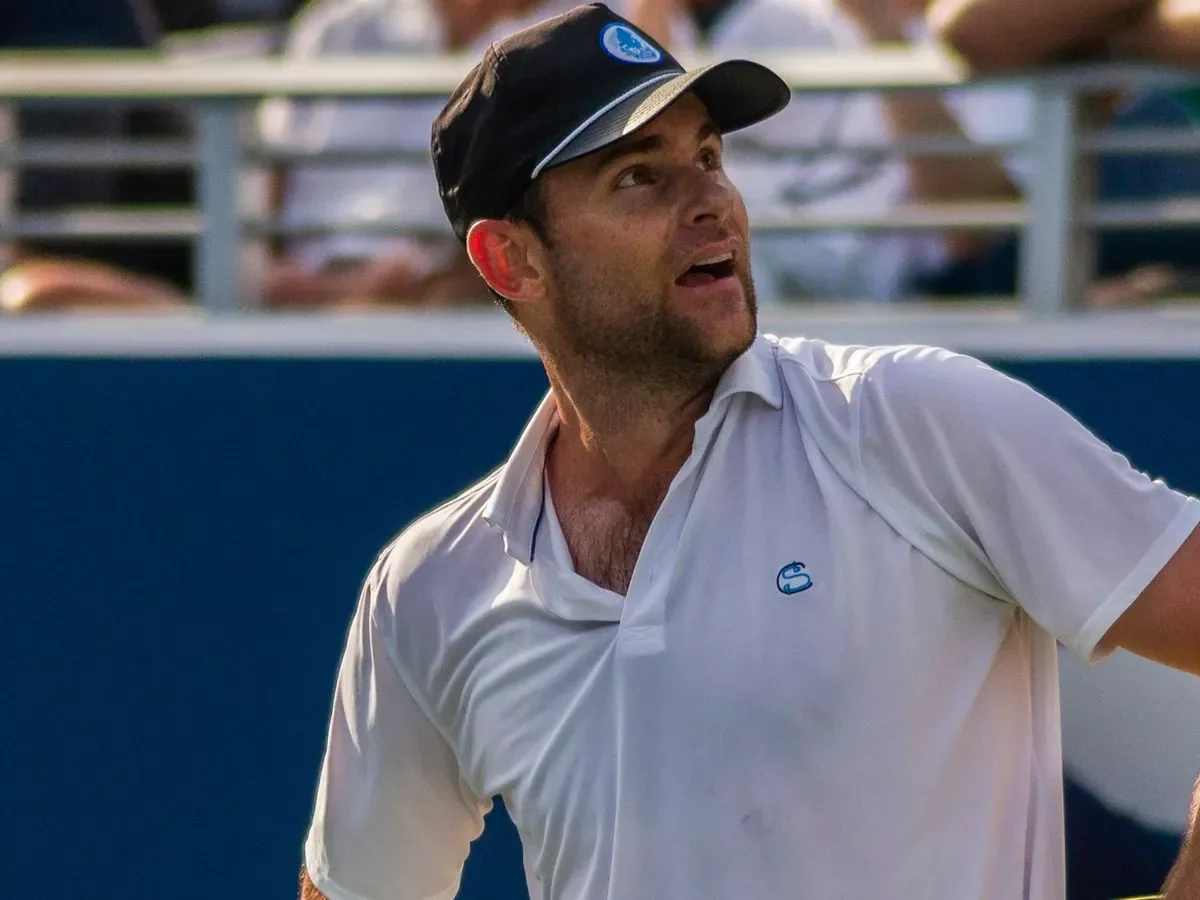
Over his Wimbledon career, Roddick compiled a 41-12 record, demonstrating both his talent and the heartbreak of repeatedly falling just short of the ultimate prize in one of tennis’s most prestigious tournaments.
Ivan Lendl’s Persistent Challenge on Grass Courts
Czech legend Ivan Lendl is often considered the quintessential “what-if” in Wimbledon lore. Known for his unmatched work ethic and mental toughness, Lendl dominated the 1980s, spending 270 weeks as world number one and reaching a then-record 19 major finals. In pursuit of Wimbledon success, he adapted his game extensively, even skipping the French Open twice to prepare for grass. His 48-14 record at Wimbledon confirmed his status as a serious contender.
Despite his dedication, Lendl’s path was blocked by contemporaries such as John McEnroe, Boris Becker, Stefan Edberg, and Pat Cash during key stages of the tournament. He reached the Wimbledon finals consecutively in 1986 and 1987 but failed to win the title. One notorious near miss came in the 1989 semifinals when Lendl, leading Becker two sets to one, was ultimately outplayed in the final sets, ending his title hopes. Despite winning eight other Grand Slams, the Wimbledon crown eluded him, leaving fans to wonder how different his legacy might have been in a different era.
Ken Rosewall’s Long Pursuit Spanning Decades
Australian great Ken Rosewall enjoyed a remarkably long and successful career, collecting eight Grand Slam titles across three decades, though Wimbledon was never among them. His four Wimbledon finals appearances stretched over 20 years, highlighting his longevity but also his misfortune at the tournament. Rosewall missed the Championships thirteen times during his prime, mainly due to his participation in professional tours that limited his availability for Grand Slam events.
Rosewall formed part of a golden generation alongside legends like Rod Laver, Frank Sedgman, Roy Emerson, and John Newcombe that dominated tennis from the 1950s into the 1970s. Known for his famous backhand and exceptional fitness, he was both the youngest and oldest winner of the Australian Open. Despite this, his Wimbledon finals losses spanned from the 1950s with defeats to Jaroslav Drobný and Lew Hoad, to his 1974 finals loss to a rising Jimmy Connors at age 39. Even in unofficial grass court events like the 1967 Wimbledon Pro, his rivalry with Laver continued without Wimbledon success.
Rosewall amassed 44 grass-court titles in total, underscoring his mastery of the surface despite the elusive Wimbledon trophy.
Monica Seles’s Elusive Grass-Court Triumph
Monica Seles’s career was marked by extraordinary success on hard and clay courts, with nine Grand Slam singles titles. Yet Wimbledon remained a missing jewel. Renowned for her powerful two-handed groundstrokes, Seles’s game was less suited to grass, which demands swift adjustments to low, fast bounces.
From her professional debut in the early 1990s until her career was tragically interrupted by a stabbing incident in 1993, Seles was unbeatable, capturing seven majors within this period. She missed the 1991 Wimbledon due to shin splints but made it to the 1992 final, where she lost to Steffi Graf. This final was notable for controversy around “gruntgate,” a widespread complaint regarding Seles’s on-court vocalizations, which led her to play the match in silence to avoid criticism.
Seles’s Wimbledon record stands at 30 wins and 9 losses, with several quarterfinal appearances beyond her final, demonstrating she had the skill to compete at the highest level. Many believe that with different circumstances, she would have eventually claimed Wimbledon’s crown, cementing her dominance fully across all surfaces.
Justine Henin’s Fight for Wimbledon Success
Belgian Justine Henin is celebrated for what many regard as the finest one-handed backhand in tennis history — a view endorsed by John McEnroe, who labeled it as
“the best single-handed backhand in both the women’s or men’s game.”
Known for her all-around game, Henin combined power, finesse, resilience, and movement, often drawing comparisons to Roger Federer for her versatility.
Henin’s career was highlighted by seven Grand Slam titles, including four French Opens, two US Opens, and an Australian Open, but Wimbledon proved her toughest challenge. Twice a finalist in 2001 and 2006 and reaching multiple semifinal spots between 2001 and 2008, Henin consistently battled elite opponents like Venus and Serena Williams and Amélie Mauresmo, all of whom prevented her from securing the grass-court Slam.
Afflicted by health issues and injuries at times, including missing Wimbledon in 2004 due to a virus, Henin’s resilience in returning to the tournament showed her determination. She played her final Wimbledon in 2010, bowing out to fellow Belgian Kim Clijsters. Henin’s 30-8 Wimbledon record underscores her competitiveness on grass, though the title remained just out of reach.
The Significance of Their Near Misses and the Road Ahead
The stories of Andy Roddick, Ivan Lendl, Ken Rosewall, Monica Seles, and Justine Henin illuminate the intense competition and narrow margins at Wimbledon, where careers have hinged on a single match or point. Each left a legacy of talent, persistence, and memorable matches that continue to inspire tennis fans.
As new champions like Carlos Alcaraz and Barbora Krejčíková defend their titles, the anticipation grows for future players who might experience similar near misses—or finally break through to claim lasting Wimbledon glory. For Andy Roddick, his Wimbledon near misses remain an emblem of hope and determination, reflecting the passion and heartbreak entwined with one of sport’s greatest stages.