
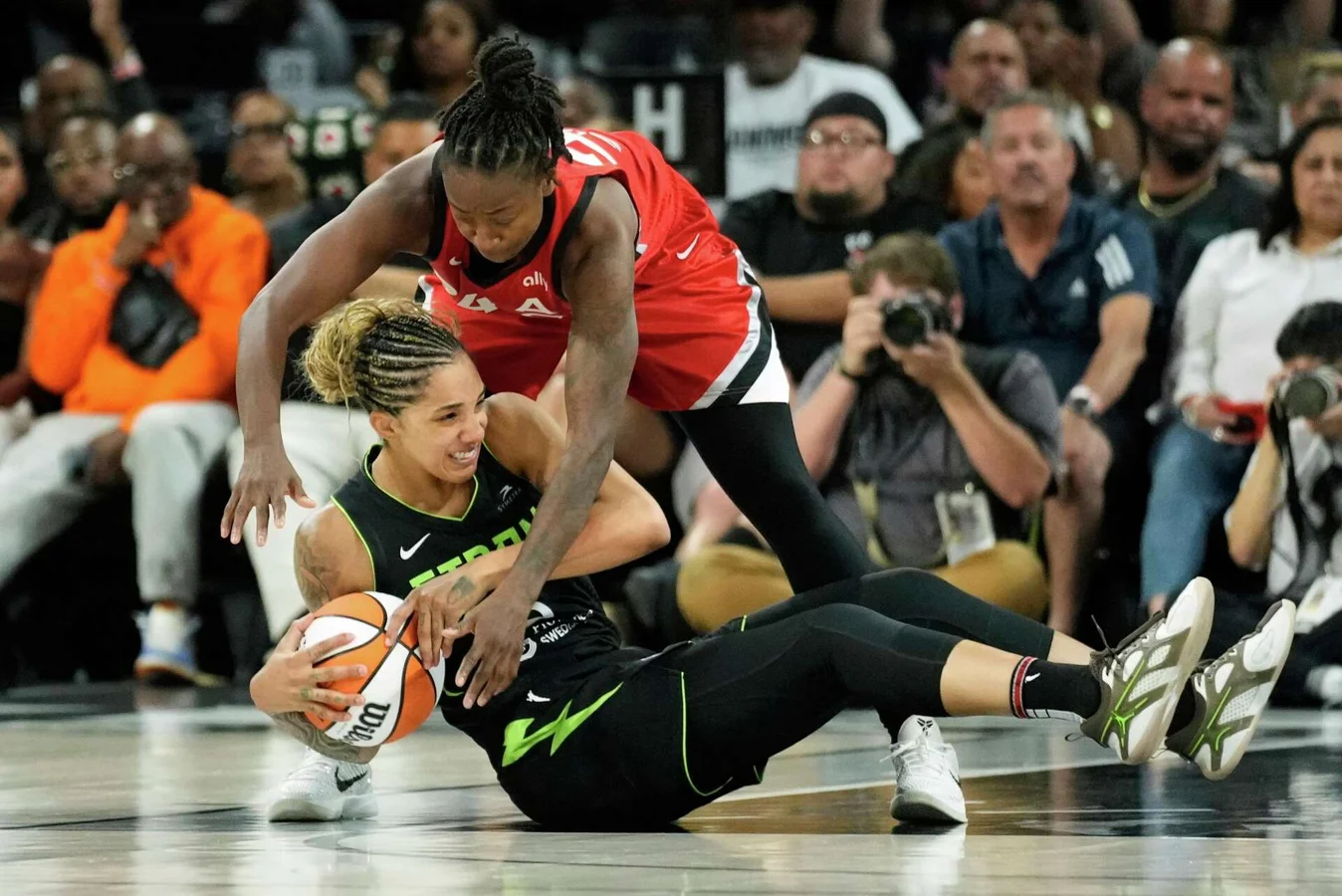

The Indiana Fever remain unable to overcome the Las Vegas Aces, falling to them 89-81 on Sunday and extending their losing streak against the Aces to 16 games. Despite Caitlin Clark’s efforts, including significant playmaking, her ongoing 3-point shooting slump continues to raise concerns this season.
Clark’s struggles from beyond the arc have become a defining storyline as the Fever navigate their season. Known for her sharp shooting and deep shooting range, Clark finished Sunday’s game with 19 points and 10 assists but managed only 1 of 10 from three-point range. This performance marked her fourth poor shooting display from three-point distance in eight games, underscoring the severity of her slump.
Clark’s Shooting Challenges and Recent Performances
In Sunday’s matchup, Clark showed promise early, contributing six assists in the first quarter through effective pick-and-roll plays with Aliyah Boston. However, the Las Vegas Aces adjusted their defense, forcing Clark into difficult decisions and errant shots. She committed eight turnovers in addition to shooting a meager 7 of 20 from the field overall. This game followed another rough outing against the Golden State Valkyries on Thursday, where Clark scored only 11 points and missed all seven of her 3-point attempts.
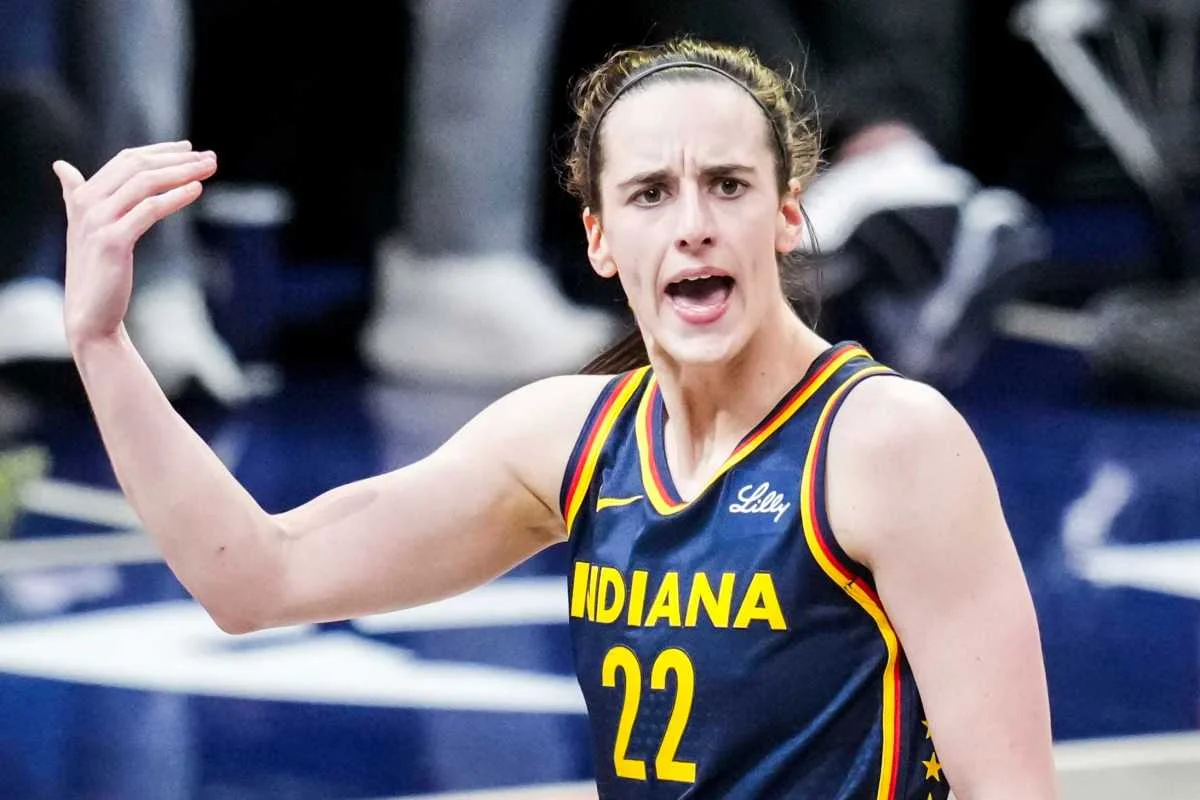
Clark reflected on her struggles candidly after Saturday practice, acknowledging the pressure she places on herself.
It’s a 44-game season, I’m not going to play perfect for 44 games, and that’s where I kinda really struggled last year at times,
she said.
I held myself to such a level of perfection every single night that I wasn’t giving myself much grace. I didn’t play very well at Golden State but I wasn’t defeated after the game. Was I upset at the way my team performed, absolutely, but that doesn’t define our season by any means.
—Caitlin Clark
Clark’s shooting woes became especially visible when analyzing her 3-point shooting percentages. She currently shoots 31.9% from three on nine attempts per game, a career-low compared to her collegiate and rookie WNBA seasons, where she never dipped below 33.2%. This season, her four worst three-point shooting games have included zero percent shooting and very low efficiency, highlighting inconsistency that has hindered the Fever’s success.
The Correlation Between Clark’s Shooting and Fever’s Outcomes
Indiana’s results closely tie to Clark’s efficiency from beyond the arc. When Clark shoots 40% or better from three-point range, the Fever hold a 3-1 record. Conversely, when she shoots 20% or worse, the team is 1-3. As the Fever rely heavily on Clark’s offensive production, her inability to connect on outside shots has impacted their ability to close out games and break losing streaks.
After Sunday’s defeat, Clark admitted uncertainty about the source of her shooting troubles but emphasized resilience.
There are going to be stretches that are really good and there’s going to be stretches that aren’t as good, and obviously it’s frustrating as you want them to go in,
she said.
Certainly a tough shooting night and I gotta find a way to continue to shoot and remain confident in myself because I know I put the time in. I don’t feel like it’s anything that’s off, necessarily, but it would be nice if they went down.
—Caitlin Clark
Impact of Injury on Shooting Rhythm
Clark has missed five games this season due to a left quad strain, the first injury of her professional career. Despite concerns that the injury might have disrupted her shooting rhythm, her before-and-after shooting splits reveal little difference. Prior to the injury, she shot 31.4% from three-point range, and post-injury, that figure stands at 32.4%, suggesting her slump is influenced by factors beyond physical recovery.
Examining Clark’s Home and Away Shooting Inconsistency
One of the most striking trends this season is Clark’s dramatically different shooting performances at home versus on the road. The Fever enjoy a strong home-court atmosphere at Gainbridge Fieldhouse, which fuels Clark’s best displays. For instance, upon returning from injury against the New York Liberty, Clark tied her career-high with seven three-pointers made in a single game at home.
Her shooting splits underline the difference: she shoots 44.0% from three at home but just 4.5% on the road—a staggering discrepancy compared to her rookie season where she was actually more accurate away from home (36.7%) than at home (32.3%). This extreme split is expected to normalize as the season progresses, but it currently highlights a significant vulnerability in away contests.
Heavy Reliance on Off-the-Dribble Shots
Another critical factor in Clark’s shooting troubles lies in her shot profile. Most of her attempts come while she is handling the ball, meaning they are off-the-dribble shots, which are inherently more challenging. So far this season, Clark shoots 30.9% on off-the-dribble attempts compared to 35.3% on catch-and-shoot opportunities.
Coaches have struggled to find a balance that allows Clark to get more catch-and-shoot looks without disrupting the team’s offensive flow. Clark’s role as the Fever’s primary decision-maker means the offense runs more smoothly when she controls the ball. However, when she relinquishes the ball, opponents can apply more physical on-ball defense, complicating her offensive effectiveness.
Clark’s shot selection, heavily skewed towards off-the-dribble threes—over 75% of her attempts compared to 66% last season—may require adjustment. Fever coach Stephanie White and her staff may need to innovate their offensive schemes to allow Clark more catch-and-shoot chances, while Clark herself might benefit from more disciplined shot choices to avoid forced, low-percentage attempts.
Directional Tendencies in Clark’s Shooting
Clark shows a clear preference for pulling up to shoot while dribbling to her left, a habit carried over from her collegiate career. She shoots 41.2% when stepping left, compared to lower percentages when shooting straight ahead, to the right, or using stepbacks, the latter being particularly ineffective this season with a 29.2% success rate.
Defensive schemes frequently focus on preventing Clark from getting to her favored left side. When forced rightward, Clark is less comfortable and less effective, occasionally attempting stepback shots that have yielded poor results so far. Monitoring whether Clark expands her comfort zone to include right-side shots or improves her stepback efficiency will be key in her shooting evolution during this season.
Clark’s Range and Approach to Deep 3-Pointers
Long-range shooting defines much of Clark’s playing identity. She set the NCAA Division I women’s scoring record with a 35-foot shot and has shown willingness to attempt deep shots beyond normal three-point line distances, including during preseason contests in Iowa City.
Clark’s 3-point shooting attempts from 25 feet or farther lead the league, with 61 of 72 attempts originating from 25-plus feet, and she attempts an average of 5.6 shots per game from 25-29 feet—also the most in the league. Even from 30 feet or more, she has taken 16 attempts, a league high despite having played only eight games.
Her shooting percentages from these ranges reflect her comfort level: 18.1% from 22-25 feet, 35.6% from 25-29 feet, and 31.3% from 30+ feet. Surprisingly, Clark shoots worst from the range closest to the basket, 22-25 feet, revealing an unusual pattern where some longer-range shots fall more consistently than those nearer the arc.
Though her fondness for deep shots aids in stretching defenses to guard far from the rim, increasing floor spacing, Clark may still need to be more selective on extremely long-distance attempts to optimize scoring efficiency.
Defensive Pressure and Shot Quality
Clark consistently faces intense defensive attention, often seeing double teams and physical coverage designed to disrupt her rhythm. Unlike the NBA, the WNBA’s official statistics do not track defender proximity, but hand-tracked data indicate Clark shoots 29.5% on contested shots and 35.7% on open looks, confirming how much poorer her efficiency becomes under pressure.
Stephanie White acknowledged the challenges Clark faces, stressing the importance of improving shot quality.
I think the biggest thing is what we as a staff have to do to get [Clark] better looks, higher quality looks,
White said after the game against the Aces.
Every [opponent’s] game plan is going to be to make her score inside the three-point line, right? And the different ways they’re going to do that: physicality, coverage, showing bodies, all the different things. We have to do a better job of getting her higher quality looks.
—Stephanie White
In response, the Fever made strategic adjustments by replacing DeWanna Bonner with Lexie Hull in the starting lineup to enhance spacing. This lineup has produced strong offensive ratings and net positive impacts over the limited minutes played together, indicating some progress in creating improved offensive opportunities for Clark.
The coaching staff continues to wrestle with balancing on-ball control and off-ball movement for Clark to maximize her effectiveness without sacrificing offensive cohesion.
Outlook on Clark’s Shooting and the Fever’s Season
Caitlin Clark remains an elite shooter with a unique skill set, though her shooting patterns and heavy defensive focus suggest she may not rival the league’s top three-point percentage leaders. Nonetheless, her subpar shooting this season is below even her lowered expectations and requires attention.
Detailed analysis of her shot attempts reveals both strengths, such as her comfort with deep shots and left-side pull-ups, and weaknesses, like shot selection and struggles under defensive pressure. These insights offer guidance for how coaching strategies and Clark’s own decisions could evolve moving forward.
Despite the frustration surrounding Clark’s streaky shooting, no one in the Fever organization is panicking. White conveyed confidence in Clark’s ability to turn things around.
I’m not worried about Caitlin’s shot,
White assured.
Caitlin’s shot is going to be just fine,
—Stephanie White
As the season progresses, both Clark and the Fever will aim to stabilize her shooting form, improve shot quality, and ultimately translate her talent back into consistent scoring to help the team climb the standings.