
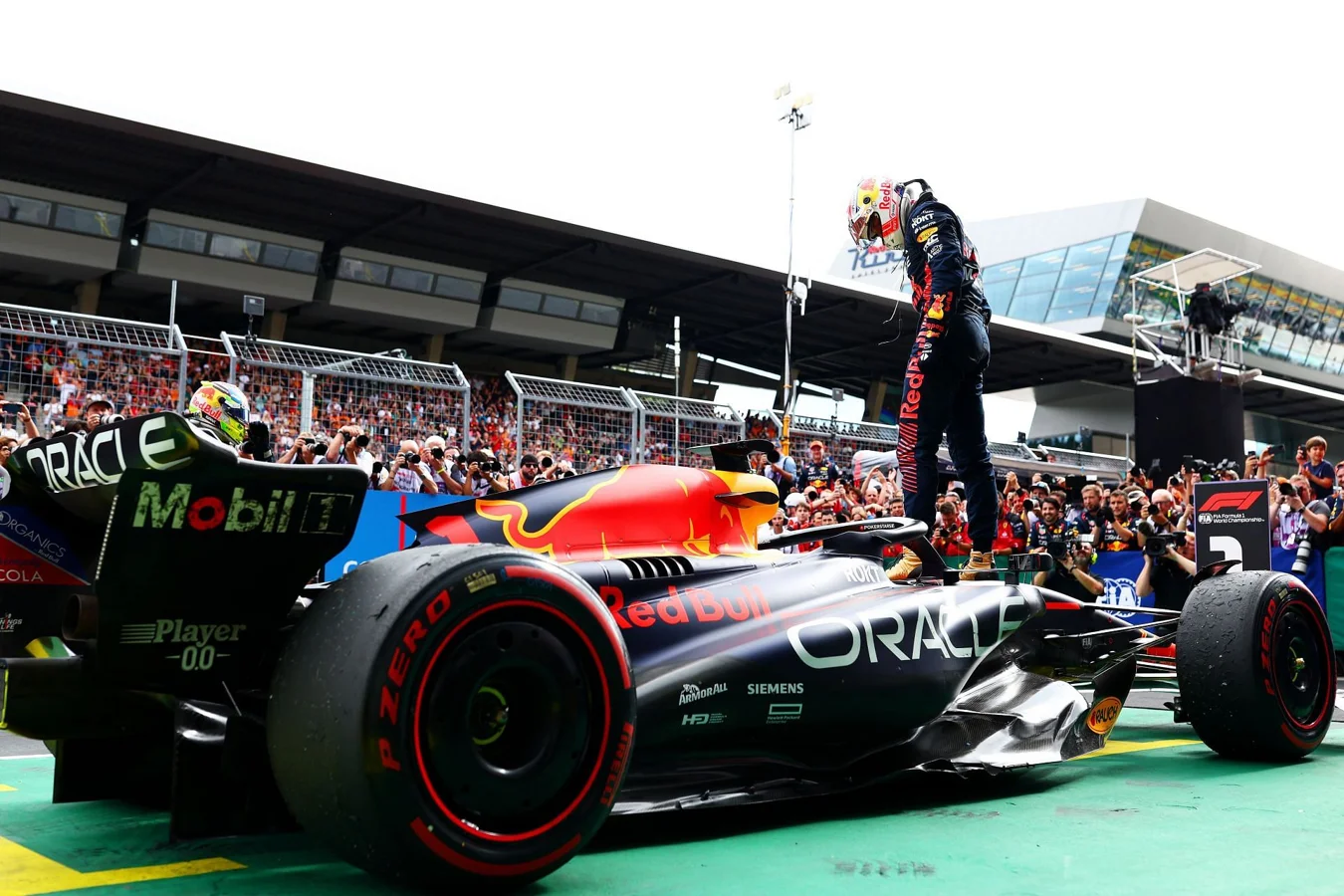

Max Verstappen, the reigning Formula 1 world champion, has highlighted the importance of maintaining traditional circuits on the F1 calendar amid the sport’s expansion into new markets. Speaking ahead of the Austrian Grand Prix, Verstappen emphasized six classic venues that deserve guaranteed spots, arguing they represent the sport’s core identity and challenge drivers’ skills in ways newer circuits do not. His remarks focused on preserving heritage locations within the evolving and increasingly crowded calendar.
The six tracks Verstappen singled out are Spa-Francorchamps, Zandvoort, Silverstone, Imola, Suzuka, and the Brazilian circuit. He stated,
“Circuits that, in my opinion, deserve a separate status and always belong on the calendar, purely on sporting grounds, are Spa-Francorchamps, Zandvoort, Silverstone, Imola, Suzuka and Brazil.”
These historic venues are known for their narrow layouts, limited runoff areas, and flowing corners that place a premium on driver precision rather than aerodynamic advantage. Verstappen contrasted this with the newer venues introduced since the 2000s, which often feature wider runoff zones, slower speed sections, tight chicanes, and reliance on Drag Reduction System (DRS) overtaking zones.
Concerns over the expanding and congested race schedule
Verstappen also expressed unease about the current density of the F1 calendar. He suggested that the sport is prioritizing quantity over quality with too many races. Reflecting on this, he noted,
“If it were up to me, the calendar would look very different and also have fewer races.”
The rising number of events has seen newer venues such as Jeddah, Yas Marina, Las Vegas, Saudi Arabia, and Qatar compete for spots against these emblematic tracks. Despite the commercial appeal of these modern additions, the classic circuits embody racing heritage and distinct challenges for drivers and teams alike.
Despite Verstappen’s advocacy, the contractual situations of these historic venues vary significantly. Spa-Francorchamps is set to alternate with other European circuits, with no races scheduled there in 2028 and 2030 but a return planned for 2031. Suzuka’s contract extends through 2029, underscoring its significance not only for its unique figure-eight layout but also Honda’s historic connection in Formula 1.
Brazil’s Interlagos circuit, celebrated for its elevation changes and its association with Ayrton Senna, is contracted through 2030. Silverstone, the birthplace of the Formula 1 World Championship, holds the longest commitment with races scheduled until 2034. On the other hand, circuits such as Zandvoort, Verstappen’s home Grand Prix, face uncertainty beyond 2026, while Imola’s deal will expire this year without a confirmed extension. These tracks continue to face intense competition for calendar space against financially lucrative newer venues.
Max Verstappen’s performance and pressure at the Austrian Grand Prix
As the 2025 Formula 1 season reaches its 11th round, Max Verstappen returns to the Red Bull Ring in Austria, one of his most successful circuits. The 4.318 km Spielberg track hosts a 71-lap race known for its alpine scenery and demanding driving zones. Verstappen has secured four wins in the last seven Austrian Grands Prix and seeks crucial points to narrow the gap to McLaren’s Oscar Piastri and Lando Norris, who currently lead the standings.
The Dutch driver faces an added challenge beyond competition, carrying nine penalty points on his FIA super licence — only one point shy of triggering a race suspension. These penalties, stemming largely from incidents earlier this season, intensify scrutiny on Verstappen’s discipline. However, two penalty points from a collision with Norris at this circuit last year will expire on June 30, easing some pressure starting the week after the race.
The Red Bull Ring features three DRS zones, a technically demanding uphill sequence in Turns 1 through 3, and high-speed corners that demand precision, particularly Turns 6 and 9. Verstappen’s skill on this track has made it a key stronghold in the current hybrid era. Alongside his pursuit of strong results, avoiding incidents that could add further penalty points is critical to his championship campaign.
Adding to the weekend’s atmosphere, Verstappen will be wearing a special edition Orange Lion helmet designed to mark the Austria, Belgium, and Zandvoort race stretch.