
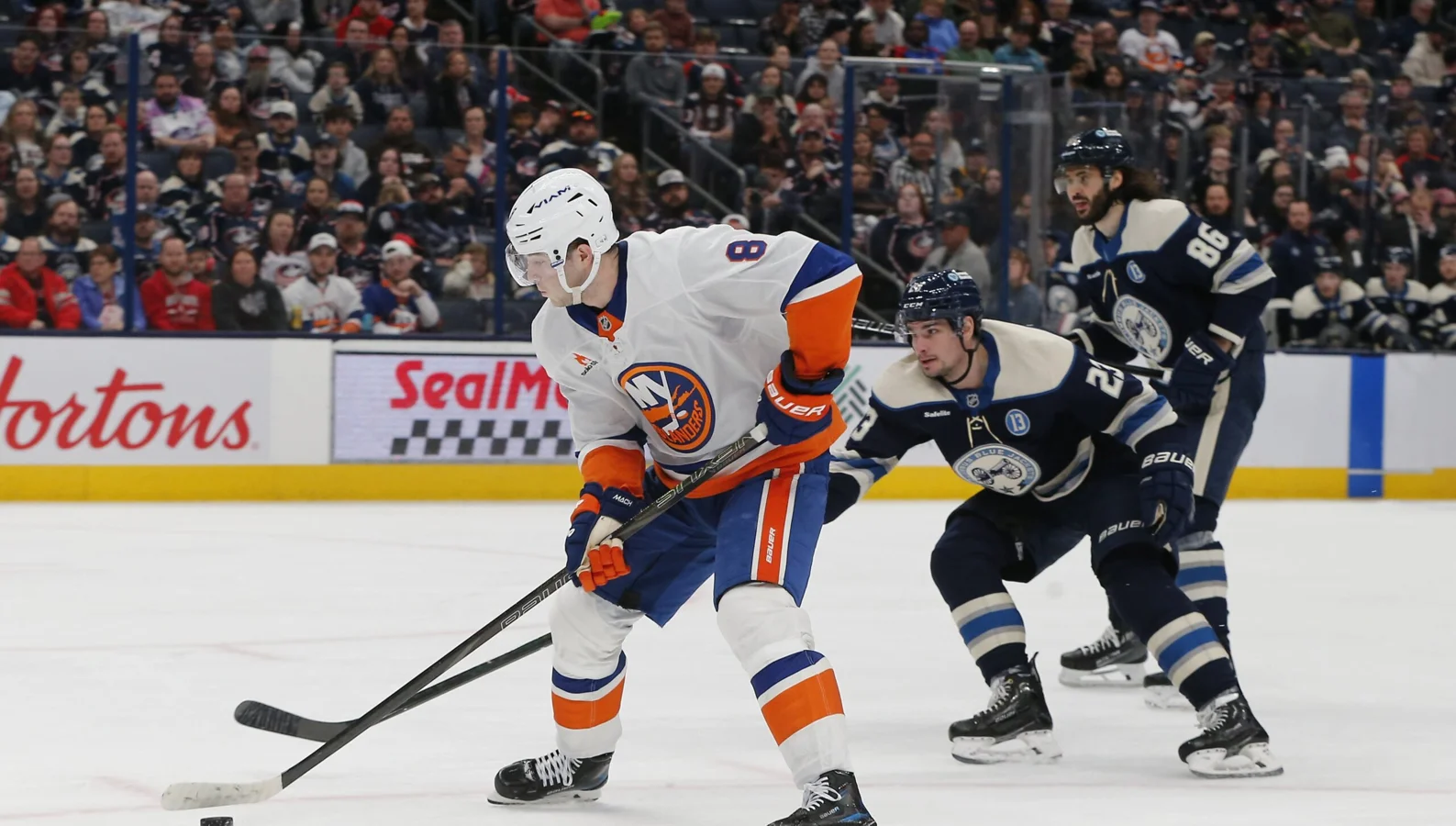

The New York Islanders face a pivotal decision involving Noah Dobson, a 25-year-old right-shot defenseman coming off a 70-point season. As the NHL trade rumors intensify, Dobson has emerged as one of the league’s most valuable assets potentially available this offseason, positioning the discussion of Noah Dobson trade destinations at the forefront. With the Islanders navigating a strategic reset under new GM Mathieu Darche, the timing and teams involved could shape the franchise’s future trajectory.
Dobson’s prowess as an offensive defenseman—proven through consistent double-digit goal totals, heavy ice time exceeding 23 minutes per night, and reliable shot blocking—makes him a coveted player for contenders and rebuilding clubs alike. His strong 2024-25 season as a key 5-on-5 play driver on a struggling team elevates his trade value. However, questions around his arbitration-eligible restricted free agent (RFA) status, an initially ambitious $11-million average annual value (AAV) request, and an injury-shortened recent campaign add complexity to the negotiations. The Islanders appear willing to leverage Dobson’s value before the NHL Draft, signaling openness to reacquire multiple assets in return to accelerate their rebuild. These dynamics situate Dobson’s possible trade destinations among teams that can balance cap space, prospect depth, and strategic needs.
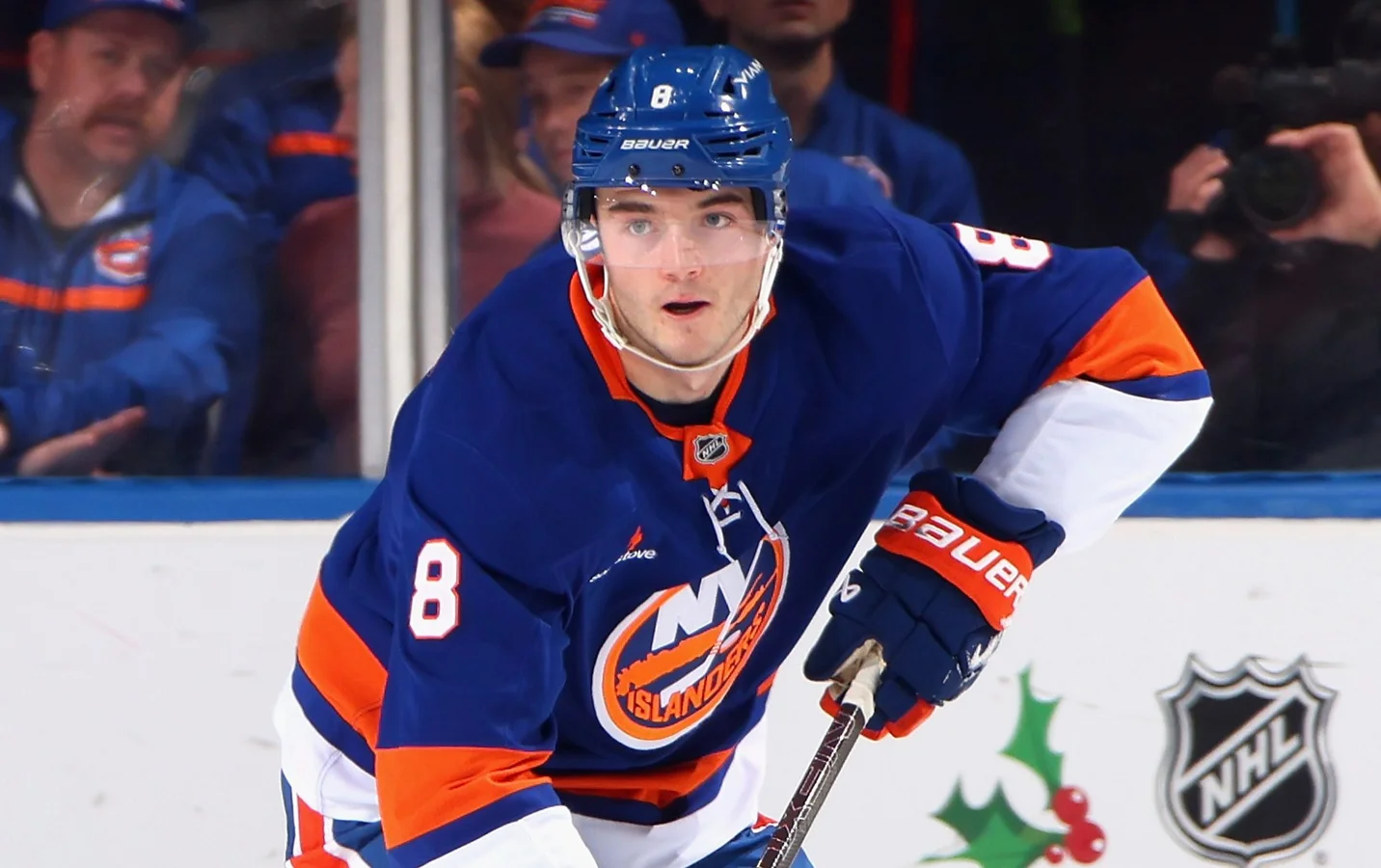
Buffalo Sabres: Addressing Defensive Gaps with Young Assets
The Buffalo Sabres stand out as logical trade partners given their swelling pool of young forwards and urgent defensive needs. While the Sabres have accumulated promising forwards such as Zach Benson, Isak Rosen, and Jack Quinn, their defense requires an anchor on the right side to complement stars Rasmus Dahlin and Owen Power. Dobson’s addition could provide that reliable presence and veteran stability.
GM Kevyn Adams has shown an inclination toward trading promising talent to accelerate roster improvement, evident in last summer’s move trading Matt Savoie for Ryan McLeod. The Sabres possess the prospect capital and a 2025 first-round pick that could be leveraged in a trade. However, integrating Dobson’s cap hit around ongoing RFA negotiations for players like JJ Peterka and Bowen Byram complicates matters. Both Peterka and Byram may be attractive pieces in a deal but could exacerbate Buffalo’s cap constraints if not included, especially as Peterka remains an offer sheet candidate.
Carolina Hurricanes: Balancing Cap Space and Defensive Reinforcements
With nearly $27 million in projected cap space, the Carolina Hurricanes emerge as one of the few Stanley Cup contenders capable of affording Dobson. The Hurricanes are addressing defensive concerns, especially considering Dmitry Orlov‘s probable departure and Brent Burns’ uncertain retirement status. They already boast a solid core led by Jaccob Slavin and add intriguing prospects like Jackson Blake and Alexander Nikishin.
Jackson Blake has shown promise as an NHL rookie, and Nikishin represents a valuable trade asset who could be central to an offer for Dobson. However, Carolina faces a strategic dilemma: their defensive depth may suffice with the current lineup, and their pressing need is arguably a high-impact forward, making players like Mitch Marner and Nikolaj Ehlers preferable offseason targets. Consequently, the Hurricanes might hesitate to allocate extensive cap space toward a defenseman, despite Dobson’s appealing skill set.
Columbus Blue Jackets: Potential to Build Around Emerging Talent
The Columbus Blue Jackets have substantially improved in recent seasons, and acquiring Noah Dobson could accelerate their ascent in the Metropolitan Division. Zach Werenski remains a cornerstone on defense, while young forwards Adam Fantilli and Kirill Marchenko have recently emerged as offensive catalysts. Columbus boasts a deep emerging prospect pool including Cayden Lindstrom, Gavin Brindley, and Jordan Dumais, along with blueliners Denton Mateychuk and Charlie Elick gaining NHL experience.
With $40.41 million in projected cap space, the Blue Jackets can comfortably absorb Dobson’s contract demands while packaging NHL-ready prospects to secure the deal. However, the high cost of acquiring Dobson raises tactical questions; Columbus also needs a right-shot center, a top-six forward, and a goalie upgrade, all of which require significant investments. Therefore, some debate exists whether pursuing Dobson—or opting for a slightly less expensive right-shot defenseman to preserve roster balance—is the wisest move this offseason.
Detroit Red Wings: An Urgent Upgrade to Resuscitate a Struggling Team
The Detroit Red Wings are arguably the most likely destination if Dobson is traded. After missing the playoffs for nine straight seasons, the Wings’ defense corps is thin, apart from promising young pieces Moritz Seider and Simon Edvinsson. Noah Dobson would immediately elevate Detroit’s blue line and supply a skilled, right-handed presence desperately lacking in the organization.
Detroit holds considerable assets that could entice the Islanders, including potential right-shot defense prospects Axel Sandin-Pellikka and elite goaltending prospects Sebastian Cossa or Trey Augustine. The Wings could also offer centers like Nate Danielson or NHL-ready forwards such as Jonatan Berggren to construct a competitive return package. The team’s cap situation and urgency to improve align well with the Islanders’ objective to acquire a blend of young talent and prospects.
This scenario faces minimal obstacles, given Detroit’s strong motivation and resource availability, as well as GM Steve Yzerman’s willingness to pursue bold moves. The primary question is whether the Wings’ preference for a left-handed defenseman could influence negotiations, but this appears to be a minor concern relative to the overarching opportunity.
Los Angeles Kings: Navigating a Win-Now Phase with Defensive Transition
The Los Angeles Kings are entering a critical phase in their championship pursuit, with veteran defenseman Drew Doughty at 35 still under contract for two seasons. As Brandt Clarke, a promising right-shot defense prospect, continues to develop, the Kings may seek a more immediate solution on the right side. Noah Dobson could fill that role, helping the team push beyond repeated first-round playoff exits.
A preliminary offer might involve sending Clarke—who has shown flashes of impactful offensive play but was limited by playing time and even scratched multiple times this past season—in exchange for Dobson. Still, the Kings already rank among the NHL’s best defensive teams, and their top priority may lie in acquiring a premier forward rather than overloading the blue line.
With established right-side options including Doughty, Clarke, and Jordan Spence, the Kings risk defensive redundancy. Additionally, reallocating funds to retain or replace key players like Vladislav Gavrikov on the left side might offer more strategic benefit than adding Dobson. This trade path is therefore plausible but less certain than others due to positional priorities and roster construction.
Philadelphia Flyers: A Rebuilding Team Eyeing Defensive Strength
Though the Philadelphia Flyers recently appeared poised to target defenseman Rasmus Andersson, Dobson represents a significant upgrade better suited to their long-term rebuild. The Flyers have promising puck-moving defensemen in Cam York and Jamie Drysdale but lack a top-tier right-shot defenseman comparable to Dobson. His addition would immediately improve their blueline alongside Travis Sanheim.
However, Philadelphia is still in the early stages of rebuilding, limiting their ability to part with multiple top prospects or first-round picks, which the Islanders would likely require. GM Danny Briere’s current approach favors building depth and prospect accumulation rather than making major splashes. Consequently, a Dobson trade for Philadelphia may make more sense 1-2 years from now, when the team’s asset base has matured.
—
With these six teams emerging as the most credible options for Dobson, the Islanders’ front office must weigh the timing and composition of returns they can obtain. Each suitor presents unique advantages and challenges based on cap room, organizational needs, and prospect value. Finding the right balance will be crucial, as moving a player of Dobson’s caliber carries high stakes for New York’s long-term rebuilding success.
The coming days ahead of the NHL Draft and the opening of free agency appear poised to sharpen these trade discussions, potentially reshaping several teams’ futures and notably impacting the Islanders’ next phase. New GM Mathieu Darche’s decisions now could set the foundation for rebuilding or redirecting the franchise for years to come.