
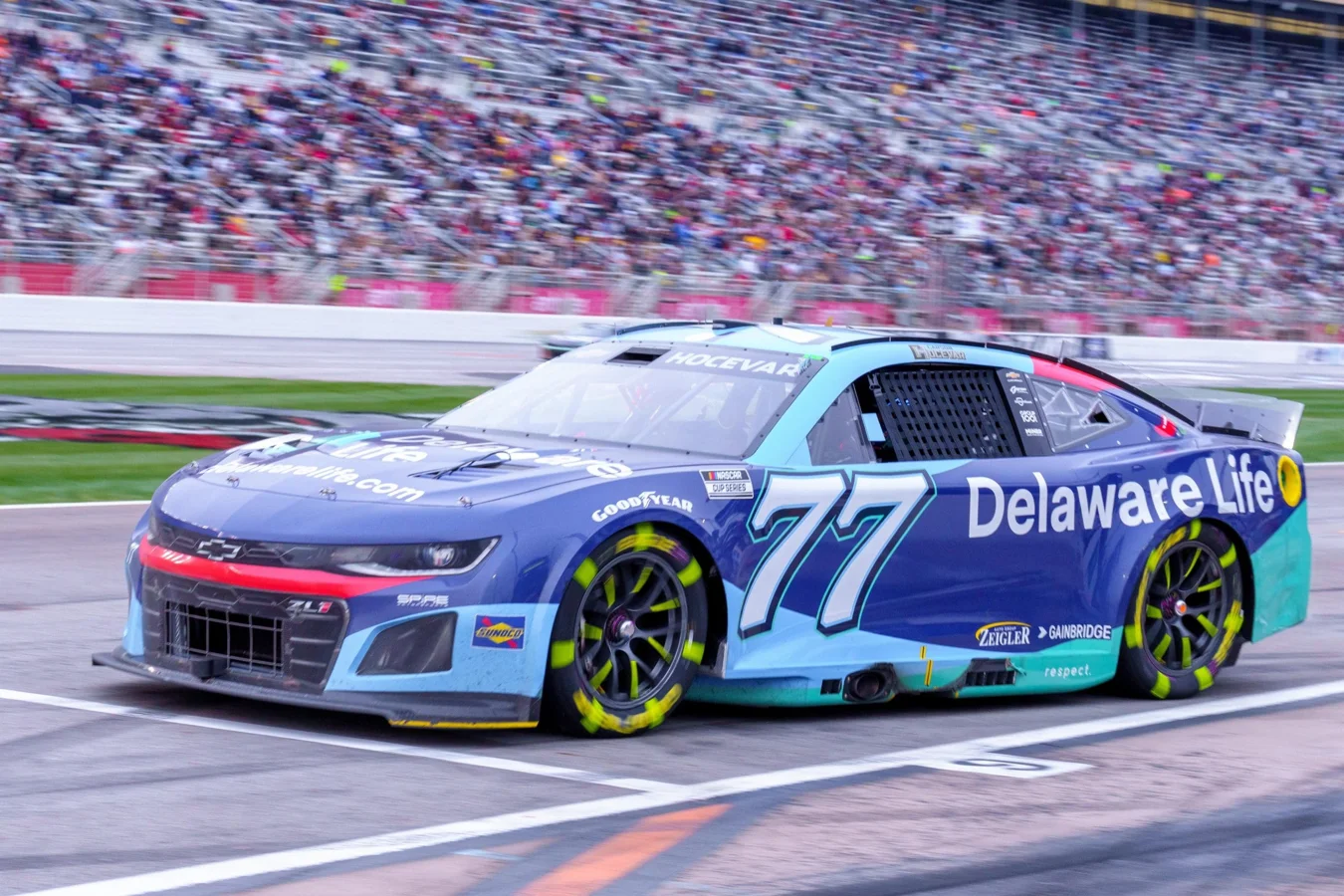

During last weekend’s NASCAR Cup Series event at Pocono, Carson Hocevar and Denny Hamlin executed a clever pit road tactic that caught their competitor Brad Keselowski off guard. This ploy contributed to Keselowski making a major error by entering pit road while it was closed, forcing him to struggle through the field throughout the race.
Keselowski’s prospects for a strong finish quickly evaporated following his pit road misstep, which dashed his chances of victory. However, newly revealed team radio communications have shed light on how Hocevar and Hamlin strategically feigned their pit road moves to mislead him during the crucial moments under caution.
Hocevar and Hamlin’s Deceptive Pit Road Signals Unveiled
Hocevar’s team first alerted him that the red light on pit road was off, yet he intentionally delayed responding to manipulate Keselowski’s reaction. Hocevar confirmed over radio:
“Yeah I know. I wanted to bait him. I didn’t want him to have him realize the mistake.”
—Carson Hocevar
Similarly, Hamlin engaged in a comparable strategy with his crew, admitting his intent not to give away their plan to Keselowski:
“Yeah, I know. I just didn’t want to tip him [Keselowski] off.”
—Denny Hamlin
Keselowski Accepts Responsibility Despite Rival Tactics
Despite being caught in this ruse, Keselowski took full ownership of his error rather than blaming Hocevar or Hamlin. Speaking during a Prime Video post-race interview, Keselowski clarified:
“This is my fault, let me just be clear with this.”
—Brad Keselowski
He explained that pit road had been closed for longer than usual during caution laps, which contributed to the confusion. With his team instructing him to pit on the second lap under caution, Keselowski trusted their call without second-guessing the timing. He reflected:
“Ultimately, I hold the steering wheel and I’m the one that’s got to check. I didn’t check the crew chief and the spotter, and that’s my fault.”
A caution flag appearing at a bad moment later in the race further disrupted his race strategy and sent Keselowski’s No. 6 car tumbling to 24th place. From there, he fought hard to regain positions, eventually finishing ninth, a result that fell short of the team’s championship hopes.
Implications for Keselowski and the NASCAR Cup Series
This incident at Pocono underscored how psychological tactics and split-second decisions play a decisive role in NASCAR competition. Hocevar and Hamlin’s ploys highlight the intense rivalry and strategic depth present on pit road, where delays or misinformation can dramatically change race outcomes.
Keselowski’s admission of responsibility also illustrates the constant pressure drivers face in communicating with their crews and making instantaneous judgements. Moving forward, this event serves as a reminder that both technical skill and mental acuity are essential for success in the NASCAR Cup Series.