
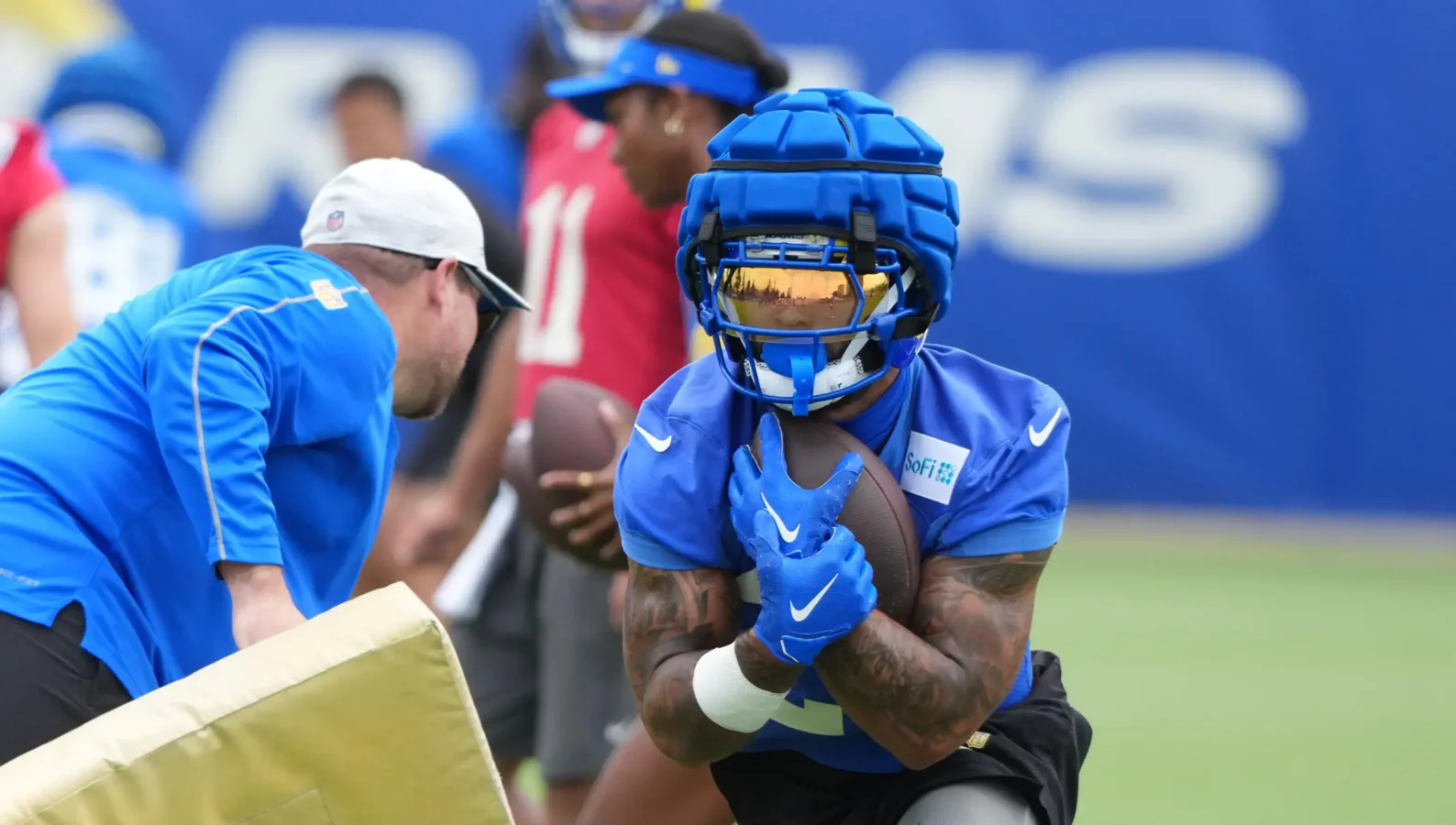

As the Los Angeles Rams prepare to begin their new season, a critical story is developing around Kyren Williams and the incoming rookie Jarquez Hunter. Williams, having surpassed 1,100 rushing yards in each of the past two years, has firmly established himself within the Rams’ offensive lineup. However, with Hunter joining the roster, the competition for carries and a significant role in the backfield intensifies, setting the stage for a notable Kyren Williams Rams contract battle.
Kyren Williams’ Established Role and Contract Pressures
Williams enters the current campaign facing a pivotal contract year, where his future with the Rams may hinge upon his ability to demonstrate sustained excellence. Last season, Williams dominated the backfield, commanding 90 percent of the snap counts, highlighting his dependability and effectiveness. Now, with Hunter challenging for playing time, head coach Sean McVay must carefully divide responsibilities to maximize both players’ impact without disrupting team chemistry or offensive rhythm.
Introducing Jarquez Hunter: The Promising Rookie Addition
Selected in the third round of the 2024 NFL Draft, Jarquez Hunter brings a fresh and dynamic skillset to the Rams. Known for his physical running style and quick one-cut moves, Hunter’s performance at Auburn showcased his capacity to thrive under pressure. His combination of quick bursts and agility, observed through detailed All-22 film analysis, suggests he can adeptly maneuver through defenses in the Rams’ blocking scheme.
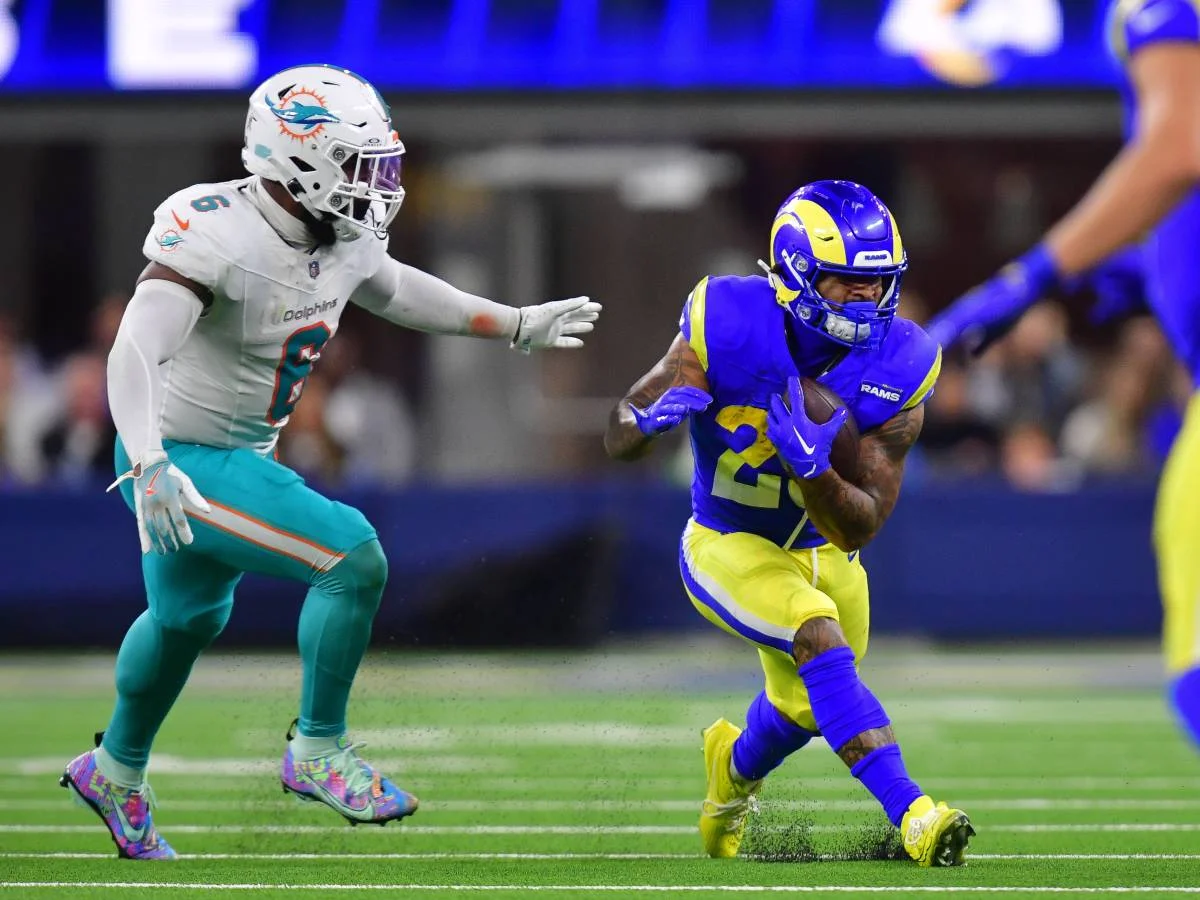
Standing 5-foot-9 and weighing 204 pounds, Hunter may lack prototypical size but compensates with a low center of gravity and compact build, enabling him to generate yards after contact. His aggressive style has drawn comparisons to successful NFL running backs, signaling the potential to become an essential contributor for the franchise.
Strengths and Developmental Challenges for Hunter
Despite his promise, Hunter faces areas that require improvement before he can fully capitalize on his potential. His relatively tight hip flexibility could limit his ability to execute fluid changes of direction, particularly in congested scenarios and pass protection. While his speed is sufficient, it is not among the elite tier, possibly restricting his effectiveness in breaking away on longer runs.
Additionally, Hunter’s tendency to fumble—recorded seven times during college—underscores the need for enhanced ball security as he adapts to the professional game. His receiving capabilities, although competent, will need to expand through a more diverse route tree to make him a versatile threat within McVay’s offense. Nonetheless, Hunter’s power, balance, and quickness position him well to succeed within the Rams’ zone-blocking system.
The Competitive Road Ahead: Williams Versus Hunter
The upcoming season will test both Williams and Hunter as they vie for roles that could define their careers. Williams seeks to leverage his proven track record into a favorable contract, while Hunter aims to demonstrate that he can be a reliable and impactful piece of the team’s backfield moving forward. Their rivalry is poised to influence coaching decisions and game plans, as McVay strives to integrate experience with youthful energy effectively.
This competition is more than an internal contest—its outcome will shape the Rams’ offensive identity and could play a significant role in determining the team’s success this year.
The Broader Implications of the Rams’ Backfield Battle
The story of Williams and Hunter mirrors a larger transition within the Rams’ organization as it navigates roster evolution and strategic adjustment. Both running backs face pressure to excel amid high expectations and significant stakes. With fans watching closely, this athlete duel will be a central focus throughout the season, highlighting who will lead the Rams’ rushing attack and become a pivotal force pushing the team toward victory.