
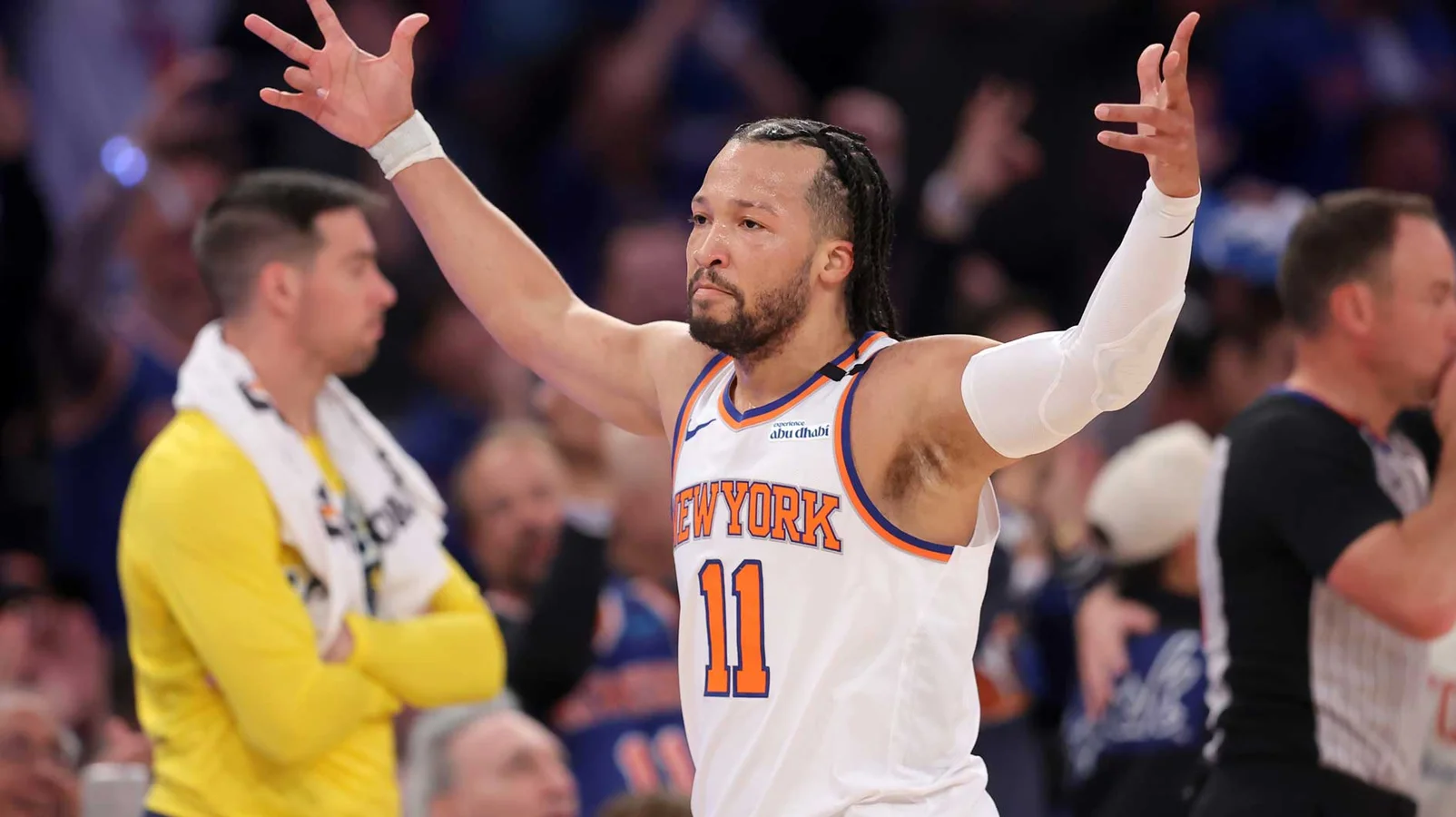

Mikal Bridges, forward for the New York Knicks, is now eligible for a contract extension, with the maximum deal available being four years and $156 million, according to Stefan Bondy of the New York Post. Acquired last season in a significant trade involving five first-round picks, Bridges is considered a vital part of the Knicks’ core moving forward.
Bridges’ contract situation has become a central topic as the summer approaches, especially since the Knicks aim to keep him on the team. However, the financial terms of his extension remain uncertain, with concerns over salary cap constraints influencing negotiations. In the current NBA financial landscape, teams must carefully manage their payroll to avoid becoming hard-capped, which limits roster flexibility.
Financial Challenges Surrounding Bridges’ Potential Extension
The Knicks face a delicate balancing act with Bridges’ contract talks. While Bridges indicated last offseason that he would consider taking a pay cut to support the team’s long-term flexibility, final agreement terms have yet to be reached. This follows a precedent set by teammate Jalen Brunson, who accepted a sizable pay reduction to remain with the Knicks and preserve their salary cap space.
Bridges’ defensive contributions, notably in the postseason, have reinforced his importance. His standout performance in the second round against the Boston Celtics helped New York secure a surprising series win, with key defensive plays underscoring his value despite some offensive inconsistencies during the regular season.
Knicks’ Roster and Salary Cap Considerations Impact Extension Talks
The Knicks are approaching crucial decisions due to their current salary commitments. They are obligated to pay nearly $40 million to OG Anunoby and roughly $53 million to Karl-Anthony Towns next season. Additionally, contracts for Josh Hart and Mitchell Robinson account for $20 million and $15 million, respectively.
Given these financial commitments, offering Bridges a maximum contract could push the team over the NBA’s second salary apron, triggering a hard cap. This situation would limit their ability to add depth to the roster, forcing difficult choices regarding player retention and acquisition.
If the Knicks and Bridges cannot reach an agreement on an extension, the possibility of Bridges being involved in trade discussions could increase. The outcome of these negotiations will significantly influence the Knicks’ roster construction and strategic planning for the upcoming season and beyond.