
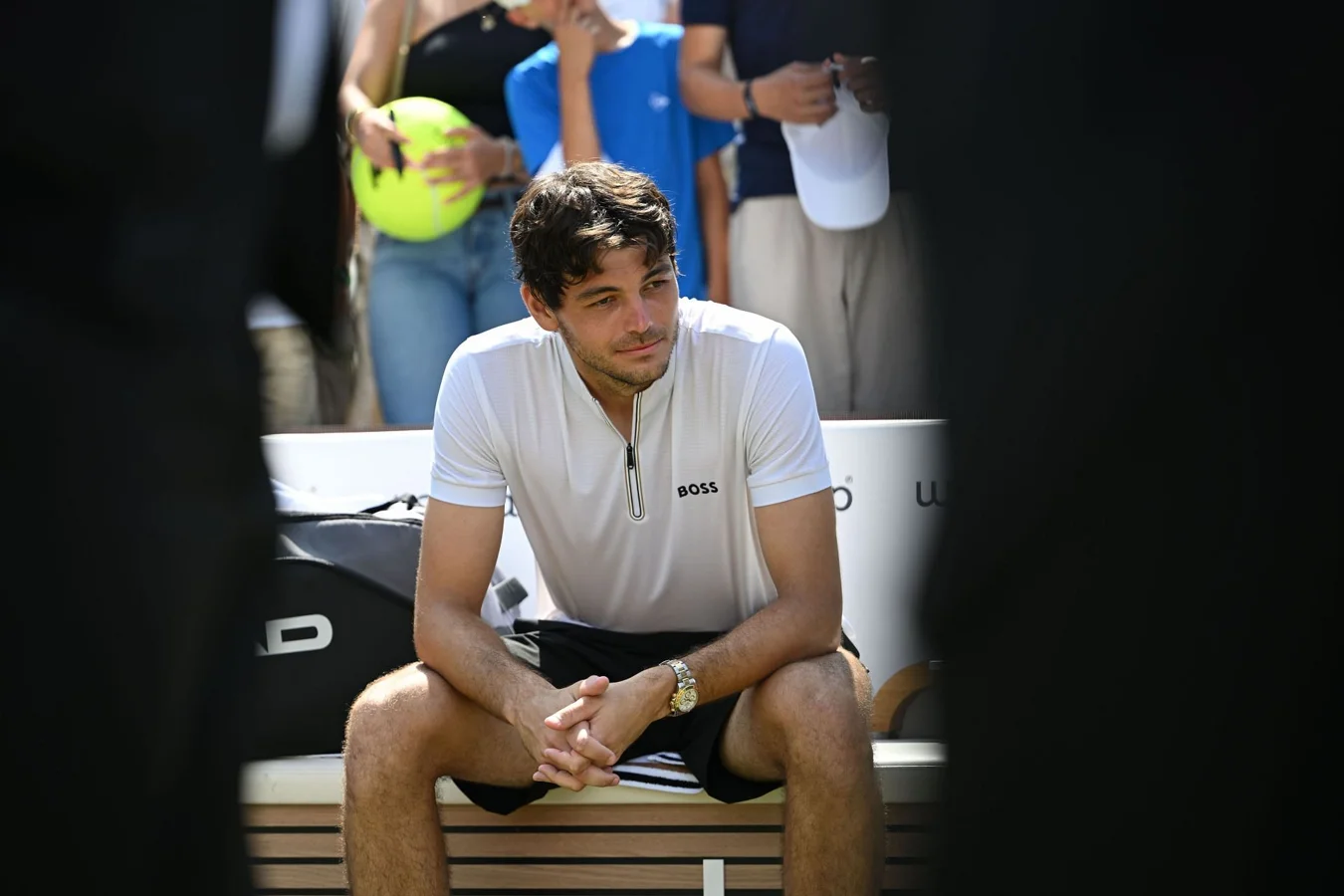

Taylor Fritz strongly criticized on-court coaching, insisting he only shares his own observations with his coach rather than taking instructions during matches. The American player recently experienced an early exit at the HSBC Championships, losing in straight sets to French competitor Corentine Moutet. Highlighting his stance on coaching, Fritz emphasized that tennis should remain an individual sport where players rely on their own decision-making.
Coming off a solid performance at the 2024 US Open where he reached the finals, Fritz has shown flashes of top form this season. Despite an unexpected first-round loss to Germany’s Daniel Altmaier at the French Open, he rebounded impressively at the Boss Open, claiming the title by defeating World No. 3 Alexander Zverev in straight sets. As Fritz prepared to face João Fonseca in the Lexus Eastbourne Open first round, he remained firm in his view that on-court coaching undermines the sport’s individual nature.
Why Taylor Fritz opposes coaching during matches
Fritz explained that allowing coaches to provide strategic advice mid-match diminishes the mental challenge unique to tennis. He argued that if players cannot adapt independently to an opponent’s tactics, letting a coach intervene is unfair and undermines the sport’s integrity. According to Fritz, coaching should be limited to confirming strategies rather than directing play during matches.
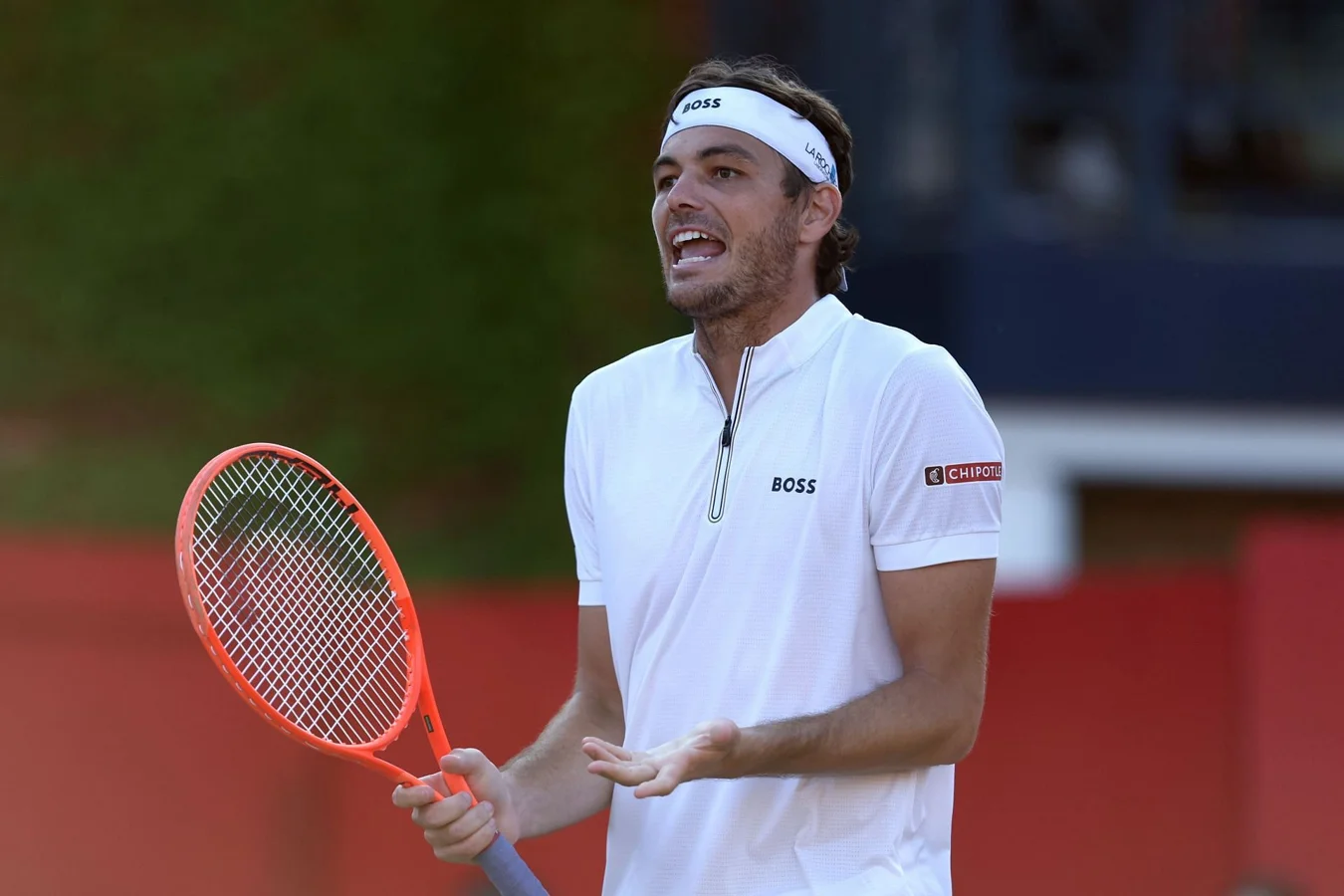
“I think it’s bad for the game. Yeah, the game of tennis, it’s definitely bad. If fans could hear that stuff, maybe that’s more like entertaining, but we don’t even do that anyway. So, tennis is an individual sport. Why can someone else tell me what to do when the strategy of tennis is such a big part of the game? Understanding what my opponent’s doing, how is it fair that someone, if they’re not smart enough to figure out that they need to change what they’re doing, it’s complete bulls**t that someone can tell them what to do.”
—Taylor Fritz, Professional Tennis Player
He further elaborated on the psychological aspect of tennis, stating the mind games that players engage in during matches are crucial and should not be lost to external coaching.
“I just think that the mind games that are going on during the match is a big part of tennis. Why would we, you know, lose that? I talk to my coach during matches, you can, but I don’t think I’m ever talking to him, like, asking him like, what do I do? I’m telling him what I see and what I think and that he’s almost just more so giving me a confirmation, I think it’s bad.”
—Taylor Fritz, Professional Tennis Player
This perspective comes amid Fritz’s rigorous schedule, which included a promising run at the 2025 Australian Open before falling to Gael Monfils after strong starts in earlier sets.
Assessing Taylor Fritz’s challenges against top-tier opponents
Fritz also reflected on his experiences facing elite players, particularly Carlos Alcaraz, who triumphed recently at the French Open to claim his first clay-court Grand Slam title. Alcaraz, along with Jannik Sinner, Alexander Zverev, and Casper Ruud, remains entrenched among the ATP’s top five. Fritz admitted that while he has been able to beat Sinner, Alcaraz presents a significantly tougher challenge.
“I’d say Carlos is the harder opponent for me but I have to add the caveat that when we played in the Laver Cup [last year] I ran into the on-fire version of him where it just feels like there’s nothing you can do. So even though obviously Sinner has gotten me several times, pretty routinely, at least in those matches I felt like I could play tennis. In the Laver Cup with Carlos I felt, for about 80 to 90% of the match, I couldn’t do anything.”
—Taylor Fritz, Professional Tennis Player
Throughout his career, Fritz has demonstrated a strong level of competitiveness, with two quarterfinal showings at Wimbledon in 2022 and 2024, and eight ATP Tour singles titles, including a prestigious Masters 1000 victory at Indian Wells in 2022. These achievements underline his status as a significant contender on the ATP Tour despite ongoing struggles with consistency against the sport’s most formidable players.
The broader implications of Fritz’s stance on tennis coaching
Fritz’s rejection of on-court coaching raises important questions about the future of tennis as an individual sport defined by player autonomy and mental acuity. His outspoken comments underscore a tension within the sport between traditional values and modern innovations intended to enhance performance and fan engagement.
As tournaments continue to experiment with coaching rules, Fritz’s resistance may influence debates over how much input coaches should have during matches, especially in high-stakes competitions like the Eastbourne Open. His perspective champions the mental toughness and strategic independence that many believe form tennis’s core appeal.
Looking ahead, how tournaments regulate on-court coaching could significantly impact players’ approaches and fans’ experience. For Fritz, maintaining tennis as a contest of mental skill and individual adaptability remains paramount.