
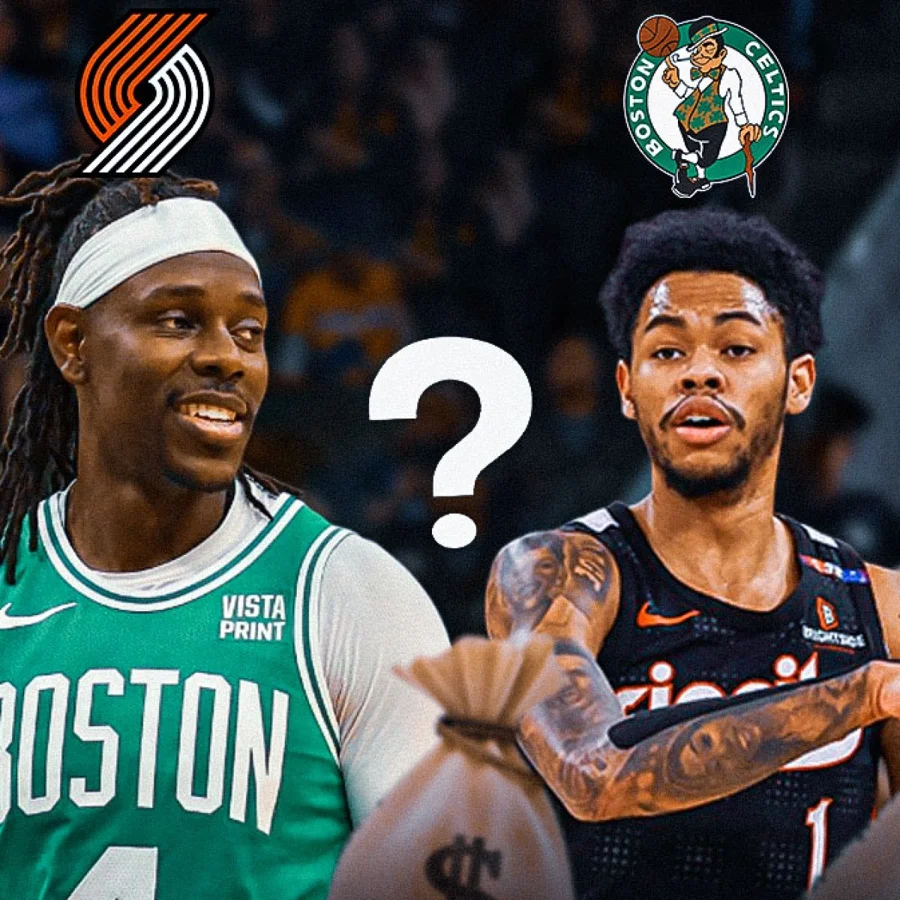

The Boston Celtics have initiated a major strategic transition following their unexpected second-round playoff defeat to the New York Knicks. In a move signaling a new direction, the team traded veteran point guard Jrue Holiday, stirring debate about the consequences for their defense and overall team balance. This decision highlights the Celtics’ focus on reshaping their roster to better align with their future ambitions.
Details and Consequences of the Jrue Holiday Trade
The Celtics sent Holiday, who spent only two seasons with Boston, to the Portland Trail Blazers in exchange for Anfernee Simons and two future second-round draft picks. This transaction represents a calculated risk, as Simons is widely praised for his scoring talent but has raised questions regarding his defensive consistency. Some voices in the basketball community are even uncertain if Simons will ultimately suit up for Boston.
Kevin Pelton, a respected NBA analyst, rated the trade with a B-, acknowledging the potential in acquiring Simons but also noting the uncertainty about how well he will fit into Boston’s traditionally defense-focused framework. The Celtics’ reputation for tough defense is well established, and losing Holiday’s experience on that end of the floor has sparked concern about how effectively Simons can fill that void.

Brad Stevens’ Role and Long-Term Vision for the Celtics
Boston’s President of Basketball Operations, Brad Stevens, orchestrated the trade, demonstrating a willingness to pivot away from aging veterans to build around younger talent. At 35, Holiday’s timeline was not considered aligned with the Celtics’ core group, making his departure a challenging but necessary step. Importantly, Stevens managed the deal without surrendering valuable draft picks, securing future assets that could help the franchise continue evolving.
This trade may be the opening move of a transformative offseason for Boston, indicating a departure from older dynamics and a push toward a roster that better suits the speed and style of today’s NBA. Simons is expected to play a vital role in this new chapter if he can contribute meaningfully on both ends of the court.
Balancing Opportunity and Risk in an Evolving League
Boston’s decision to acquire Anfernee Simons reveals their ambition to capitalize on offensive talent despite defensive uncertainties. The NBA’s landscape is continuously shifting, requiring teams to adapt quickly while managing trade-offs between scoring ability and defensive discipline. The Celtics are betting on Simons’ offensive upside to complement their existing stars, hoping this leads to long-term success.
As the offseason progresses, this trade is likely just the first move in a series that will redefine the Celtics roster. Fans and analysts will closely monitor how the team integrates Simons and adjusts its defensive strategies, which will be crucial in determining whether this gamble yields positive results.
Potential Impact and Boston’s Path Forward
In professional basketball, maintaining a strong defensive identity while maximizing offensive potential is a complex balancing act. The Celtics’ willingness to part ways with Holiday underscores their drive to innovate and embrace calculated risks. However, the loss of a seasoned defender leaves questions about how Boston’s defense will hold up in high-pressure scenarios.
The success of integrating Anfernee Simons hinges on his ability to mesh with Boston’s established core and contribute effectively on both sides of the ball. With high stakes involved, the Celtics are entering an important and uncertain period that will test their adaptability and vision for future success in the NBA.