
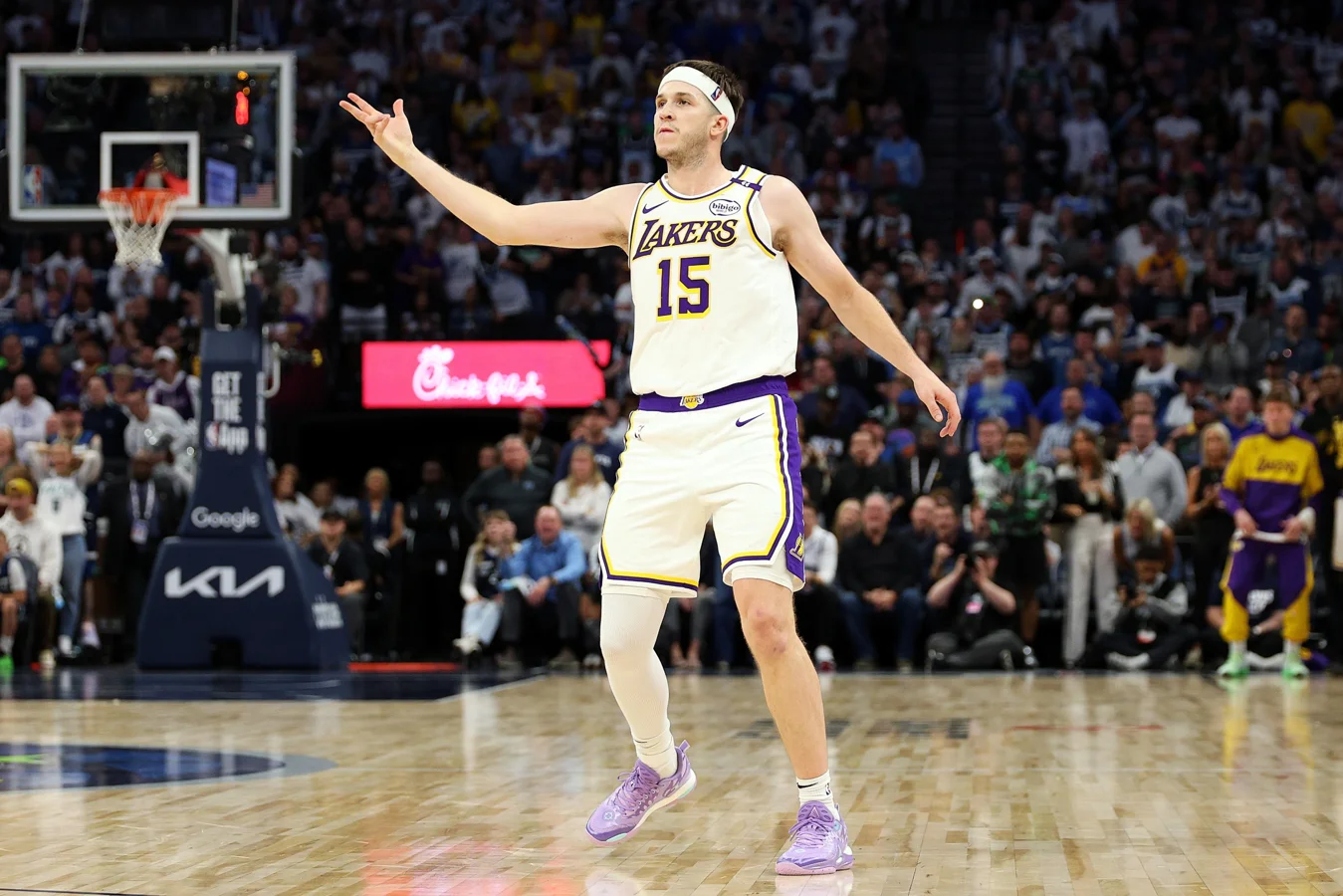

The Los Angeles Lakers are facing key roster decisions as they approach the 2025-26 NBA season with limited salary cap space, and one of the biggest developments is Austin Reaves declining a lucrative contract extension. Reaves turned down a four-year, $89.2 million offer, signaling that he may pursue a larger deal in the near future, a move that has stirred concern among Lakers fans about his future with the team.
General Manager Rob Pelinka is tasked with assembling a strong supporting cast around stars LeBron James and Luka Doncic, amidst challenging cap constraints. The team recently traded up to select Arkansas wing Adou Thiero with the 36th overall draft pick, a player chosen for his defensive potential and ability to improve their rim protection—areas where Doncic and Reaves have struggled.
Lakers Managing Star Contracts Amid Offseason Moves
Rob Pelinka’s offseason strategy revolves around navigating the contracts of the Lakers’ top players, particularly LeBron James and Austin Reaves. While negotiations with Luka Doncic are set for a later time and generally not a pressing concern, LeBron’s player option is expiring soon, leaving his next steps uncertain. Reaves, meanwhile, was expected to renegotiate his contract but instead declined the current max extension the team offered.

By rejecting the $89.2 million extension, Reaves begins the third year of his existing contract and retains a player option for the 2026-27 season, which provides him additional leverage in future negotiations. This decision opens the door for a potentially higher-value deal next year but also brings risks regarding his continued role and fan perception.
Lakers Fans React Strongly to Reaves’ Contract Decision
Austin Reaves’ refusal to accept the substantial extension has sparked a wave of reactions from Lakers supporters, many of whom fear he might follow the fate of Dennis Schroder, a former Lakers guard with a similar history. Schroder declined a max contract in 2021 but subsequently struggled to secure comparable earnings elsewhere. Since then, he earned only a fraction of what the Lakers had offered, making his case a cautionary tale.
Fans expressed skepticism about Reaves’ decision, pointing to Schroder’s experience as a warning for the young player, given the uncertainty of landing a better contract on the open market. Social media responses ranged from criticism of Reaves’ defensive abilities to doubts about his worthiness of a max contract, highlighting how much is at stake in his current holdout.
Despite the backlash, it is important to note that Reaves holds a stronger negotiating position than Schroder did. Reaves is still under contract with the Lakers, with leverage from his player option, and his development as a key contributor gives him more bargaining power in future discussions.
Potential for a Major Contract if Reaves Continues to Impress
Looking ahead, Reaves could secure a significantly larger contract if he maintains his growth and carves out an essential role on the team. According to ESPN analyst Bobby Marks, Reaves could command a five-year deal worth around $246.7 million next summer—nearly triple the current extension offer—with an average annual salary approaching $50 million.
This projected contract size reflects the rapidly increasing salary scales in the NBA and Reaves’ potential to become a vital teammate alongside Luka Doncic and LeBron James. While some may question Reaves’ value at this stage, the league’s inflation in player salaries could mean that this larger deal would represent good value for the Lakers if he evolves into a consistent high-level performer.
The Importance of Strategic Roster Building for the Lakers
As the Lakers prepare for free agency and potential trade opportunities, managing the contracts of cornerstone players like Reaves is crucial. Pelinka’s decision to draft Adou Thiero indicates a focus on shoring up defensive weaknesses, but future moves will depend heavily on how negotiations with Reaves and LeBron progress.
The outcome of these talks will have significant implications for the Lakers’ competitiveness in the coming seasons. If Reaves capitalizes on his leverage and earns a substantially larger contract, the team will need to make careful adjustments to balance their roster under the salary cap. Alternatively, if the contract discussions stall, the team risks losing a promising young player or diminishing fan support.
Ultimately, Austin Reaves’ contract situation embodies the challenges NBA teams face in retaining rising talents under tight financial constraints, and this ongoing saga will be closely watched by fans, analysts, and league insiders alike.
“Sources: Lakers guard Austin Reaves declined a max extension with the team earlier this week. Here’s what that means and why it shouldn’t be a surprise” —Dan Woike, Sportswriter