
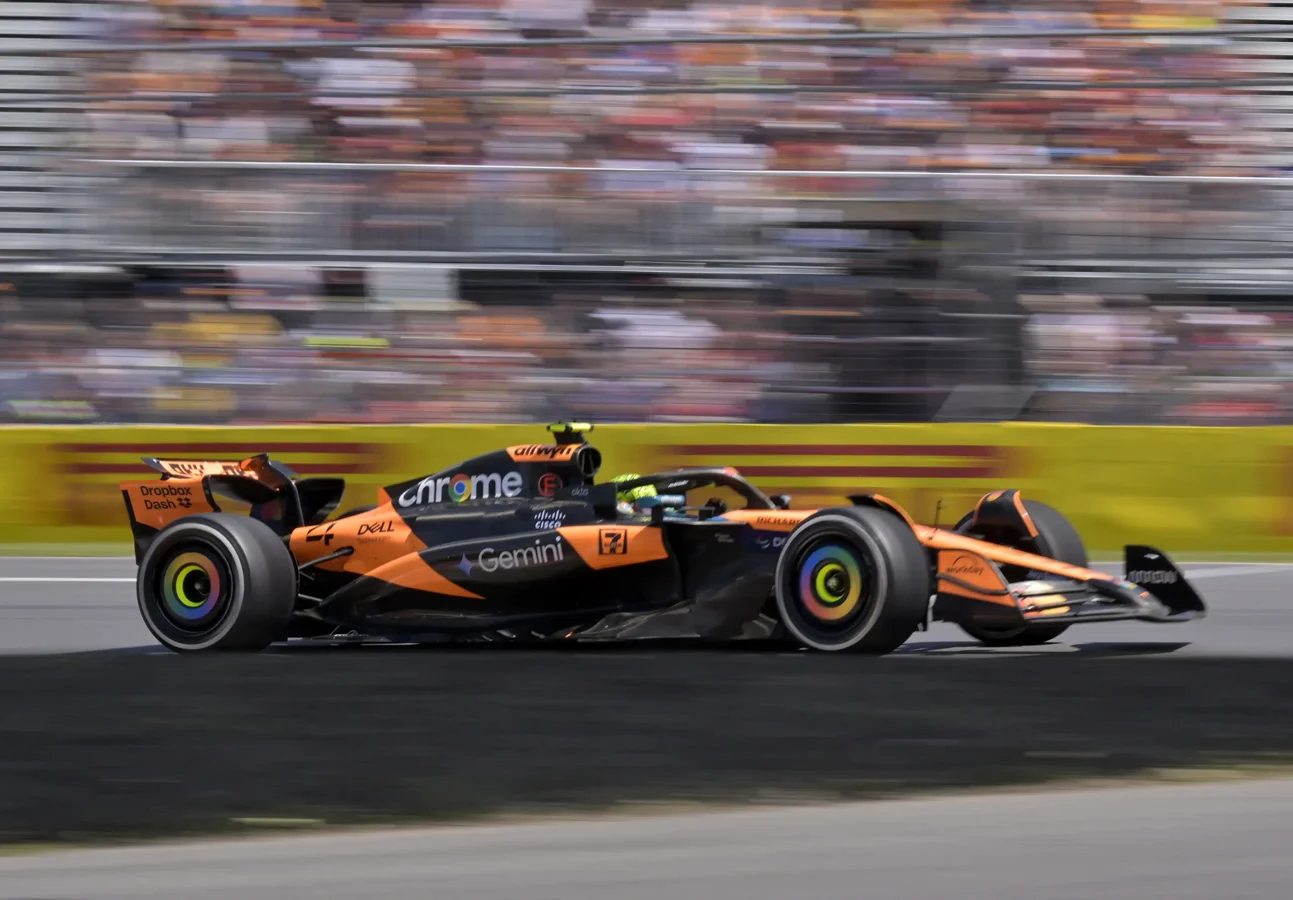

Lando Norris may have found a crucial breakthrough to his recent performance struggles with a brand-new suspension upgrade developed by McLaren for the 2025 Formula 1 season. The innovative modification focuses on improving the driver’s connection and responsiveness by addressing the sensitivity issues Norris has experienced while driving this year.
McLaren’s Solution to Norris’ Driving Challenges
After enduring difficulties adapting to the 2025 McLaren car, Norris’ performance woes appear to be easing thanks to a specially designed suspension setup tailored to his driving style. This new system aims to restore the rich feedback Norris felt with previous cars by enhancing his ability to sense and control the front end, which he previously struggled to feel this season.
The team introduced a visually distinct suspension on Norris’ car that differs notably from the standard front suspension configuration used by his teammate, Oscar Piastri. With slightly thicker upper suspension arms, the upgrade strengthens the connection to the wheel hub and is intended to refine the handling characteristics to better suit Norris’ preferences.
Technical Changes Focused on Precision and Sensitivity
Central to this suspension redesign is an increase in the caster angle, a subtle yet impactful alteration that improves steering feedback and weight transfer during cornering. This adjustment enhances how Norris feels the car’s movement, enabling quicker and more confident reactions on track. The refined linkage aims to provide Norris with the precise tactile information he had lost since moving from last season’s car.
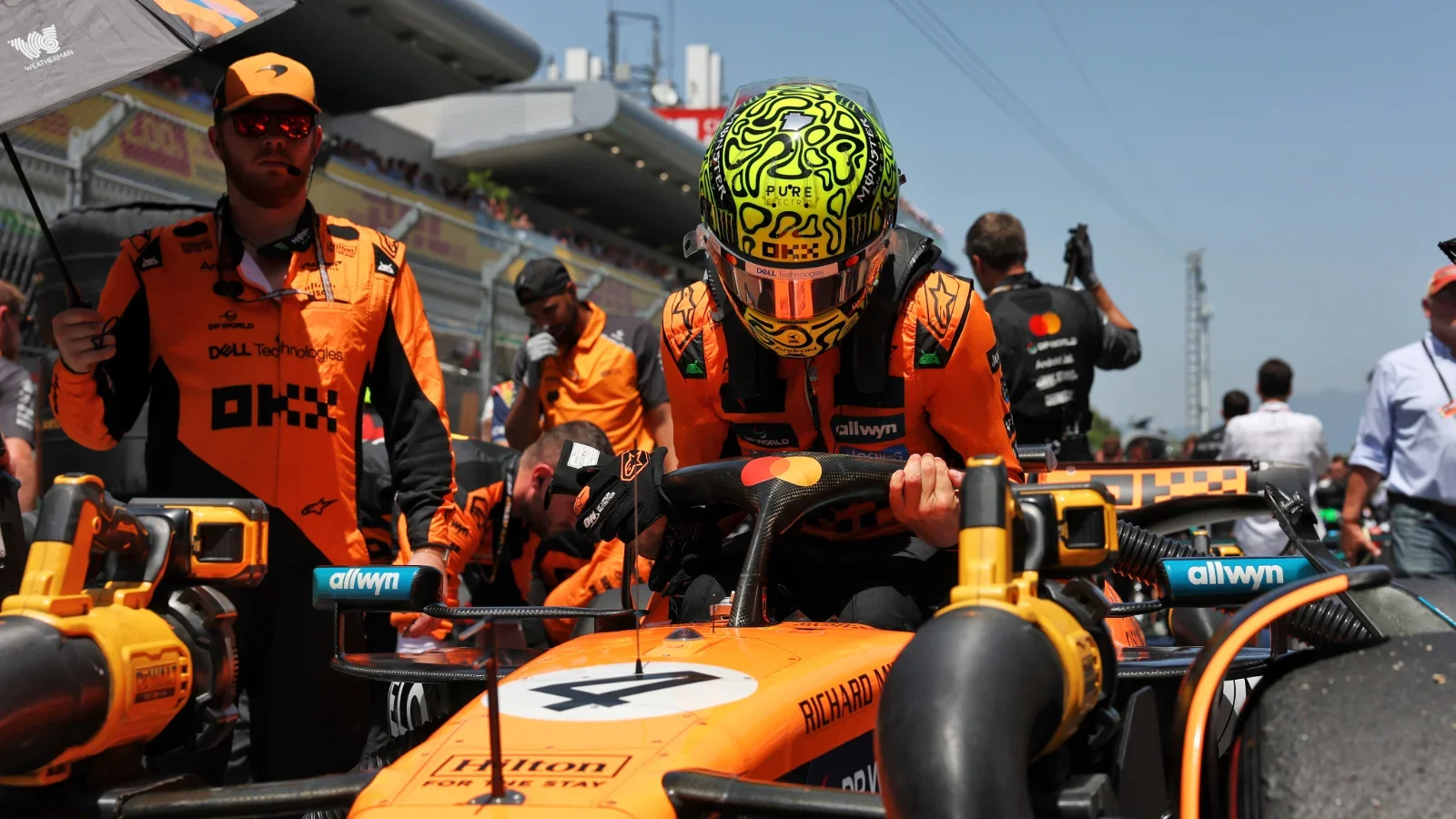
While Piastri tested the new setup during practice sessions in Montreal, he ultimately chose to retain the conventional suspension arrangement. In contrast, Norris’ willingness to adopt this innovative design demonstrates his commitment to adapting and extracting maximum performance from the car amid intense competition within McLaren and the wider field.
Norris’ Frustrations Highlight the Importance of the Upgrade
Speaking after the Bahrain Grand Prix, Norris openly admitted the difficulties he faced, explaining the disconnect he felt with the car last season compared to this year:
Something is not clicking between me and the car. I can’t navigate a lap as smoothly as I did last season. Before, I knew every turn, every move the car would make – how it would react. I felt in control. This year, I couldn’t feel more different.
—Lando Norris, Formula 1 Driver
This candid reflection underscores why McLaren prioritized this suspension upgrade to address his concerns about control and driving comfort, giving Norris a vital tool to regain confidence on track.
Future Prospects and Impact on McLaren’s Championship Aspirations
As the Formula 1 season progresses, all attention will be on Norris to see how effectively the suspension upgrade translates into improved lap times and race results. This technical innovation could be key in closing the gap to his teammate and rival drivers, potentially reshaping McLaren’s competitiveness in the championship battle.
McLaren’s efforts to customize their cars to suit individual drivers highlight a broader strategy of precision engineering and driver-focused development. For Norris, this upgrade represents more than just a mechanical change; it may be the catalyst that revives his racing form and pushes him toward higher podium finishes.
Ultimately, this development reflects the intricate balance Formula 1 teams must strike between cutting-edge technology and driver feedback, emphasizing how nuanced adjustments can determine success in a sport where milliseconds decide outcomes. Norris’ experience with this new suspension will be scrutinized closely as he strives to reclaim his confidence and deliver strong performances moving forward.