
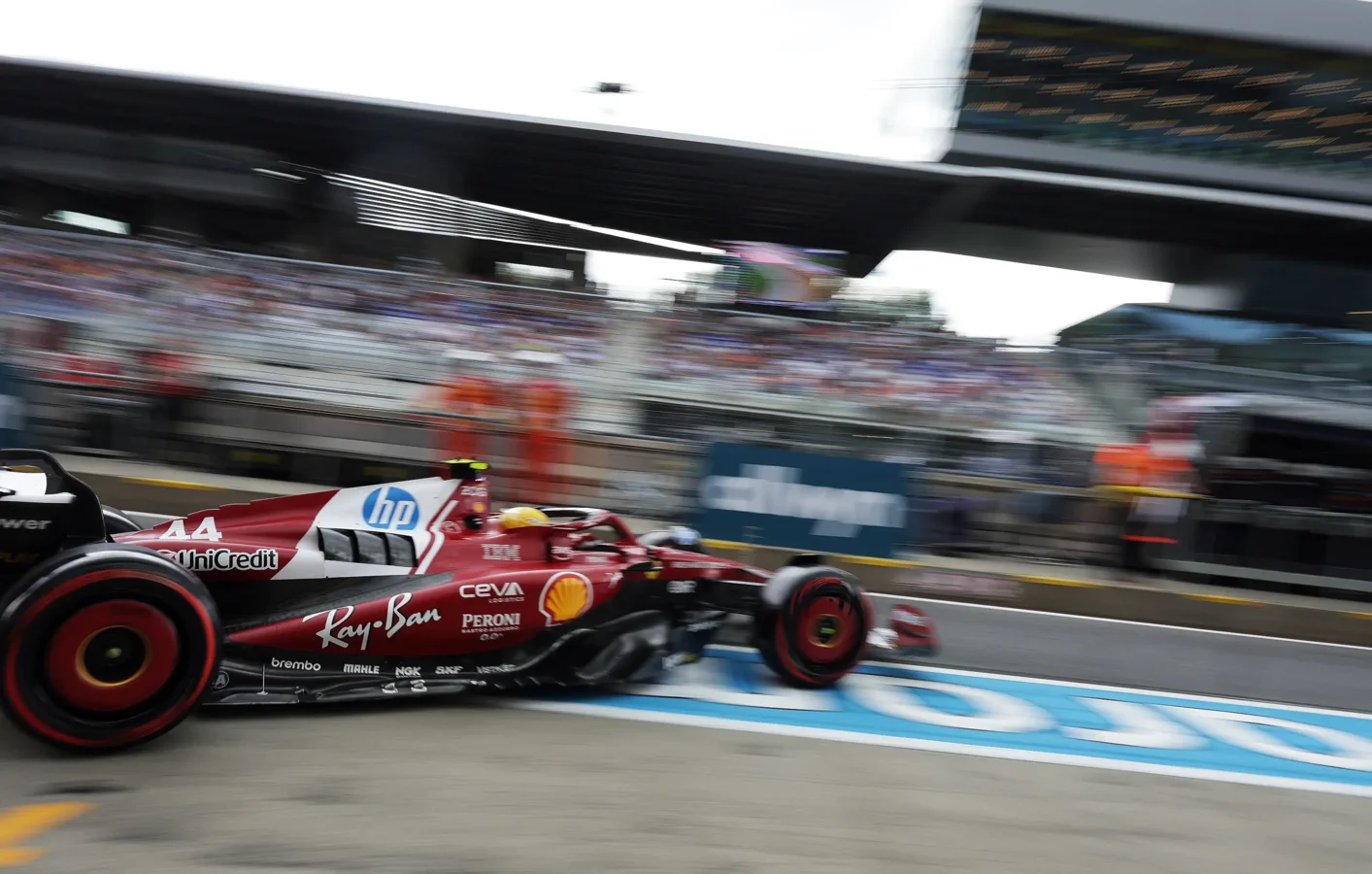

Lewis Hamilton’s first season with Ferrari in 2025 has fallen short of expectations, with limited success during the initial ten races. Despite securing a sprint race victory in China, the British driver has faced several unforeseen challenges that have delayed his adaptation to the team. As a result, Hamilton is shifting his focus toward a stronger comeback in the 2026 season, aiming to capitalize on new regulations and improvements within Ferrari.
Hamilton Opens Up About Adjusting to Ferrari’s New Environment
The transition to Ferrari has proven more complicated than anticipated for the seven-time world champion. Lewis Hamilton has highlighted difficulties integrating with the team’s personnel in Maranello, including friction with his race engineer. These unexpected hurdles have made it challenging for Hamilton, 40, to find his rhythm and deliver consistent results in his debut year with the Italian squad.
While the initial period was expected to require adjustment, Hamilton admits that the issues he encountered were not all predictable. He describes this season as a steep learning curve, emphasizing the complexity of adapting to a new constructor while managing unexpected technical and team-related setbacks.
“It’s definitely been an interesting season, we’ve learned a lot. I think definitely getting acclimatised to a new team is as to be expected. Of course, you can never expect the issues that you’re faced with through a season, so that’s always unexpected.”
—Lewis Hamilton, during Austrian GP media day
Focus Shifts Toward 2026 and Building a Strong Foundation
Despite the struggles during the current season, Hamilton remains committed to laying the groundwork for a more competitive performance next year. He stresses that his efforts are concentrated on internal improvements and strategic changes that Ferrari needs to implement for the 2026 regulations era. The British driver is prepared to accept the difficulties of 2025 while maintaining optimism about the team’s prospects in the upcoming campaign.
“I’m focused more, I would say, on changes in the background, foundation building stuff that we need to put in place in order to have a better 2026.”
—Lewis Hamilton
Hamilton’s realistic approach reflects his understanding that the current season is less important than preparing Ferrari to succeed under new rules. The 2026 season promises extensive changes to car design and competition structure, and success will depend on how well constructors adapt to these innovations. Hamilton hopes Ferrari can be among the teams that master these changes and regain their status as race winners.
Limited Optimism for Performance Boosts From Austrian GP Upgrades
Ferrari introduced updates to its car for the Austrian Grand Prix, aiming to spark improved results after a difficult start to the year. However, Hamilton remains cautious about the immediate impact of these modifications. While appreciative of the team’s attempts to enhance the vehicle, he does not expect dramatic performance shifts in the short term and is bracing for modest gains at best.
“You always want upgrades, so I’m grateful for every little bit, whether it’s a small or big piece. What I would say is don’t expect much change. Hopefully tomorrow we’ll find something that we didn’t expect, but again, we don’t really know, so we will find out tomorrow [and] hopefully it will be a step forward in the right direction.”
—Lewis Hamilton
This tempered outlook comes as Ferrari continues to face pressure from competitors like McLaren, who currently hold a stronger position in the constructors’ standings. Ferrari sits in third place, trailing teams that have adapted more successfully to the 2025 season’s challenges. Hamilton’s acknowledgment of this reality underscores the uphill battle Ferrari faces to reclaim dominance this year.
Analyzing the Broader Context and Team Prospects
Overall, Ferrari’s underwhelming 2025 performance is a clear indicator that much work remains to be done. Hamilton’s candid reflections reveal internal struggles and the complexities of his first year with the team, compounded by the ongoing technical battles within Formula 1. As Ferrari continues to develop upgrades and refine their approach, the focus has increasingly turned to the future rather than any immediate successes.
The 2026 season looms as a pivotal turning point, with new regulations offering opportunities to reshape team dynamics and car competitiveness. Hamilton, with his vast experience and competitive drive, has expressed readiness to lead Ferrari through this transformational phase and hopes to regain momentum alongside the team when next season begins.
Given Hamilton’s frank admission of the challenges faced so far and his transparent focus on rebuilding, Ferrari fans and analysts will be watching closely to see if these efforts materialize into a true resurgence. The next year offers a chance to transition from a difficult debut to a period of meaningful progress for both driver and team.