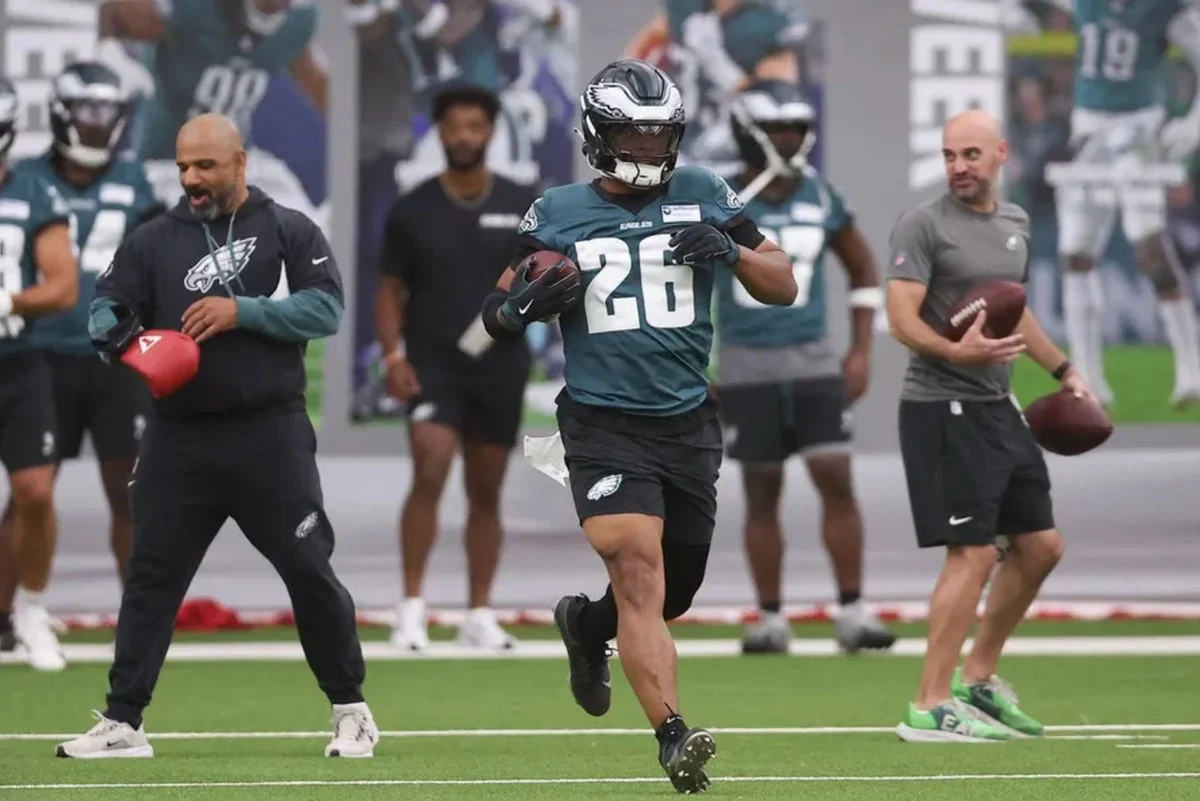
Saquon Barkley's incredible 2024 season raises regression concerns as he prepares for the 2025 NFL campaign.
Philadelphia Eagles running back Saquon Barkley delivered a simply unprecedented performance during the 2024 NFL season, shattering records and cementing his status among football’s elite. Barkley raced to a staggering 2,504 rushing yards, making him the only player in league history to exceed 2,500 yards in a single season including playoffs. Additionally, he established a new single-season yards-from-scrimmage record with 2,857 yards. These feats earned him a rare 99 rating in Madden 26, an honor previously unattained by any Philadelphia athlete.
His dominant year also powered the Eagles to a Lombardi Trophy victory, highlighted by five postseason touchdowns. Barkley’s presence on the field was so overwhelming that he became the centerpiece of Philadelphia’s offense, carrying the team through critical moments and earning adoration from fans citywide. Despite these achievements, the looming specter of regression challenges Barkley as he approaches the 2025 campaign, a situation familiar to many football greats after historic seasons.
High Workload Raises Concerns About Sustainability
The massive volume of playtime Barkley endured last season has analysts cautioning about an inevitable drop in production. Expert John Daigle discussed on the Ross Tucker Podcast how Barkley’s touches exceeded 460, a level of demand only matched in recent NFL history by DeMarco Murray. Daigle warned,
Image of: Saquon Barkley
“It was the most touches since DeMarco Murray actually led the league in touches for Saquon Barkley to reach 460 plus. It’s an absurd number how much they used him. He’s once again going to rival for the league and touches.”
He added a somber outlook for Barkley’s explosive ability,
“There will be regression in terms of his explosive touchdown runs. Like you just can’t naturally sustain.”
—John Daigle, Fantasy Analyst
The analogy Daigle drew compares Barkley’s heavy workload to driving cross-country without changing the oil—the machine will eventually falter. Although Barkley has relatively limited competition in the Eagles backfield, with Will Shipley as his only notable rival, sustaining this level of output year after year poses grave challenges.
Historical Patterns Warn of Potential Decline
Joining the exclusive 2,000-yard rushing club comes with its own set of hurdles, as exemplified by NFL history. Players like Adrian Peterson and Terrell Davis produced jaw-dropping campaigns but faced steep declines soon after. Peterson’s 2,097-yard run in 2012 was followed by a sharp drop to 1,266 yards in 2013 despite playing 14 games, while Davis’s miraculous 2,008-yard season in 1998 gave way to a career-ending knee injury that limited him to just 211 yards the following year.
Throughout NFL history, no player has replicated a 2,000-yard rushing season back-to-back. Barkley joined this elite group at the age of 28, becoming its second-oldest member after Barry Sanders, who ran wild at 29 before retiring shortly thereafter. Barkley also set a career-high with 345 carries in the regular season and 91 playoff touches, pushing the limits of any running back’s physical endurance.
Retirement Speculation Clouds Barkley’s Future
Adding to the uncertainty, Barkley’s recent comments comparing himself to Barry Sanders fueled retirement rumors. He hinted that his career could end abruptly, stating it might happen
“next year or [in] two years or four years.”
This ambiguity stirred discussion among fans and media alike. When pressed about Barkley’s future, Eagles head coach Nick Sirianni responded cautiously,
“Yeah, I guess anybody could do that, right? I just know he’s got a lot of good football left in him.”
—Nick Sirianni, Eagles Head Coach
Despite the coach’s diplomatic deflection, Barkley’s actions suggest he is taking his long-term health seriously. He eliminated offseason hill sprints in favor of mobility and core training, trusting veteran mentors like Marshall Faulk and Edgerrin James to guide him through a more sustainable workload. This strategic adjustment signals Barkley’s awareness of his body’s limits after the record-breaking, punishing 2024 season.
Adapting Training for Longevity Against Intense Demands
After minicamp, Barkley shared insight into his new approach to conditioning, saying,
“It wasn’t hard because everyone I trust told me to sit my a– down for a little bit.”
He is pacing himself strategically to extend his prime, rather than attempting to come into training camp in the same shape as a season’s peak. The shift reflects a quiet acceptance of the heavy toll an intense workload can have on a running back’s body and career.
Last season, Barkley was undeniably the fulcrum of the Eagles’ offense, often shouldering the burden when quarterback Jalen Hurts assumed more of a decoy role than an every-down dual-threat. Every critical short-yardage situation saw Barkley powering through the middle, and every postseason drive relied on his steady grind. Yet such reliance on a single player raises questions about the team’s capacity to mitigate risk and maintain performance in future seasons.
Balancing Barkley’s Role with Team’s Long-Term Viability
Most NFL running backs who achieve 2,000-yard seasons do not replicate those numbers, frequently experiencing shortened careers or a noticeable decline. Barkley’s injury history prior to joining the Eagles already sets a precarious precedent. Philadelphia’s coaching staff faces the challenge of balancing Barkley’s contributions with the need to manage wear and tear, but trimming his workload could affect offensive potency.
The dilemma for the Eagles now is whether they can afford to reduce Barkley’s touching opportunities in 2025 without compromising their offensive strategy. Barkley’s unique talents have defined the team’s success, but even a player of his caliber may be vulnerable to statistical regression and physical strain.
What Lies Ahead for Barkley and the Eagles?
Saquon Barkley’s extraordinary 2024 season has raised both hopes and doubts about his future trajectory. His historic production and role in winning a Super Bowl render him indispensable, while his workload and age highlight the risk of a step back. As Barkley embraces a modified training regimen under the mentorship of NFL legends and approaches another season carrying the pressure of high expectations, the question remains: can he sustain his remarkable form, or is regression inevitable?
Fans, analysts, and the Eagles organization will be watching closely as the 2025 season unfolds, eager to see if Barkley can defy history, avoid injury, and continue to carve his legacy among the sport’s all-time greats—or if the natural decline seen in past rushing legends will cast a shadow over his career.