
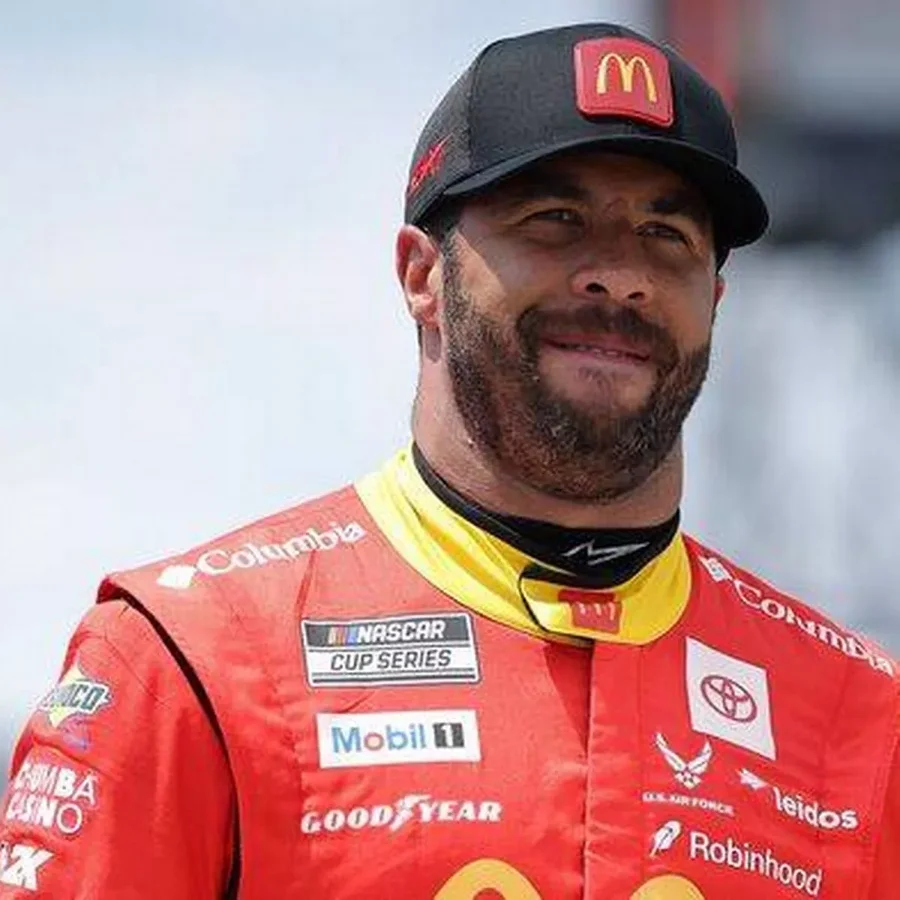

Bubba Wallace has publicly criticized the safety of spotter positions at certain NASCAR tracks, emphasizing serious visibility issues especially at complex road courses. Speaking after the recent race in Mexico City, Wallace described the current protocols as “unacceptable,” highlighting how spotters had no clear vantage point over turn one, putting drivers at risk.
Unlike traditional oval tracks where spotters enjoy an elevated and unobstructed view, road courses present numerous blind spots due to their layout and sharp turns, making it more difficult for spotters to track all on-track activity. Wallace pointed out that this problem requires multiple spotters to ensure full coverage and safety for drivers.
Wallace Condemns Inadequate Spotter Positions Following Mexico City Race
During a media session on June 27, Wallace criticized how spotters were positioned at the Mexico City race. He stated,
“Spotters into a turn one in Mexico, do you know where they were standing? You can’t see anything. So if we want to talk about safety and all this stuff, either say we’re not racing with spotters or get them in a position and make sure the area is safe for them to operate in to give us the safety and the protocols that we need.”[5:52 onwards]
Sticking them behind trees or behind banners or whatever is at this point where we’re at in the year is completely unacceptable,” he added.
Wallace’s concerns come as he prepared for the Quaker State 400 at Echopark Speedway, where he qualified 24th, one place behind teammate Tyler Reddick. The 260-lap race also launches the In-Season Challenge, pitting Wallace against Daniel Suarez of Trackhouse Racing, who qualified 31st.
Fans can watch the event live on TNT Sports at 7 PM ET.
Previous Visibility Challenges Experienced by Wallace’s Spotter at Gateway Raceway
Earlier this year, Wallace’s spotter Freddie Kraft detailed the difficulties of spotting at tricky tracks like Gateway. On the “Door Bumper Clear” podcast, Kraft explained how visibility problems affected his ability to effectively guide Wallace during the Enjoy Illinois 300. He confessed,
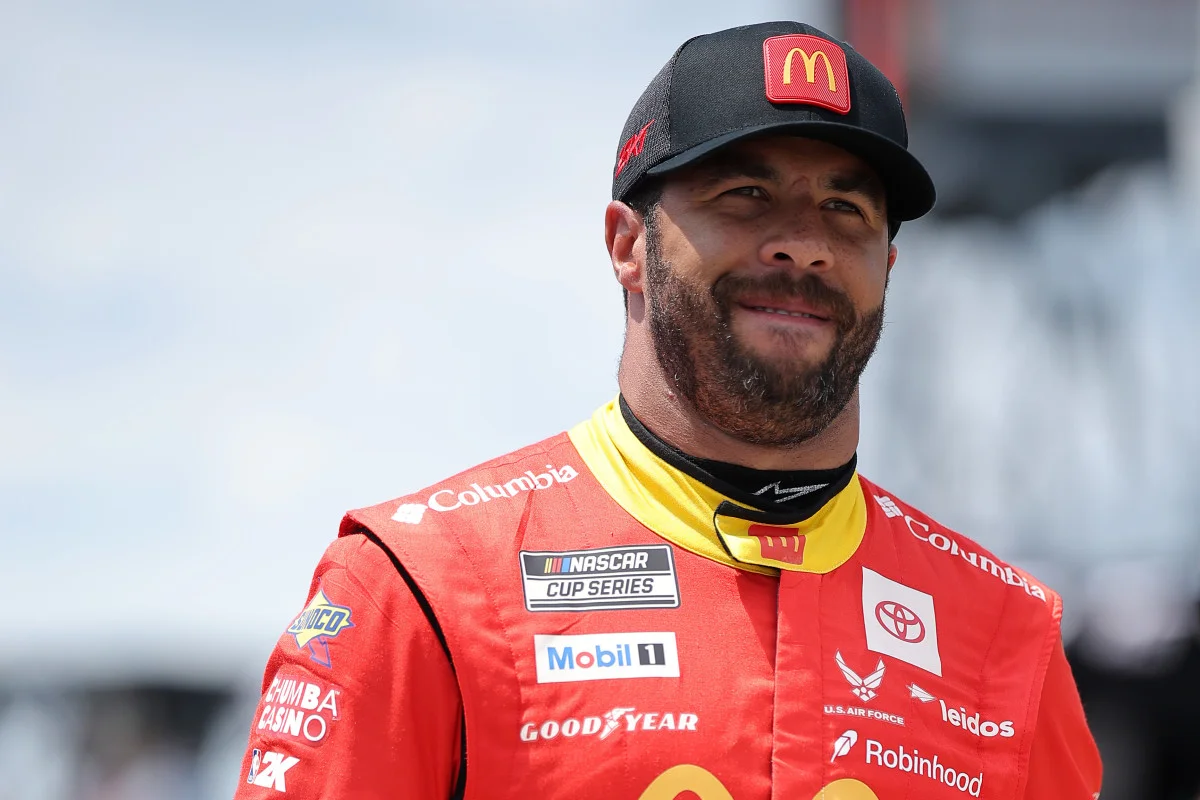
“In turn one is you lose kind of sight of your car…..and you can’t see the runs coming because they’re driving straight away from you. And you can’t see who’s got momentum and you can’t see who’s kind of getting ready to peak out,” he said. [15:28 onwards]
This created communication gaps that contributed to a challenging race, although Wallace managed to avoid wrecks and finished 21st despite starting in the top 10.
Spotting Issues Recur at Various Tracks, Prompting Multiple Spotters Use
Kraft also noted similar problems at North Wilkesboro Speedway, where infield vehicles blocked sight lines, making cars nearly invisible in certain sections. NASCAR faces comparable challenges ahead with the Chicago street course and Sonoma Raceway, where multiple spotters will likely be needed to cover extensive blind spots adequately.
These ongoing safety concerns highlight the urgent need for NASCAR and teams to reevaluate spotter protocols, aiming to improve visibility and driver safety on complex circuits as the season progresses.