

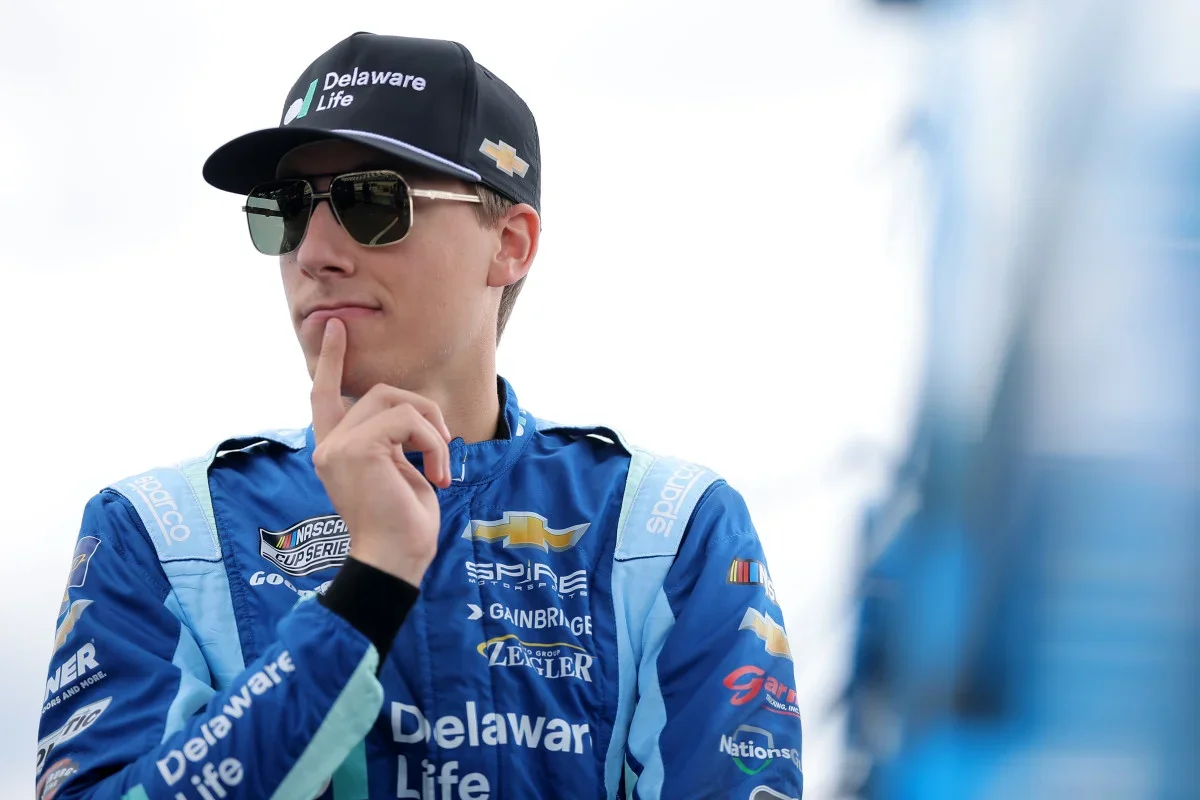
Carson Hocevar recently explored the long-abandoned Chicagoland Speedway, a significant site in NASCAR history that he never experienced active during his lifetime. The Portage, Michigan native visited the track near Joliet, Illinois, reflecting on its closure since 2019 and its impact on racing in the region, highlighting the relevance of his Carson Hocevar Chicagoland Speedway exploration.
Chicagoland Speedway, a 1.5-mile track similar to Kansas Speedway which opened the same year in 2001, has remained largely unused since its last NASCAR Cup event in 2019. Situated about an hour from downtown Chicago, the once-bustling track has joined other dormant venues, such as Rockingham Speedway, Kentucky Speedway, and Road America, which no longer host Cup races. Meanwhile, Auto Club Speedway in California has been demolished since its final race in 2023.
Hocevar’s visit came shortly after attending an event at the nearby Autobahn Country Club road course, just five and a half miles from the Speedway. Having flown over the track multiple times, the chance to see the facility in person left him visibly impressed despite its desolate appearance.
I drove over and walked in to see what it looked like up-close,
Hocevar said. It was cool to see it in-person. It’s kind of an eerie feeling (to see it shuttered), but I like going to check racetracks out.
I always find videos of people exploring abandoned stuff is cool, or even movies where they explore the prequels or whatever, where everything is abandoned. I think that’s cool. To me, (old) racetracks are less sketchy and cooler looking. I just like racetracks.
The Declining Role and Current State of Chicagoland Speedway
Since shutting down for NASCAR’s Cup events more than half a decade ago, Chicagoland Speedway’s usage has been sparse. Aside from a motocross race held in 2023 and occasional small-scale car shows, the venue has largely sat unused. NASCAR continues to own the property, which also includes the adjacent Route 66 Raceway dragstrip and a dirt track.
There had been rumors that Amazon planned to purchase the Speedway’s grounds to create a massive Midwest distribution hub. This plan would have consolidated with several other Amazon centers within a 30-mile radius, taking advantage of the site’s location near a large business park, an intermodal transport center, and Interstate 80. However, the pandemic and economic downturn caused Amazon to pause such expansions, effectively ending these plans.
At its peak, Chicagoland Speedway could host over 90,000 fans. Over time, due to dwindling attendance exacerbated by the 2007-2009 recession, seating capacity has been halved to around 47,000. Over its 18-year tenure, the speedway hosted numerous top-tier motorsports events, including 19 NASCAR Cup races, 24 Xfinity races, 11 Truck races, and various IndyCar and ARCA competitions.
Following the track’s departure from the Cup series, NASCAR encouraged Chicago to host a new street race downtown, marking the sport’s first foray into urban racing. Although the first two street races in 2023 and 2024 were challenged by poor weather and modest crowds, the event remains notable for attempting to fill the void left by Chicagoland Speedway’s closure.
Uncertainty Surrounds the Future of the Chicago Street Race and Possible Return to Chicagoland Speedway
The upcoming third Chicago street race, scheduled for next weekend, carries significant speculation as it could represent the event’s final running. Despite initial announcements of a decade-long contract between Chicago city officials and NASCAR, only the first three years are guaranteed, leaving the fate of this experiment uncertain. NASCAR has reportedly considered alternative street race locations including San Diego, Philadelphia, and several Canadian cities like Toronto, Vancouver, and Montreal.
With the Amazon deal for Chicagoland Speedway long dead and the facility mostly unused, discussions have surfaced regarding the potential resurrection of the speedway and its return to the Cup schedule if the street race ends. Chicago media outlets and racing fans have debated this possibility, which might gain traction if poor weather or low attendance negatively impact the upcoming race.
Hocevar expressed a hopeful yet pragmatic view on potential racing developments in Chicago, welcoming either the continuation of the street race or a revival of Chicagoland Speedway.
I have no idea of their schedule plan,
Hocevar said, referring to NASCAR’s future decisions regarding CLS and the street race.
I would bet the odds are very, very low of them existing together in the same year. There’s so many tracks you can name that hope they’re on the schedule.
Having a track in the same market basically within an hour of each other isn’t probably realistic. It would be cool, they’re two great racetracks, but I wouldn’t imagine that’s in the works. If it is, I’d be shocked, but if it was, it’d be a good surprise, but I don’t think so.
With NASCAR’s evolving landscape and the constant search for viable tracks and race formats, Chicagoland Speedway’s future remains uncertain but highly significant. Whether through reactivation or urban street racing, Chicago’s place on the NASCAR map continues to be a subject of considerable attention.