

This NASCAR season has seen significant changes in the Cup Series lineup, with Michael McDowell joining Spire Motorsports behind the wheel and other notable drivers stepping into new roles. Chase Briscoe now drives the No. 19 car for Joe Gibbs Racing, Riley Herbst has taken a spot at 23XI Racing, Connor Zilisch made his debut, and Shane van Gisbergen is embarking on his rookie Cup season. These shifts reflect a dynamic field as experienced drivers and rookies alike adapt to new teams and equipment.
Briscoe’s victory at Pocono, alongside Shane van Gisbergen’s win at the Mexico road course, marks them as the only first-time winners so far this year. Briscoe has openly discussed the challenges he faced in transitioning from Stewart-Haas Racing to Joe Gibbs Racing, emphasizing the adjustments required to handle faster, more competitive cars.
Adjusting Driving Styles to New Competitions
Briscoe revealed it took until the Coca-Cola 600 at Charlotte for him to overcome former driving habits where he underdrove due to previous equipment limitations. Learning to trust the enhanced capabilities of his new car has been a gradual process, requiring a change in instinct and confidence behind the wheel.
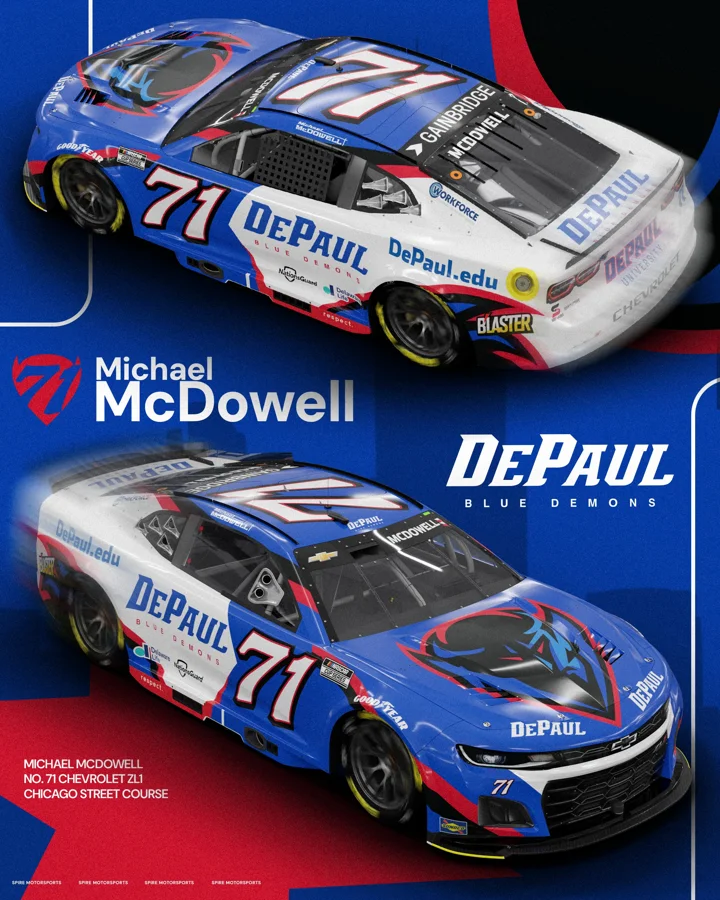
Michael McDowell offers a related but distinct view, now piloting the No. 71 Chevrolet. He underscores that adaptability depends largely on the driver’s ability to comprehend their car’s boundaries, absorb new information, and develop synchronization with their crew chief. This adaptation, he explains, unfolds over time as drivers test car behavior and refine their responses.
Reflecting on the constant evolution in NASCAR, McDowell said,
I feel like that’s every year; I feel like there’s always a rule change, there’s always a tire change, there’s always something changing, where you’re constantly having to push yourself to find that limit. With the limited practice, sometimes that’s hard to do.
—Michael McDowell, NASCAR driver
Insights from Past Opportunities and Top-Tier Experience
McDowell draws on his experience from 2011, when he raced six times for Joe Gibbs Racing in the Xfinity Series. This exposure to premier equipment gave him firsthand understanding of high-level competition and sharpened his awareness of critical moments like restarts and pit strategies.
He explained that competing in well-funded teams puts drivers in more frequent situations where racing skill and precise decision-making determine success. This environment allows for growth in execution under pressure, a vital component of winning.
A conversation with CBS Sports highlighted McDowell’s perspective on adapting to better equipment, inspired by Briscoe’s comments about learning to push his car harder. McDowell recalled,
I got the opportunity to drive for Joe Gibbs Racing. I think I had six races the first year, and my average start was fourth, and my average finish was third. So, granted, I didn’t get any wins in that year. But I just saw how big of a difference it quickly makes.
—Michael McDowell
He also pointed out,
But I also realized, too, that the guys that are winning and the guys that make it happen on those last green, white checkers, that execute their road perfectly, that execute the resource perfectly. It’s still really, really tough to win, even with great cars. You’re able to get more confident and comfortable executing those because you’re in that situation more often.
—Michael McDowell
Balancing Talent with Opportunity in Racing Success
McDowell emphasizes that talent alone is insufficient without the right vehicle and circumstances to capitalize on it. He noted,
Good race cars helps you be a better driver. I think if you’re a good race car driver and you get plopped into a good car, you’ll figure it out,
highlighting the synergy required between driver skill and car quality to secure strong results.
Through the 2025 season, McDowell has achieved one top-five finish and two top-ten results, currently holding 21st place in the driver standings. His experiences underscore the continual need for adaptability and precision in execution amid the ongoing changes and challenges in NASCAR.
As the season progresses, the ability to swiftly adjust to rule changes, equipment upgrades, and race conditions remains critical. Drivers like McDowell and Briscoe demonstrate that success hinges not only on raw speed but also on mastering the complexities of teamwork and strategy under pressure, shaping who will rise to victory in 2025.