

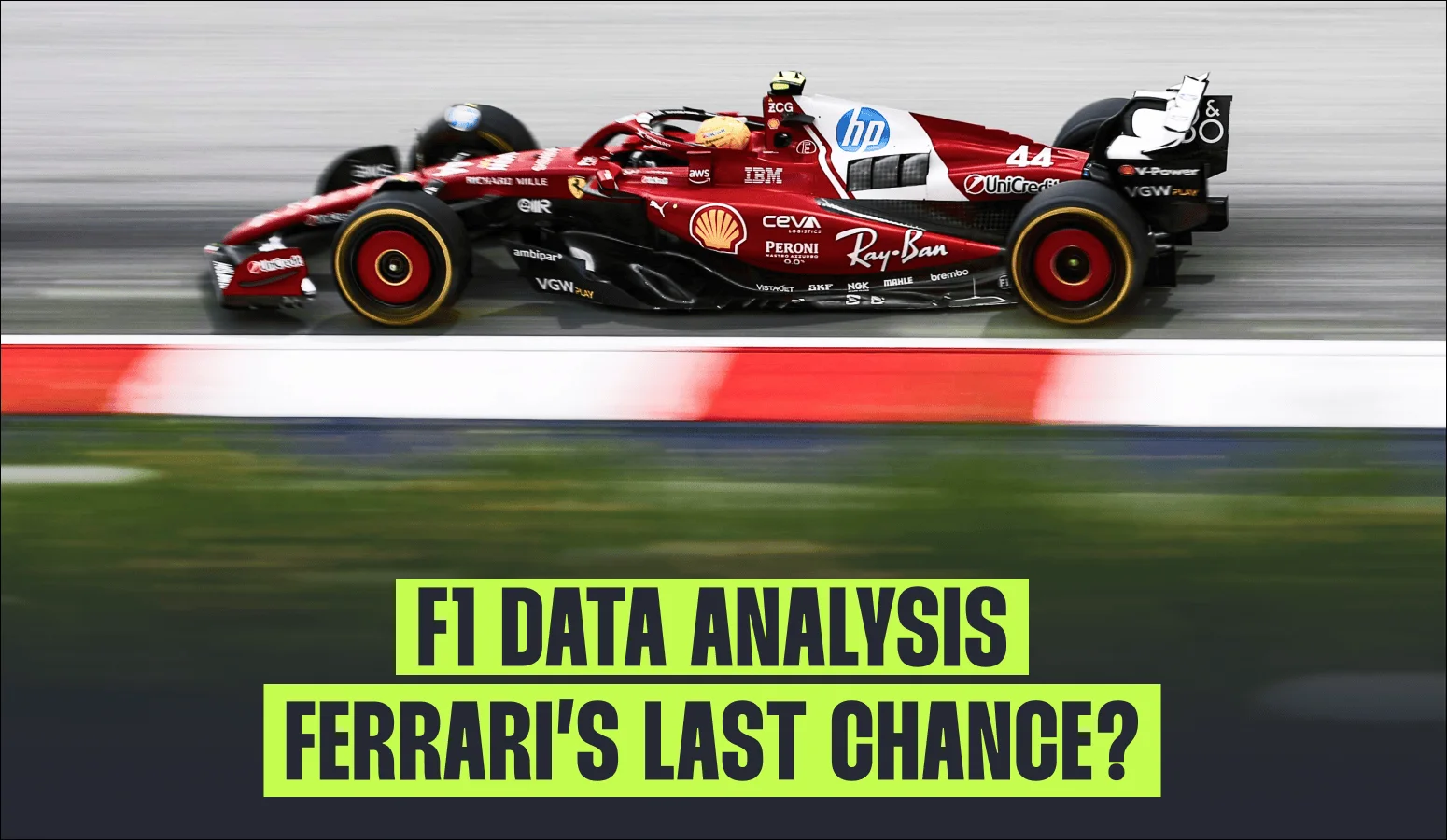
At the 2025 Austrian Grand Prix, Lewis Hamilton, a recent addition to Ferrari, started the race from fourth position, choosing a two-stop strategy as planned by the team. With 20 laps remaining, Ferrari instructed Hamilton to make his final pit stop, but the British driver resisted the order, creating tension over the pit stop call during the race.
Hamilton began the race strongly, maintaining his fourth place despite the chaotic first lap incident involving Kimi Antonelli and Max Verstappen. Once the early turmoil settled, the two McLaren drivers pulled ahead, while Hamilton and his Ferrari teammate Charles Leclerc held steady in third and fourth places.
Hamilton’s first pit stop occurred slightly after Leclerc and both McLaren drivers had completed theirs. By lap 45, he was comfortably in fourth place, seven seconds behind Leclerc, with George Russell further back in fifth by over 20 seconds.
When Leclerc made his pit stop, Hamilton temporarily moved up to third, but Ferrari quickly called him in for his final stop. Hamilton questioned the timing, noting that his tires still felt adequate, and wanted confirmation about whether his pace justified the pit stop.
“Is my pace really bad? Because the tires are fine,” said Hamilton as Ferrari asked him to box.
“We box now for the fastest race, optimal race,” responded the race engineer.
“The tires are okay, can I extend? How many more lap left?” asked Hamilton.
“Box box, 20 laps left,” responded the race engineer.
“I don’t want to stop, 20 laps left,” said the Briton.
Ultimately, Hamilton conformed to Ferrari’s directives and made the pit stop, returning to the track in fourth place without any immediate competitors close behind.
Previous Team Radio Conflicts Raise Concerns for Ferrari
Similar disagreements between Ferrari and its drivers have occurred earlier this season. At the Canadian GP, Charles Leclerc expressed frustration with Ferrari’s insistence on a two-stop race plan, which clashed with his desire to attempt a one-stop strategy. Lewis Hamilton also experienced friction during the Miami GP, where he requested the team to instruct Leclerc to let him pass.
Former Formula 1 driver Christian Danner recently commented on these ongoing disputes, advising the Ferrari drivers to avoid public arguments over team radio. He highlighted the risks of such exchanges being broadcasted and suggested stronger team leadership to halt these conflicts.
“Well, if I were team boss, I’d say, listen up, guys, I don’t want to hear any more of these arguments and smug remarks. That’s it. Order You simply make a fool of yourself if you constantly talk past each other.”
“If I know I’m going to end up on TV, then I have to think very carefully about whether I might not just press the radio button. And that would be my advice to everyone involved,” he added.
Danner emphasized that final decision-making authority should rest with the team rather than individual drivers, aiming for smoother coordination and less public discord.
Implications of the Pit Stop Dispute for Ferrari’s Race Dynamics
The friction between Lewis Hamilton and Ferrari over the pit stop call highlights the challenges of balancing driver input with team strategy in Formula 1. Hamilton’s hesitation to follow the pit timing reflects broader tensions between his race instincts and the team’s calculated decisions. As Hamilton adjusts to Ferrari’s environment, how this dynamic evolves could impact future races and team harmony.
Given the high stakes in championship points, Ferrari’s strategic calls and how well their drivers comply will be crucial. The Austrian GP incident serves as a reminder that even experienced drivers like Hamilton may push back when strategy and race feel do not align perfectly, raising questions about how Ferrari will manage their dual leading drivers going forward.