
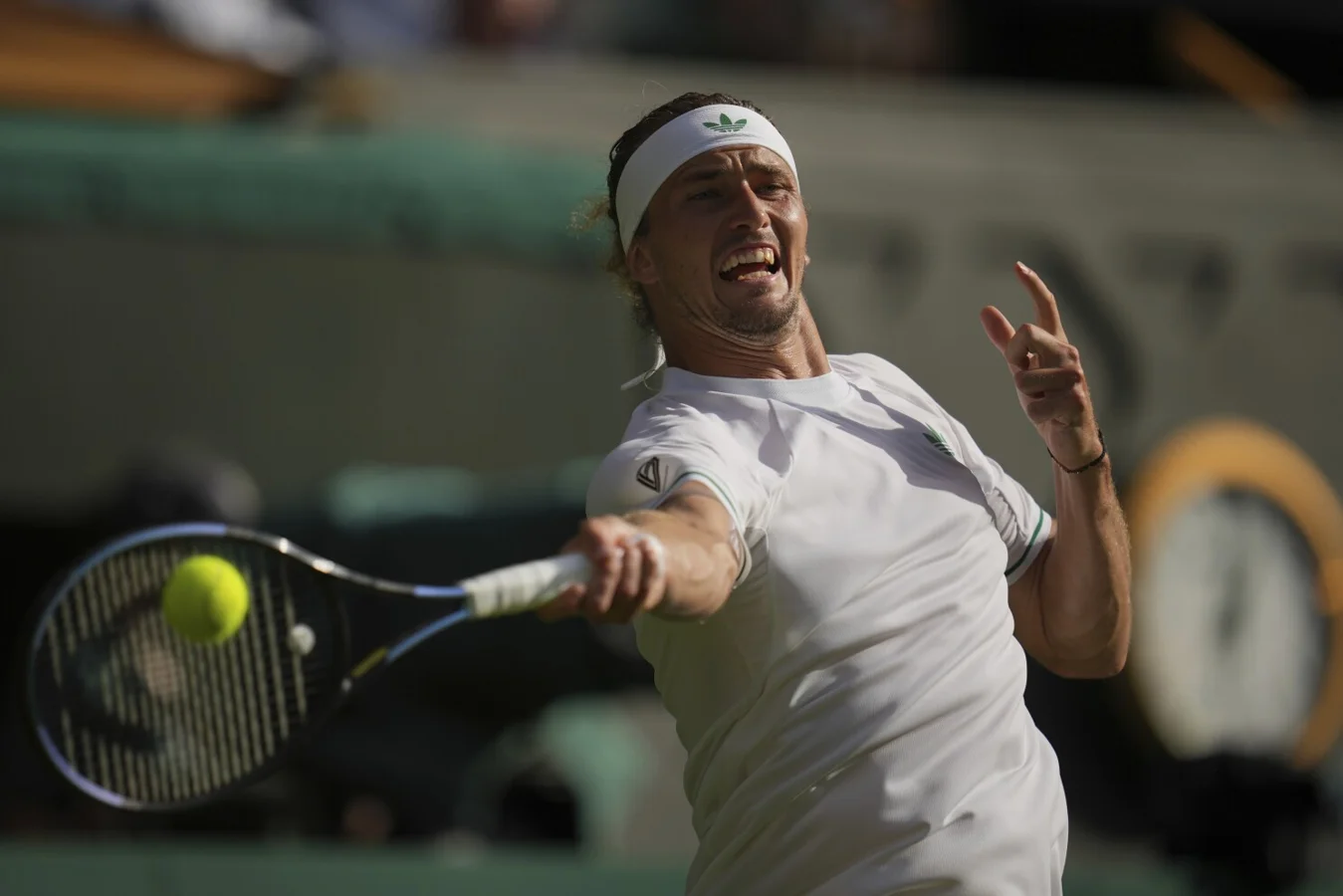

Ben Shelton entered the 2025 tennis season on a promising note but faced difficulties as he headed into Wimbledon, carrying a two-match losing streak on grass courts. Despite showing early potential, Shelton’s grass-court struggles have drawn attention, especially from former players like Boris Becker who have pinpointed key technical flaws affecting his performance.
Ben Shelton’s Mixed Start to the Grass-Court Season
After a solid start to the year, Ben Shelton made an impressive run to the semi-finals of the Stuttgart Open, where he was defeated by Alexander Zverev. This run helped him break into the ATP top ten for the first time, joining fellow Americans Taylor Fritz and Tommy Paul. However, Shelton could not maintain this momentum, losing in the first round at Queen’s to Arthur Rinderknech and suffering another early exit at the Mallorca Championships, where Learner Tien beat him in straight sets.
These back-to-back losses on grass indicated ongoing challenges adapting to the surface, which are especially critical as Wimbledon, the most prestigious grass-court tournament, approached.
Boris Becker Critiques Shelton’s Timing and Spin on Grass
Speaking on the Becker Petkovic podcast, six-time Grand Slam winner Boris Becker analyzed Shelton’s performance issues on grass courts. Becker highlighted Shelton’s physical attributes as ideal for the surface, calling him a “real thoroughbred athlete” standing at 1.95 meters and left-handed, which generally provides an advantage on grass.

However, Becker identified Shelton’s forehand as a key weakness. He described Shelton’s stroke mechanics as problematic, stating,
“He has an incredibly high loop. That’s why he often hits too late, he also has too much topspin for my taste.”
—Boris Becker
Becker elaborated that the fast pace of grass courts does not afford Shelton enough time to execute his forehand effectively, leading to mistimed shots. He added,
“He still needs to work on his forehand, and on grass, due to the speed of the game, he doesn’t have the time.”
—Boris Becker
According to Becker, Shelton’s forehand inconsistency negatively impacts his chances deep in tournaments, as he said,
“Needing time to find the forehand in the latter rounds is simply not good enough; that’s why you usually lose, but the foundation is there.”
—Boris Becker
Andrea Petkovic Highlights Shelton’s Large Backswing Problem
Joining Becker, co-host Andrea Petkovic shared her observations, suggesting that Shelton’s backswing on his forehand might be excessively large. She recalled a Wimbledon match last year against Jannik Sinner where Shelton struggled with timing, saying,
“I commented on the match between Ben Shelton and Jannik Sinner last year. That was, I think, the fourth round of Wimbledon. What I noticed, when someone like Jannik [Sinner] takes the ball very early on the line and plays very fast, then Ben Shelton is too late with his forehand.”
—Andrea Petkovic
Petkovic acknowledged that Shelton’s forehand is usually his strongest weapon but noted,
“Actually, the forehand is his weapon, but he has this huge backswing. I don’t know, technically, whether it’s almost too big.”
—Andrea Petkovic
Petkovic admitted that when Shelton connects perfectly, his forehand is extremely powerful, describing it as an “absolute bomb.” Nevertheless, she stressed that against top opponents, Shelton’s timing issues lead to inconsistent shots. She observed,
“I already found against [Alexander] Zverev in Stuttgart, when he plays against the top players, they get in there quickly.”
—Andrea Petkovic
She further explained that nervousness or fatigue causes Shelton to lose control, resulting in many mis-hit forehands,
“Especially when he’s nervous or tired, he plays half of his forehands [all over the place]. He didn’t take out a bit and play in first [gear], but instead he just kept hacking at it. Against Jannik last year, he needed 2.5 sets to find his rhythm on the forehand, then he became really dangerous. Then it went to a tiebreak and Jannik brought it home.
But 2.5 sets to find a forehand is just too long against the best in the world.”
—Andrea Petkovic
During that Wimbledon encounter in 2024, Shelton ultimately lost in three tight sets to the number one seed, Sinner, highlighting this ongoing challenge.
Ben Shelton’s Response After Narrow First-Round Victory at Wimbledon
Despite these difficulties, Shelton showed resilience in his opening match at Wimbledon 2025. He defeated Australia’s Alex Bolt in straight sets, 6-4, 7-6, 7-6, which marked a solid start to his Grand Slam campaign. After the match, Shelton expressed his appreciation for the crowd and relief at avoiding a long contest,
“Really happy, every time you get to play here at Wimbledon, it’s an honor, it’s an honor to play in front of you guys, I appreciate everyone for coming out.”
—Ben Shelton
He noted the challenge of facing an opponent who came through qualifying and praised the crowd’s support,
“I had a lot of five-set matches here last year, my first three matches were all five sets, it almost killed me. So to get through in three sets in the first round, I’m really happy. Especially against a guy like him, came through qualies, playing great on grass. It’s never an easy matchup; there are no easy matchups here at Wimbledon.”
—Ben Shelton
Shelton also reflected on playing left-handed opponents on grass, pointing to the difficulties caused by spin and pace:
“It’s really difficult. I lost to a lefty on grass last week. It’s always tricky with the different spin, he has a live arm, he can make the ball move in a lot of different ways, and as I said, he’s really accustomed to the grass, so there are a lot of challenges playing a guy like him here.”
—Ben Shelton
Finally, Shelton praised the unique atmosphere at Wimbledon and mentioned it as one of his favorite tournaments:
“I think the crowd helps a lot, I love playing at the Grand Slams, it’s my favorite… one of my four favorite tournaments, I can’t do my home Slam that dirty.”
“But one of my favorites 100%, I love playing here every year, there’s a lot of excitement, a lot of tension, but really happy with the way I played.”
—Ben Shelton
Looking ahead, Shelton is set to face Rinky Hijikata in the second round on Thursday, July 3, aiming to improve his performance on grass and build momentum after his challenging start to the season.
Implications of Shelton’s Grass-Court Difficulties and Future Prospects
Ben Shelton’s struggles on grass courts reveal critical areas for improvement, particularly his forehand timing and shot selection under pressure. As Boris Becker and Andrea Petkovic have detailed, the need to shorten his backswing and reduce heavy topspin could be vital for Shelton to achieve success on this surface.
Given Shelton’s physical advantages and talent, addressing these technical issues could elevate him beyond his current top ten ranking. His ability to perform better in upcoming grass tournaments like Wimbledon will likely determine his trajectory and potential to break into the sport’s elite level.
For now, Shelton’s first-round victory at Wimbledon suggests he is building confidence, but how he adapts to the fast-paced demands of grass remains a central question for his 2025 season and beyond.