
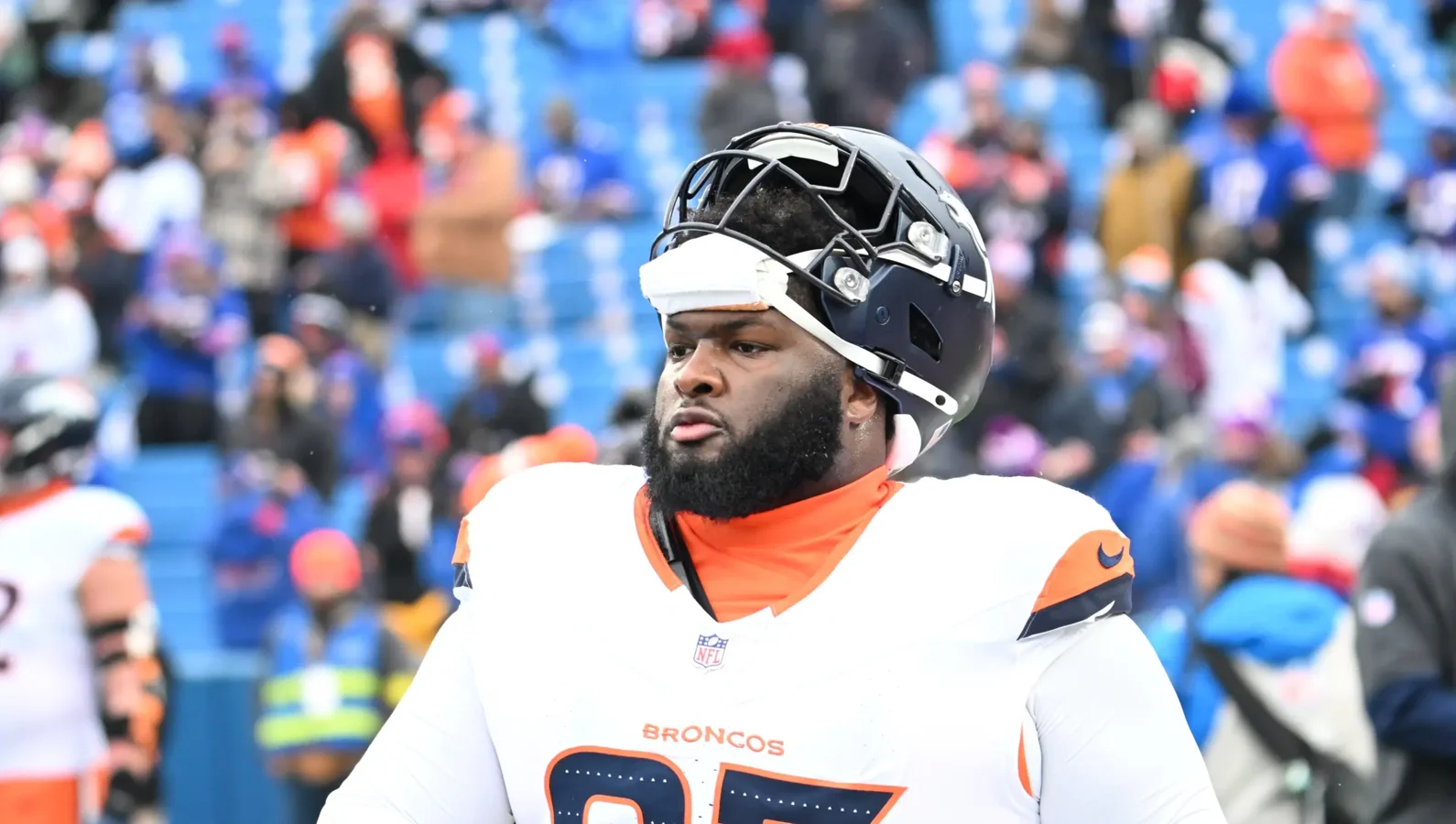

The Denver Broncos have dramatically improved their defense, ranking eighth in the NFL after finishing 31st last season. This notable advancement reflects their growing depth and talent on the defensive line. Yet, the team still faces a significant obstacle with the absence of a traditional nose tackle, a key position in their 3-4 defensive alignment. D.J. Jones is leading the charge to compensate for this deficiency, aiming to help the Broncos maintain and build upon their defensive success.
Challenges Arising From the Lack of a True Nose Tackle
In a 3-4 defense, the nose tackle typically anchors the interior line, often weighing over 330 pounds and capable of handling double-team blocks while controlling two gaps. Although D.J. Jones and Malcolm Roach contribute solidly, neither fits the classic nose tackle profile. Jones, recognized as a strong run defender, does not possess the ideal size or two-gap capability, especially against double teams. Despite these limitations, Jones’s performance last year earned him a contract extension, underlining his value to the team.
The Broncos’ run defense showed strength through much of the last season, ranking among the NFL’s best. However, lapses did occur, often linked to failures in gap control or missed assignments, emphasizing the collective responsibility in defending the run. To address these issues, Denver has bolstered other defensive positions, specifically linebackers and safeties, to support the line’s efforts.
Maximizing Defensive Flexibility for Improved Performance
The Broncos are banking on the versatility of players like Jones and John Franklin-Myers to enhance their defensive front. Last season’s playoff loss exposed gaps in their edge rush strategy, partially due to the inconsistent play of Jordan Jackson. This season, Franklin-Myers’s ability to line up in various positions, coupled with the anticipated development of Sai’Vion Jones, provides Denver with more tactical options.
Deploying multiple versatile defenders on the line could allow the Broncos to field a more formidable front against strong running attacks. Players such as Jones, Roach, Franklin-Myers, and Allen can be rotated into key roles, especially during critical running situations or when confronting aggressive offenses. While this strategy might compromise some pass-rushing capability by limiting the roles of Nik Bonitto and Jonathon Cooper, the Broncos trust their resilient secondary to compensate.
Franklin-Myers and Allen are expected to take on increased pass-rushing responsibilities, with Sai’Vion Jones adding necessary depth as he continues to develop. This adaptable approach could mitigate the impact of the Broncos’ nose tackle vacancy.
Room for Growth Despite Defensive Success
Even after ranking third in fewest rushing yards allowed last season, the Broncos recognize significant opportunities for improvement in run defense. Their performance against the Kansas City Chiefs—holding the opponent to a mere 27 rushing yards—exemplified their capability. Nevertheless, the team allowed over 100 rushing yards in nine games, including a particularly concerning 210 yards against the Buffalo Bills during the playoffs. These inconsistencies underscore the ongoing need for a true nose tackle to enhance run-stopping reliability.
Although Denver lacks a prototypical nose tackle, their current personnel and strategic adjustments provide the means to minimize this weakness. The Broncos are focusing on refining their gap integrity and assignments while leveraging player versatility to strengthen the overall defense.
D.J. Jones and the Future of Denver’s Defensive Identity
As the Broncos move into the new season, D.J. Jones stands as a pivotal figure within a defensive unit confronting significant challenges but equipped with talent and adaptability. His leadership on the line, together with strategic coaching and player growth, offers hope that Denver can further solidify its defensive presence. Continued effort and adjustments will be essential for the Broncos to maintain their elevated defensive rankings and to compete successfully in key matchups throughout the season.
“One avenue for improvement lies in the Broncos’ ability to leverage the versatility of their defensive players.” —narrative description
“Franklin-Myers and Allen are poised to shoulder a heavier load in pass-rushing duties, especially if they find themselves in a pinch.” —narrative description