
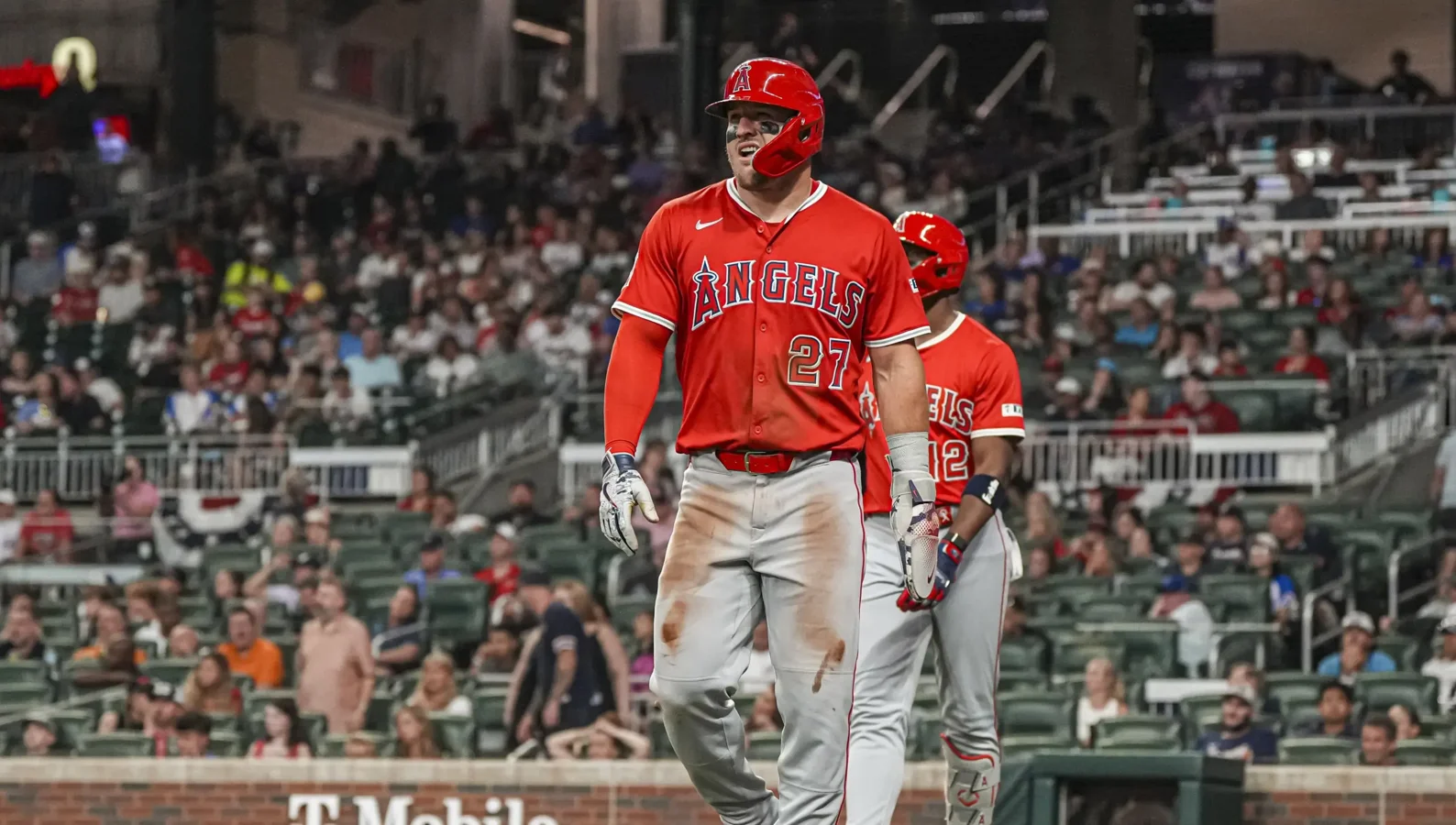

The Los Angeles Angels are engaged in a tense balancing act as they compete for a Wild Card berth and the division crown. Amid this unexpected surge, the team faces tough decisions about whether to trade veteran players or maintain a youth-driven strategy for the future. At the heart of this debate is Mike Trout, the franchise’s star outfielder whose future remains shrouded in uncertainty due to widespread trade speculation.
Mike Trout’s Recent Injury Struggles and Performance Metrics
Now 33, Trout has been hampered by a series of injuries over recent seasons, which have impacted his game. Although he has returned to action this year, his current batting average of .230 falls short of the elite numbers he once posted. Nevertheless, advanced statistics reveal a more complex picture: Trout ranks in the 90th percentile for expected weighted on-base average (xwOBA), expected slugging percentage (xSLG), average exit velocity, and hard-hit rate. These indicators suggest that despite subpar traditional stats, Trout’s underlying performance quality remains robust.
Trade Discussions Hindered by Contract Terms and Trout’s Consent
The prospect of trading Trout has been raised, yet the Angels’ general manager has ruled out such possibilities at this time. Trout’s contract, which guarantees over $200 million through the 2030 season, features a full no-trade clause, requiring his approval for any move. There is no sign that Trout is willing to waive this clause or consider a trade. Addressing the rumors, the general manager said,
No, there is no possibility of trading Trout… unless something changes dramatically, the answer will be the same.
—General Manager
This firm stance underscores the franchise’s desire to retain Trout not only for his on-field impact but also for his valuable leadership and respected presence within the organization. As the Angels pursue postseason contention, his veteran guidance is regarded as a critical asset.
Prospects for Trout’s Return to Peak Form and Team Strategy
Looking ahead, Trout’s advanced hitting metrics indicate his bat speed and ability to generate hard contact have not diminished meaningfully. With continued recovery and adjustment, there remains hope he can regain elite performance levels as he moves forward in his career. The Angels find themselves at a strategic crossroads: weighing the immediate benefit of trading established veterans against the long-term gain of holding onto a player of Trout’s stature and experience.
As the trade deadline looms, the Angels must decide how to best craft their roster for both present competitiveness and future success. Trout’s role and contributions will be pivotal in shaping these plans, with the organization striving to strike a balance between rebuilding momentum and veteran leadership as they aim to break their postseason drought.