
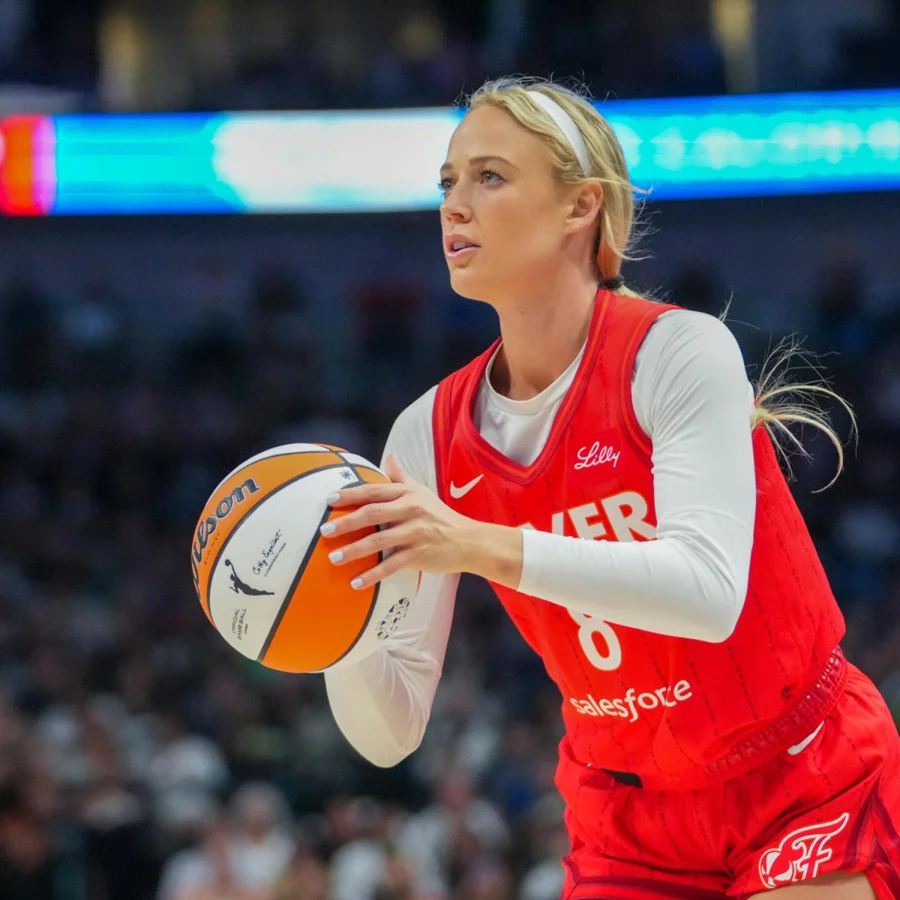

The WNBA is currently experiencing a surge in attention, partly driven by star Caitlin Clark’s rising fame, which has coincided with the league revealing plans to add new teams. In 2024, the league announced that it will introduce franchises in Cleveland, Detroit, and Philadelphia by 2030, bringing the total number of WNBA teams to 18 once combined with previously confirmed expansions in Portland and Toronto.
Cunningham Voices Reservations Over Certain Expansion Locations
Despite the enthusiasm surrounding the league’s growth, Sophie Cunningham, a key player for the Indiana Fever, expressed reservations about some of the new cities, particularly Detroit and Cleveland. Cunningham questioned whether these locations will truly generate excitement among players and fans, suggesting that other cities might be better suited for WNBA expansion.
I also think you want to listen to your players, too, like, where do they want to play? Where are they going to get excited to play and draw fans?
Cunningham said.
Miami would’ve been a great one, Nashville is an amazing city, Kansas City — amazing opportunity with a huge arena downtown that no one’s using.
She highlighted Kansas City’s success with its professional women’s soccer team and signaled caution about expanding the league too rapidly. Her comments, especially those about Detroit and Cleveland, sparked controversy in the cities mentioned.
Controversy Erupts Over Comments on Detroit and Cleveland
Cunningham didn’t mince words when expressing doubt about fan engagement in Detroit and Cincinnati. She remarked,
I don’t know how excited people are to be going to Detroit or Cincinnati,
she stated.
Her statement implied skepticism about the turnout in Cincinnati, especially with the WNBA’s new focus on Cleveland, questioning whether fans would be motivated to attend games.
These remarks quickly drew criticism from Detroit officials and supporters, prompting a strong defense of the city’s sports culture and history.
Detroit Counters With Historic Attendance and Sports Credentials
Detroit responded by highlighting its strong sports legacy and previous WNBA success, notably with the Detroit Shock. The city’s official social media pointed to several impressive statistics to challenge Cunningham’s claims:
The last time we were home to a WNBA team (Detroit Shock) we ranked top five in attendance for five straight seasons, No. 1 in attendance for three straight seasons and set a single-game attendance record of 22,076 fans at Game 3 of the 2003 WNBA Finals,
the statement read.
Additionally more than 775,000 people were excited to come to Detroit for the 2024 NFL draft. Detroit is a sports town. We’re sure we’ll see the same excitement for the WNBA returning.
This spirited rebuttal underscored Detroit’s proven ability to support professional women’s basketball and its status as a passionate sports market.
Future of WNBA Expansion and Player Reception in New Markets
Although the Detroit franchise will not take the court until 2029, the tension sparked by Sophie Cunningham’s comments adds an unexpected layer to the league’s expansion story. How Cunningham will be received when she eventually plays in Detroit remains to be seen, but this exchange highlights the complexities involved in growing the WNBA while addressing player preferences and fan bases.
The league’s decision to expand into these markets demonstrates confidence in basketball’s increasing popularity, yet balancing player input and market potential will likely be a continuing discussion in the years leading up to the new teams’ debuts.