
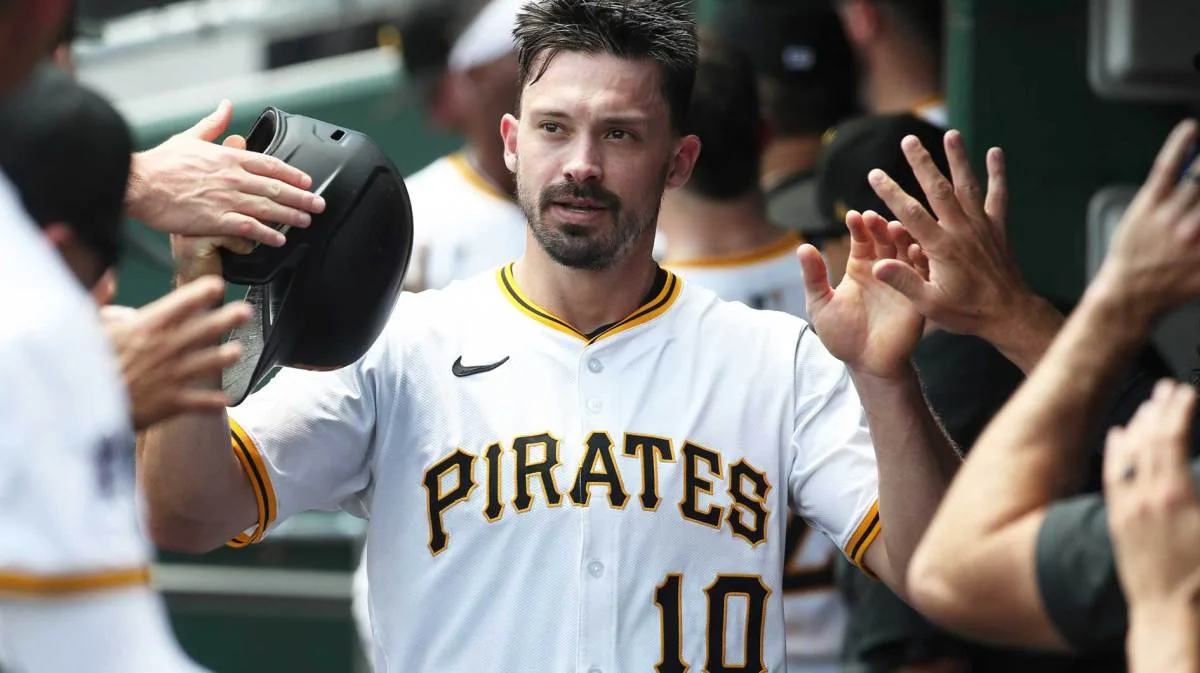

The Kansas City Royals’ ongoing search for outfield solutions has reportedly led them to express interest in Bryan Reynolds of the Pittsburgh Pirates, according to Ken Rosenthal of The Athletic. While the Bryan Reynolds trade rumors have drawn attention, discussions remain in the early stages, and Kansas City is also considering other hitters to address its persistent offensive issues.
Kansas City Pursues Outfield Improvements as Struggles Continue
The Royals have struggled for years to find reliable production from their outfield, and their need has become even more pronounced this season. Kyle Isbel and Drew Waters have received the most playing time among Kansas City’s outfielders, yet both currently possess a wRC+ of just 66, highlighting severe underperformance at the position. A recent two-year contract with Hunter Renfroe failed to pay off, as he was released, while promising Jac Caglianone is still acclimating to major league play. The longtime experiment with MJ Melendez ended with his demotion to the minors. This lack of offensive depth in the outfield has contributed to a lineup that heavily relies on Bobby Witt Jr. and, to a lesser extent, Salvador Perez and Vinnie Pasquantino.
The Royals lineup, beyond a strong season from Maikel Garcia, presents multiple weaknesses. Entering the second half, Kansas City holds a .243/.298/.364 team line and an 81 wRC+, which ranks ahead of only the White Sox and Rockies in MLB. Despite the problematic offense, the Royals have managed to stay 5.5 games out of a playoff spot, primarily because of their pitching staff’s performance. An offensive upgrade—such as Bryan Reynolds—could be a key factor in rejuvenating Kansas City’s postseason chase.
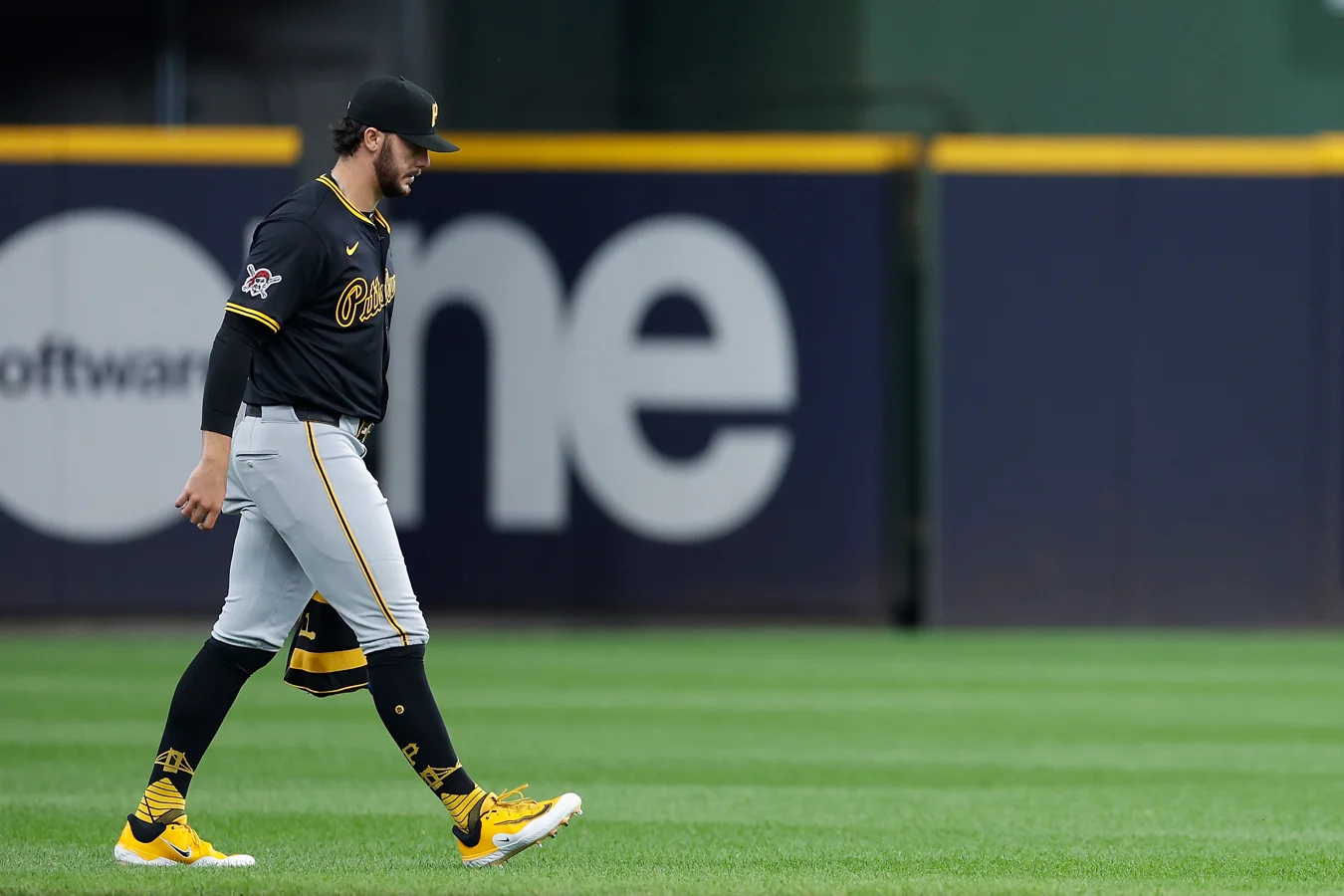
Bryan Reynolds Remains a Fixture in Pittsburgh Amid Uncertainty
Bryan Reynolds, now 30 years old, has been one of the faces of the Pirates franchise, delivering consistent results even as the club’s fortunes have faltered. Just over two years ago, the organization invested in Reynolds with a significant seven-year, $100 million extension—marking the largest contract in Pittsburgh’s history. Despite his contributions and the symbolic status of his contract, Reynolds’ name has surfaced in continued Bryan Reynolds trade rumors as the Pirates languish with a 38-50 record, sitting nine games out of a playoff berth and positioning themselves as likely sellers at the trade deadline. Reports suggest that almost all players are options in trade talks this month, except for Paul Skenes and Andrew McCutchen, who are considered untouchable.
Reynolds’ production this season has declined compared to his career averages. Entering 2024, his career slash line sat at .276/.352/.470 with a wRC+ of 121, but his current numbers have fallen to .237/.301/.393 (with a wRC+ of 90). As a player who has never been known for elite defense, his value is closely tied to his output at the plate—making the current dip especially concerning for both the Pirates and interested teams. Underlying statistics offer a more nuanced view: despite the decline in surface-level data, Reynolds has set career highs with a 49.1% hard-hit rate, a 91.8 mph average exit velocity, and an 11.5% barrel rate. The drop in his batting average on balls in play, down to .295 from a career .328, hints at possible bad luck rather than a notable loss of skill, raising the question of whether a rebound is imminent.
Financial Hurdles and Public Opinion Complicate Potential Deal
The Pirates’ willingness to entertain offers for Reynolds does not guarantee movement. The financial side is fraught with obstacles. Reynolds’ extension still has five years and $76 million owed after this season (counting a buyout on a 2031 club option), with about $80 million total left should a trade occur near the deadline. For a budget-conscious franchise like Pittsburgh, moving such a significant commitment off their books could be attractive, especially if this season is seen as a lost cause. However, dealing Reynolds would likely be unpopular with a frustrated fan base, particularly given the size and recency of his deal.
From a baseball operations standpoint, selling on Reynolds now could be disadvantageous. Trading him amid a down year risks relinquishing an asset at a low point in value. If Pittsburgh chose to retain a portion of Reynolds’ contract in return for a better prospect haul, the team would also shoulder the public relations hit of paying a cornerstone player to succeed elsewhere. Additionally, with few credible bats in the Pittsburgh lineup—38-year-old Andrew McCutchen leads qualified hitters at a wRC+ above 102—losing Reynolds could further diminish the Pirates’ already limited offensive firepower. The club is banking on its impressive collection of young pitchers, like Paul Skenes, to drive future contention, but the challenge of replacing Reynolds’ bat would complicate any immediate plans for improvement.
Kansas City Faces Familiar Free Agency Obstacles and Financial Risks
While Kansas City generally spends more on player salaries than Pittsburgh, the organization is far from a league leader in payroll. The Royals’ recent efforts to lure outfielders Anthony Santander and Jurickson Profar in free agency were unsuccessful, partially because of financial structuring and, potentially, the inability to finalize sizable deals. Santander’s deal with the Blue Jays, for instance, spanned five years at a nominal $92.5 million, though deferrals reduced its present value to around $70 million. Profar ultimately signed a three-year, $42 million contract with Atlanta. Despite their failed attempts, the Royals are showing continued determination by pursuing switch-hitters like Reynolds as potential solutions.
Taking on Reynolds’ contract—at $80 million over five-plus seasons—would be one of the largest moves in franchise history, topped only by Bobby Witt Jr.’s extension. Such a commitment would require significant financial maneuvering, especially after recent struggles to secure deals in the range required to sign players like Santander or Profar. Furthermore, Reynolds holds the right to block trades to six teams, though it remains unclear if Kansas City is among the restricted clubs. For the Royals, obtaining a proven track record at the plate is tempting, given their persistent outfield woes and lack of success bringing in free agents willing to accept their offers. However, budget constraints may ultimately make a trade for Reynolds as unlikely as their winter pursuits.
Pirates’ Perspective: Balancing Long-Term Vision with Immediate Needs
Pittsburgh’s current predicament involves weighing immediate relief from Reynolds’ financial commitment against the consequences of losing a proven producer in the lineup. Despite their status as sellers and a pitching core that could facilitate a turnaround by 2026, the Pirates face a talent crunch among position players. With Maikel Garcia and other emerging bats producing well below star levels, the loss of Reynolds might set back rebuilding efforts and disappoint fans already weary after years of struggle.
The front office must calculate whether moving Reynolds makes sense against both the backdrop of internal budget realities and the jeopardy it presents to their on-field identity and future competitiveness. The decision is complicated by the optics of possibly absorbing salary to move Reynolds and by the scarcity of impactful bats within the organization. As both the trade deadline and the season approach their climaxes, the Pirates are unlikely to find an easy resolution.
Market Dynamics Slow Progress on Major Trade Talks
Even if all parties express cautious interest, major hurdles persist. The Royals’ persistent efforts to strengthen their outfield—whether through trades or free agency—have met with repeated obstacles, and the organization will need to assess if this opportunity represents a rare means to acquire talent unavailable through typical channels. For the Pirates, however, the short-term savings must be measured against both reputation and the risk of further stunting their offense. Meanwhile, the market for sellers is thin, which could embolden Pittsburgh to seek a significant return or, conversely, to hold firm on their asking price and ride out a difficult season with Reynolds still on the roster. The situation is fluid, with neither club able to force progress without risking major financial and competitive downside.
What Comes Next for Bryan Reynolds, Royals, and Pirates
The Bryan Reynolds trade rumors underscore a larger dilemma for both the Royals and the Pirates as the trade deadline approaches. For Kansas City, upgrading a faltering outfield could potentially transform their postseason outlook, yet financial limitations and prior failed pursuits cast doubt on their ability to finalize such a move. For Pittsburgh, any decision to part with Reynolds must weigh immediate monetary relief and prospect returns against the longer-term impact on both public perception and organizational direction. With both sides facing significant hurdles and few easy answers, the saga appears far from resolution—leaving future outcomes hanging in the balance as the baseball season presses forward.