
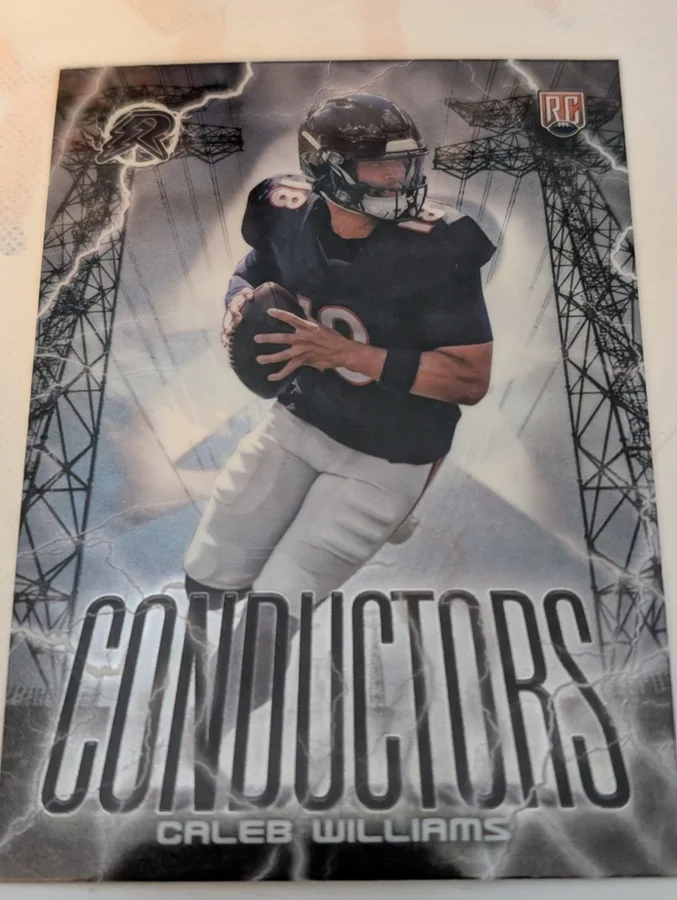

The outlook for Caleb Williams as a quarterback in 2025 has become a central storyline after a tumultuous rookie year, as the Chicago Bears seek a turnaround amid a surge from Jayden Daniels and the historic 2024 rookie quarterback class. With every member of the top rookie group facing pivotal seasons, the development and fortunes of these young passers will help define the <a href=”https://www.buzzineintl.com/category/football/nfl/”>NFL landscape through the upcoming year.
A Groundbreaking 2024 Rookie Quarterback Class
Last season delivered one of the most remarkable quarterback draft classes in NFL history, not only due to talent but also thanks to the unprecedented presence of former Heisman winners at the top. Caleb Williams was selected first overall by the Bears, followed closely by Jayden Daniels joining the Commanders. The Patriots made Drake Maye their pick at number three, setting up a rare streak with quarterbacks occupying the first three selections—an event seen only once before since the turn of the century. As Michael Penix Jr. went to the Falcons at number eight and <a href=”https://www.buzzineintl.com/tag/j-j-mccarthy/”>J.J. McCarthy joined the Vikings at ten, five quarterbacks landed in the top ten, a feat matched only by the legendary 1983 group which included Hall of Famers like John Elway, Jim Kelly, and Dan Marino. The streak continued with Bo Nix being chosen twelfth by the Broncos, capping off an extraordinary run that set high expectations.
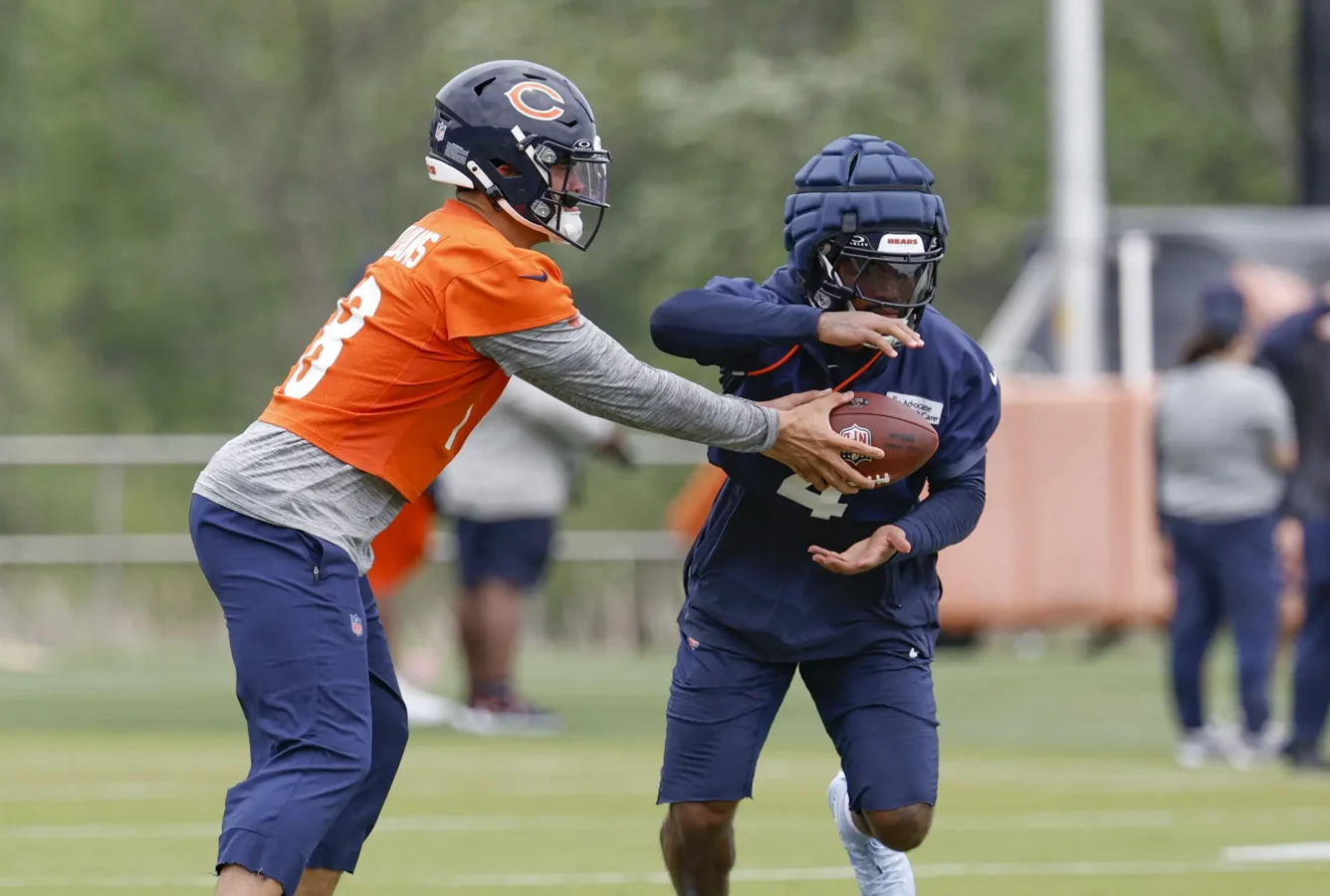
While it’s still far too early to begin making proclamations about Hall of Fame potential or labeling any of these quarterbacks as busts, the class produced plenty of highlights and challenges during their first season. Each of the top six now enters 2025 as a starter for their respective teams, all aiming at postseason contention but carrying significant uncertainties. Among these rising stars, Williams remains the focal point due to the Bears’ many pressing questions and the tantalizing prospect of a rebound in his sophomore season.
Caleb Williams: Addressing Sacks, Deep Passing, and New Opportunities
When Ben Johnson took over as head coach, he provided insight into how the Bears plan to measure success in the passing game, signaling a shift in analytical priorities for the offense.
“The EPA [expected points added] in the passing game is really one of the most critical factors in determining wins and losses right now,”
Johnson explained at the NFL owners meetings.
“That’s probably changed over the last five years or so. I would have said five years ago turnovers, takeaways, that was No. 1. From what I understand now, EPA for the passing game has now surpassed that. Whatever team has the higher passing game EPA at the end of the game, they generally win that game over 80 percent of the time. It’s a huge stat.”
—Ben Johnson, Bears head coach
The expected points added (EPA) metric has overtaken turnovers as the leading predictor of success, incorporating factors such as down, distance, field position, and time remaining, and assigning value based on the likelihood of a team’s scoring. For Williams, EPA reflected a season of growing pains. Only Anthony Richardson and Will Levis had a worse impact on expected points added in 2024. The most glaring issue for Williams was the sheer number of sacks—he was brought down 68 times, which led the league by a wide margin and resulted in Chicago losing an estimated 108 points in EPA from sacks alone, the second-worst season on record after Bryce Young’s 2023 debut.
Breaking down individual plays illustrates the effect of these negative outcomes. During a pivotal Week 3 matchup versus Houston, the Bears trailed 16-10 late in the third quarter and faced a manageable third-and-one at the Texans’ 41-yard line. The play unraveled as Williams was sacked by Will Anderson Jr., leading to an abrupt end to the drive and costing the team an estimated 3.3 points according to EPA, changing the complexion of an eventual 19-13 loss.
The root causes weren’t always easily attributed to the rookie quarterback. In this particular situation, the Bears’ offensive line left Williams exposed, with Braxton Jones failing to counter the rush and Cole Kmet unable to pick up the assignment, resulting in a fierce blindside hit. These breakdowns resurfaced throughout the season, making it difficult for Williams to function within the offense, whether he was attempting to execute plays on time or improvising on broken plays.
The Bears have responded by turning to Johnson, who previously oversaw a strong pass protection system for Jared Goff in Detroit, and bolstered their offensive line with strategic additions. Chicago traded for Joe Thuney and Jonah Jackson, and signed Drew Dalman, all intended to upgrade an interior line that struggled badly in 2024. Williams also endured the NFL’s highest rate of quick pressures, further complicating his transition into the league.
Beyond protection woes, the Bears struggled to maximize explosive plays through the air. Williams completed only 22 of 80 attempts on throws traveling at least 20 yards downfield, with over 41% of those deep passes failing to even offer his receivers a realistic opportunity to make a play. Out of all NFL quarterbacks, only Mac Jones posted a lower rate in this regard, yet Chicago continued to emphasize deep shots, leading the league in attempts while achieving little success.
The difficulties were compounded by coaching and organizational issues. Despite being highly regarded, Chicago proved to be a challenging environment for Williams. The lack of basic fundamentals, including film study guidance, left him unprepared for the complexity of NFL defenses. As a result, Williams spent much of his rookie season looking uncomfortable, vacillating between playing too rigidly within structure and resorting to improvisation that often led to negative plays.
The 2025 season brings renewed hope that Johnson’s coaching acumen and the reconstructed offensive line will offer Williams a genuine opportunity to showcase his arm talent and improvisational skills, but the onus is also on Williams to adapt. Avoiding sacks, improving deep-ball accuracy, and thriving within the offensive structure are pivotal for his development. Notably, Williams demonstrated some encouraging signs amid an otherwise rocky debut: he posted one of the lowest turnover-worthy throw rates among all quarterbacks, a significant accomplishment given his adverse surroundings, and showed a knack for scrambling when the pocket allowed.
Williams’ partnership with Johnson will be crucial in the coming year. As the infrastructure now appears to be in place, the Bears’ trajectory may depend on how quickly Williams can adapt to a new system and reduce the negative plays that derailed many promising drives last season. If he succeeds, his immense natural abilities and arm strength could become difference-makers as Chicago competes to keep pace with an ascending class of rivals.
Jayden Daniels: Fine-Tuning After A Standout Debut
Jayden Daniels’ first campaign for the Washington Commanders was remarkable, earning immediate recognition as one of the greatest rookie quarterback performances ever. Daniels combined veteran-level composure with the physical gifts that won him the Heisman, while consistently making sound decisions against NFL defenses.
The areas for improvement in his second year are more about refinement than correction. Although Daniels showed solid accuracy overall, his in-pocket precision lagged behind his outside-of-pocket prowess. At 11.2% off-target rate from the pocket, Daniels ranked near the bottom third among NFL qualifiers, missing makeable throws especially during a stretch affected by a rib injury and matchups where he was confined to the pocket. For example, against the Steelers and during his limited appearance against the Cowboys in week 18, Daniels was less effective when unable to escape pressure.
Despite these minor lapses, Daniels shattered records with 75 scrambles, outpacing every other NFL player since 2000. Film study suggests even more yardage might have been possible had he maintained downfield focus longer on some rushes, suggesting further room for growth as a dynamic rusher and a passer.
In the offseason, the Commanders prioritized fortifying their tackle positions by adding Laremy Tunsil and rookie Josh Conerly, improvements that promise cleaner pockets for Daniels. With Kliff Kingsbury returning as offensive coordinator and continuity preserved in the scheme, there’s every reason to anticipate an even more productive year in 2025 for Daniels, now viewed as both a star and a potential MVP contender.
Drake Maye: Learning Amid Turbulence and Growing Promise
Drake Maye found himself in difficult circumstances with the New England Patriots but still managed to provide glimpses of a bright future. His 47.4% success rate placed him 17th among qualifiers, similar to Sam Darnold’s output in Minnesota, and dramatically better than Jacoby Brissett’s rate within the same New England system. Maye’s improvisational skills and mobility also shone through, as his 45 scrambles and 407 rushing yards placed him among the NFL’s best scrambling quarterbacks, even in limited action.
Despite these bright spots, Maye’s passing displayed classic rookie volatility. He threw 10 interceptions and posted a 12.1% off-target rate, and when his passes missed, they often did so by a wide margin. Importantly, coaches saw teachable mistakes—throws into tight windows and attempts at deep connections—rather than a complete lack of touch or vision. Maye’s playing style features echoes of a young Josh Allen, mixing arm strength and athleticism with the occasional erratic decision-making.
The Patriots addressed offensive deficiencies by acquiring tackles Will Campbell and Morgan Moses, center Garrett Bradbury, and wide receiver Stefon Diggs, creating a more stable environment for Maye’s development. While inconsistency will likely persist as he matures, fans can anticipate more sustained offensive drives, exciting runs, and continued flashes of high-ceiling potential in Foxborough this season.
Michael Penix Jr.: Harnessing Arm Strength and Play Action Skills
Penix Jr. appeared in only five games with three starts, but he managed to show off his formidable arm strength. The learning curve remains steep, as Penix suffered from elevated inaccuracy with over 13% of his throws off-target in a small but telling sample. Drops by Atlanta receivers exacerbated his numbers, with turnovers resulting directly from failed catches.
Offensive coordinator Zac Robinson, who comes from the Sean McVay coaching philosophy, is expected to introduce greater use of play action, a key area where Penix’s performance is under evaluation. Though not a prolific runner, Penix offers enough athleticism to occasionally threaten defenses with movement, and expanding his comfort in play action could unlock a higher level of production as the Falcons seek to solidify their quarterback situation for the future.
J.J. McCarthy: Targeting the Middle and Showcasing Versatility
J.J. McCarthy’s NFL prospects remain something of an unknown. At Michigan, he benefited from exceptional protection, a powerful rushing attack, and a staunch defense, but missed all of last season due to injury. Now, Kevin O’Connell has a clear vision for his quarterback: effective play-action passing, especially over the middle of the field to top receivers Justin Jefferson and Jordan Addison, within a Vikings system noted for its frequent play-action and under-center snaps.
McCarthy excelled at attacking the field between the numbers in college, consistently hitting passes for strong yardage. However, the speed and complexity of NFL defenses mean passing windows are tighter and decision-making must be instantaneous. Observers are also interested to see whether O’Connell devises ways to take advantage of McCarthy’s athleticism, which was sometimes underestimated by college opponents but could be a valuable weapon in the pros.
Bo Nix: Improving Efficiency Outside of Play Action
Bo Nix exceeded expectations for the Denver Broncos, finishing his rookie year with 29 touchdowns to 12 interceptions and demonstrating a remarkable ability to avoid negative plays—the third-lowest sack rate in the NFL behind veterans Josh Allen and Derek Carr. Yet, Nix still finished just 20th in EPA per dropback, putting him in the league’s middle tier alongside experienced but non-elite starters like Aidan O’Connell, Kirk Cousins, and Joe Flacco.
The Broncos increasingly relied on play action to boost Nix’s output, as performance metrics such as EPA, sack rate, and success rate showed an uptick in those situations. For example, with play action, Nix logged a 0.11 EPA per dropback versus 0.00 without it, and took sacks on only 1.8% of such plays compared to 5.0% otherwise. However, in situations where play action was less effective—such as during a playoff blowout loss to the Bills—Nix’s productivity diminished and his propensity to take sacks on delayed plays grew.
This mirrors concerns present during his college scouting days: Nix thrives when operating quickly and within schedule, but can struggle when the initial play design breaks down. One area of encouraging growth has been his undervalued rushing ability—he gained 25 first downs on scrambles, second only to Jayden Daniels, and ranked seventh in EPA on such plays. Limitations remain, especially regarding arm strength and deep-ball accuracy, as well as decision-making under pressure, but Nix’s poise and football intelligence serve as significant assets going forward.
Looking Ahead: Significance and Stakes for 2025
The emergence of Caleb Williams, Jayden Daniels, Drake Maye, Michael Penix Jr., J.J. McCarthy, and Bo Nix forms the foundation for one of the most intriguing quarterback eras in recent memory. Their performance in 2025 will shape playoff races, coaching careers, and even the evaluation of front office strategies. Chicago’s commitment to revamping the supporting cast around Williams underscores the organization’s belief in his potential, though the ultimate outcome hinges on his adaptation to Johnson’s system and a higher level of execution. Meanwhile, the progress of Daniels and the rest of the rookie class will determine not only their franchises’ fortunes, but possibly influence how NFL teams approach quarterback development in the future.
Our Reader’s Queries
Q. Is Caleb Williams autosexual?
A. Caleb Williams has announced that he is “autosexual.” This means he mostly feels attracted to himself instead of to other people.
He was seen in Chicago with the supermodel Ali C, who is also called “Gorlock The Destroyer.” She also identifies as autosexual.