


Danielle Collins supports NCAA tennis players as they face major financial restrictions due to collegiate regulations, highlighting the growing call for reform after recent high-profile incidents. At Wimbledon, Collins addressed concerns over current rules that force rising stars to forfeit substantial prize money to maintain their college eligibility.
Current NCAA Rules Restrict College Tennis Players’ Earnings
Danielle Collins, noted for her success both in college and on the professional circuit, has spoken out about how NCAA rules limit the earnings of tennis players who are still enrolled in university programs. The issue arises because NCAA athletes are permitted to earn no more than $10,000 in prize money each calendar year, a figure that must account for any expenses incurred. Due to these limits, college athletes are often forced to decline significant portions of the prize money they win at international tournaments, even after deducting allowable expenses.
This contentious policy was thrust back into the spotlight through the case of Oliver Tarvet, a student-athlete representing San Diego. Tarvet recently advanced to the second round at Wimbledon, guaranteeing him £99,000 in prize money. However, to preserve his NCAA eligibility, Tarvet must relinquish the majority of those earnings, underlining the financial sacrifice required of college athletes pursuing both athletic and academic goals.
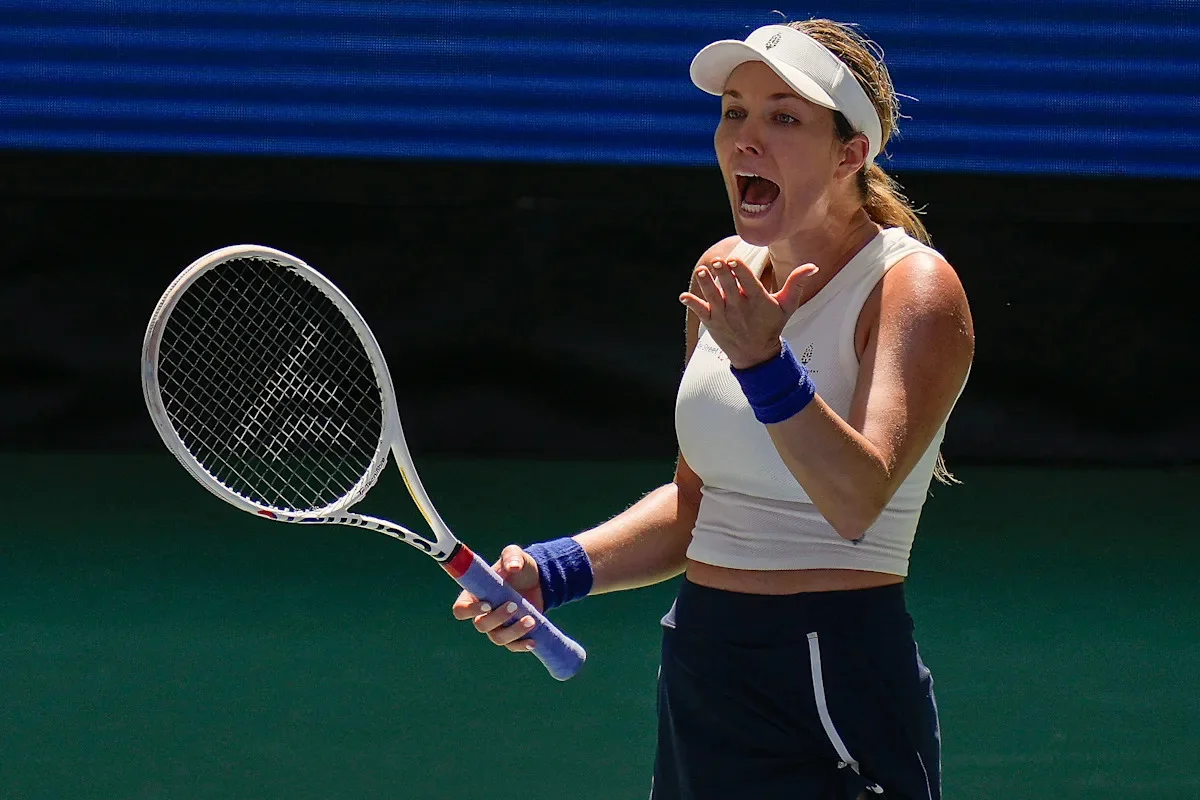
Danielle Collins Expresses Shock and Proposes Future Solutions
When questioned about the predicament faced by Tarvet and his peers during her own Wimbledon press conference, Collins, who twice claimed the NCAA singles title for the University of Virginia, expressed surprise at the ongoing restrictions.
“I thought that there was going to be some type of change, or maybe it was just my assumption,”
Collins said.
“It’s kind of interesting that you can’t accept (prize money). I wish that there was some type of solution.”
—Danielle Collins, professional tennis player
The American star went further, suggesting that a portion of collegiate prize money could be set aside in a retirement fund, rather than going directly to the players. She explained her reasoning in detail, hoping administrators might consider alternative options in the future.
“If the concern is that the player is accepting money as a professional athlete and therefore they are professional athletes, maybe there’s a way that there can be a fair portion that goes towards a 401K or some type of retirement fund that you’re not able to touch until you’re 65.”
—Danielle Collins, professional tennis player
With over $600,000 in singles tour prize money herself, Collins has pointed out that athletic success should equate to genuine benefits for players, suggesting that creative reform is possible if stakeholders are willing to rethink entrenched regulations.
“Any athlete should be put in a position to get set up for success. I feel like there’s a solution to these kinds of things. I think sometimes it just requires people to think a little bit outside of the box. That would be kind of cool if they could put it into something like a retirement fund,”
Danielle Collins said. —Danielle Collins, professional tennis player
“Then that way it’s not being spent irresponsibly but helps a college athlete that’s worked really hard to look out for their future,”
she added. —Danielle Collins, professional tennis player
Importance of College Tennis for Player Development
Beyond the discussion about prize money, Danielle Collins noted the significant developmental advantages that the college tennis system offers to aspiring professionals. She shared how the environment of college sports can foster important growth, particularly mentally, for those not yet prepared for the unique stresses of full-time professional competition.
“I feel like there are so many players now that are kind of going through the college tennis system and are doing really well,”
Collins said. —Danielle Collins, professional tennis player
“I feel like college gives you a little bit more time to kind of grow and develop. Not necessarily physically, but I think mentally, and that’s the most important thing. I don’t think a lot of people are equipped to deal with the stress and pressure that comes along with playing a professional sport, especially an individual one,”
she added. —Danielle Collins, professional tennis player
What Comes Next for College Athletes on the Tour
Danielle Collins’ outspoken support has intensified debate within collegiate tennis and beyond, urging organizations such as the NCAA and WTA Tours to consider updates to eligibility and compensation rules. As more players like Oliver Tarvet achieve breakthroughs on the international stage, the pressure to adapt outdated regulations continues to escalate. Collins herself remains in the spotlight at Wimbledon, where her continued success draws further attention to the ongoing challenges facing student-athletes who aspire to balance education with ambitious sporting careers.
Our Reader’s Queries
Q. What condition does Danielle Collins have?
A. Danielle Collins, who is 30 years old, has shared how fighting rheumatoid arthritis and endometriosis has affected her tennis career.
She discussed these health challenges and spoke about what plans she has for her future after retirement.
Q. What illness does Danielle Collins have?
A. Collins has endometriosis, a condition where tissue like the lining of the uterus grows in other parts of the body. Before she planned to retire, her doctors explained that endometriosis could make it harder and slower for her to become pregnant than she expected.