
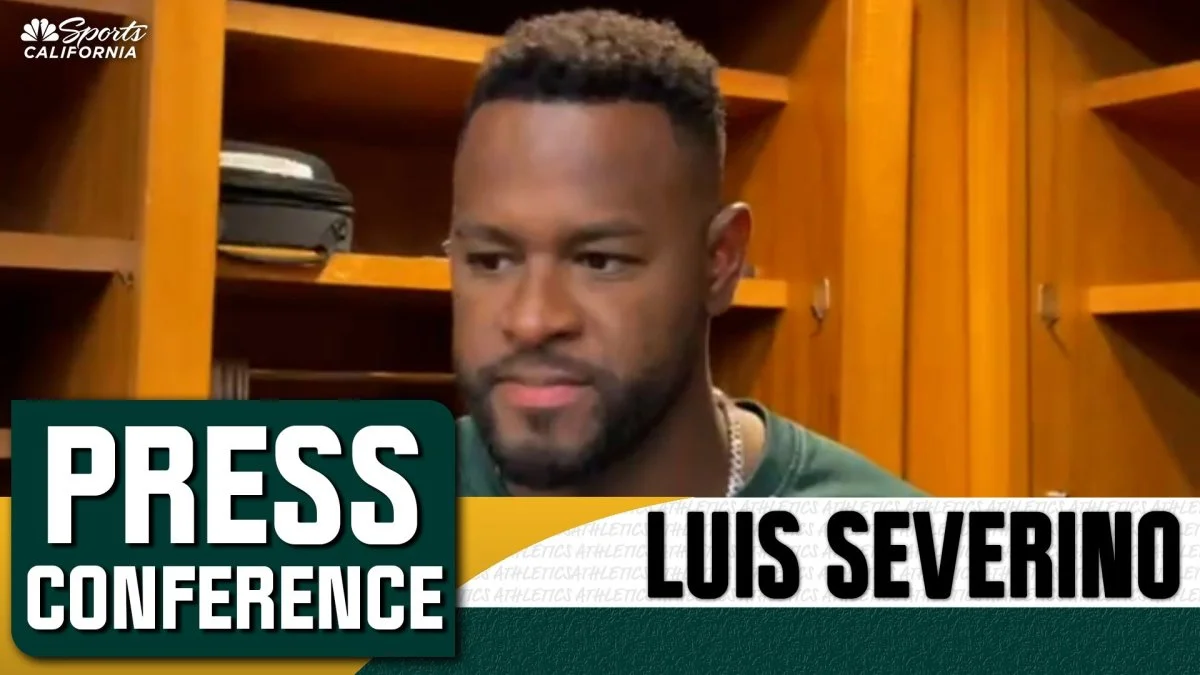

As the July 31 trade deadline looms, the Oakland Athletics are weighing the financial consequences of a potential trade involving pitcher Luis Severino, whose contract is at the center of a larger financial strategy and labor union concerns. The Luis Severino A’s trade financial strategy now involves managing not only on-field needs but also intricate salary calculations and looming payroll thresholds that could attract union scrutiny.
Analysis of Looming Financial Pressures and Union Concerns
The Athletics face a pivotal decision as they consider the possible trade of Luis Severino, who was signed to a franchise-record three-year, $67 million deal last winter. The decision extends beyond Severino’s pitching performance, focusing sharply on the detailed financial implications of adjusting such a significant contract.
Central to the Athletics’ considerations is the risk of a grievance from the players’ union. Reports have indicated that the team must spend around $105 million to avoid union backlash, a figure tied directly to Major League Baseball’s complex payroll and revenue-sharing structures. Severino’s current deal pays him $20 million for the season, with an average annual value of $22.33 million, and like most MLB players, he receives this salary only during the active season months. This means the Athletics must work through meticulous calculations to ensure their financial commitments are accurate and compliant.
Breakdown of Severino’s Salary Commitment and Payroll Impact
Calculating Severino’s salary obligations involves dividing his $20 million by six—the traditional length in months of a regular season—which comes out to roughly $3.33 million per month. Since three months have already passed, the Athletics have distributed about $10 million to Severino to date. Players’ salaries can also be assessed per day; with the season spanning 187 days, Severino’s daily wage runs about $106,951.87. After 97 days on the roster, Oakland’s total payment to date sits at just over $10.37 million, leaving $9.63 million owed for the remainder of this year. This remaining salary is a crucial element in the Luis Severino A’s trade financial strategy as the team debates any mid-season move.
Potential Trade Destinations and Their Implications
While internal debates continue, external interest in Severino is mounting. Among the teams reportedly eyeing Severino as a valuable addition are the Padres, who are facing their own pitching woes and see him as a possible solution. At the same time, the Brewers are reportedly evaluating a potential deal, looking to strengthen their postseason rotation, indicating that a trade could reshape multiple teams’ competitive strategies as the season progresses.
Payroll Thresholds, Revenue Sharing, and Arbitration Considerations
Currently, the Athletics project a payroll of about $116.6 million, which exceeds the threshold necessary to avoid a players’ union grievance. Even if the team proceeds to trade Severino and subtracts his remaining salary, the payroll would still be close to $107 million—just above the estimated requirement. However, this calculation is complicated by uncertainties around exact revenue-sharing figures: the Athletics are believed to have received about $70 million, but the specific sum will determine the precise payroll benchmark they must meet to remain clear of union action.
If revenue-sharing receipts are higher than anticipated, the Athletics may be compelled to boost payroll spending, while a smaller payout could offer additional flexibility. The organization must consider current obligations and possible future commitments, particularly with several roster players, including Brent Rooker and Lawrence Butler, entering arbitration or seeking contract extensions. These factors intensify the scrutiny and tension around the Athletics’ financial planning.
Long-Term Consequences for Oakland’s Roster and Free-Agency Position
Looking to the seasons ahead, the Athletics must consider the implications of retaining Severino, whose salary is scheduled to jump to $25 million next year. Rising payroll coupled with reviews of Sutter Health Park—where players’ impressions have been less than favorable—may make it difficult for Oakland to attract and retain free-agent talent. These challenges could prompt the Athletics to delay any Severino-related trade until after this season, aiming to clarify their financial position and roster needs.
With the Luis Severino A’s trade financial strategy under the watchful eye of the players’ union and the baseball world, the Athletics face a tense period in which every dollar and decision could shape the season. The outcome of these deliberations will not only determine Severino’s fate but also dictate the organization’s direction as it grapples with mounting competitive and budgetary pressures.
Our Reader’s Queries
Q. Why that specific number? It belongs to Mets pitcher Luis Severino, who was slated to start Game 3 on the mound for New York. This is a really cool way for Mets players to honor their teammates. It won’t be shocking to see Severino play well with this kind of encouragement behind him in the dugout.
A. The Mets are wearing the number 40 on their faces today to honor a former player or coach. This tribute helps fans and players remember that person’s contributions to the team. It is a common way for sports teams to show respect after someone important passes away.