
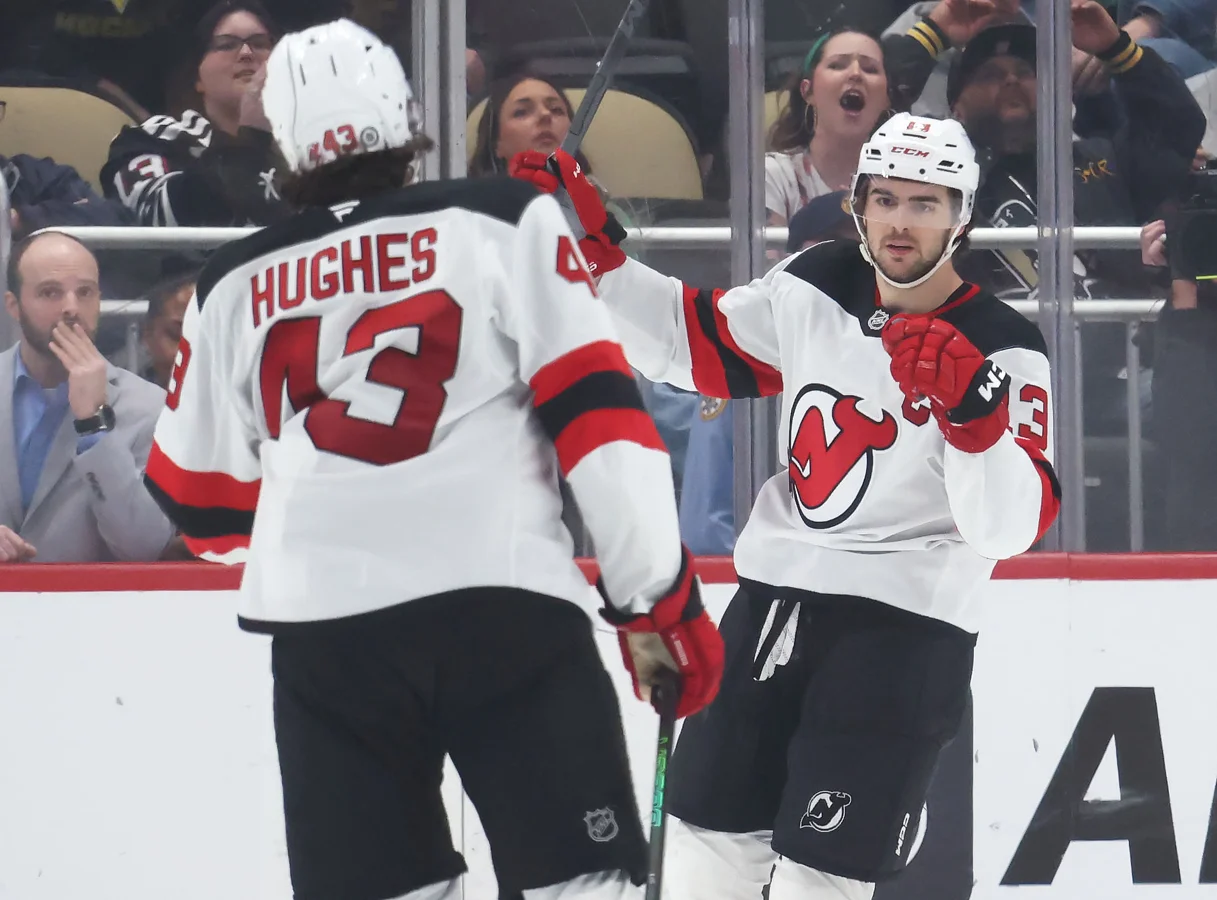

The New Jersey Devils have placed the Luke Hughes contract extension priority at the center of their offseason plans, with general manager Tom Fitzgerald confirming that securing a long-term agreement with the young defenseman is his primary objective. Speaking to reporters on Wednesday, Fitzgerald made it clear that the future of the team’s roster adjustments will depend largely on the outcome of these negotiations, underscoring the significance of Hughes’ role in New Jersey’s direction.
Luke Hughes, selected fourth overall in the 2021 NHL Draft, has already received a qualifying offer, ensuring his rights stay with the Devils through the next season. Both sides are now locked in talks for a multi-year extension, aiming to solidify Hughes’ presence alongside his brother Jack Hughes. The commitment to keep talented youth like Luke reflects the club’s strategy to build around homegrown stars and raise internal standards season over season.
Fitzgerald emphasized the shared excitement between Luke Hughes and the organization during discussions about the extension, describing a strong desire from both camps to reach a long-term agreement and maintain momentum from recent years.
Roster Changes Tied to Contract Talks
While the Devils continue exploring ways to strengthen their lineup, Fitzgerald pointed out that new additions and further moves depend on the specific terms of Luke Hughes’ eventual contract. Managing salary cap space wisely is a critical factor, and the size of Hughes’ deal could determine what roster changes are possible as the off-season progresses.
Fitzgerald pointed to incoming players such as Arseniy Gritsyuk, hoping he can step up as a potential top-six forward, as well as the recent acquisitions of veterans Evgenii Dadonov and Connor Brown, who aim to add depth and talent up front. Having Cody Glass available from the start of the season, instead of as a late deadline addition, brings optimism about his ability to settle in and contribute more comfortably.
The Devils also welcomed Juho Lammikko, whose size and skating ability may fill a role similar to that of Lars Eller, focusing on defensive-zone faceoffs and penalty killing. The mix of proven experience and emerging prospects highlights a roster in transition, with flexibility and future moves hinging in large part on Luke Hughes’ contract status.
NHL Draft Format: Weighing the Pros and Cons
The NHL’s recent shift to a decentralized draft, which began in 2025, has led to debate about the benefits and drawbacks of allowing teams’ staff to remain at home rather than converging in one city. This transition has impacted scheduling for the entire league, pushing the draft closer to the start of free agency and giving organizations less time to regroup after the Stanley Cup is awarded later each season.
Tom Fitzgerald explained his support for the decentralized model, noting that reduced travel was an important consideration due to the compressed off-season schedule. He expressed a willingness to remain flexible if the league decides to return to a centralized format, citing both logistical challenges and advantages in staff communication when everyone shares the same location and time zone.
Neck Guard Mandate and Player Safety Initiatives
Player protection remains a pressing issue in the NHL, with Tom Fitzgerald among those advocating for greater safety measures. The league will require neck guards for all incoming players beginning in the 2026-27 season, a policy shift driven in part by Fitzgerald’s personal connection: his son Casey, a defenseman for the Hartford Wolf Pack in the AHL, suffered a potentially life-threatening neck laceration even while wearing protective equipment.
“I think it’s great. To me, it’s no different than the helmet or the half shield,”
said Fitzgerald, who is on the cut-resistance equipment committee.
“I just think kids won’t even realize they’re wearing it, just like the helmet and shield for players in the past. I think it’s a great start for the league. Anytime you can continue to look after your players, especially young players as they grow into the league, and help them stay protected, and more importantly, educate them on the different types of things out there that can help them, that’s important.”
—Tom Fitzgerald, GM
He has spoken publicly on the importance of mandatory protection, sharing in March,
“If you give (players) options (to not wear protection), they’re going to take it,”
Fitzgerald told NHL.com in March.
“They’re going to say, ‘I haven’t worn it my whole life so I’m not going to wear it now.’ So don’t give them options.”
—Tom Fitzgerald, GM
What Lies Ahead for the Devils and the League
The focus on the Luke Hughes contract extension priority underscores how one star prospect’s future can shape an organization’s plans. As the Devils look to boost their roster and integrate new talent like Gritsyuk, Dadonov, Brown, Glass, and Lammikko, the details of Hughes’ deal will dictate the scope of additional signings or trades this summer. Management’s proactive stance on both player development and safety, as illustrated by leadership roles on league equipment committees and advocacy for new regulations, reflects a broader commitment to sustainable success.
For the league at large, evolving policies on the NHL Draft and on-ice equipment signal ongoing adaptation as teams balance efficiency, safety, and the pursuit of excellence. The Devils, led by Tom Fitzgerald, plan to set the pace in these evolving landscapes, aiming to cement themselves as contenders while prioritizing both performance and the well-being of all team members.