
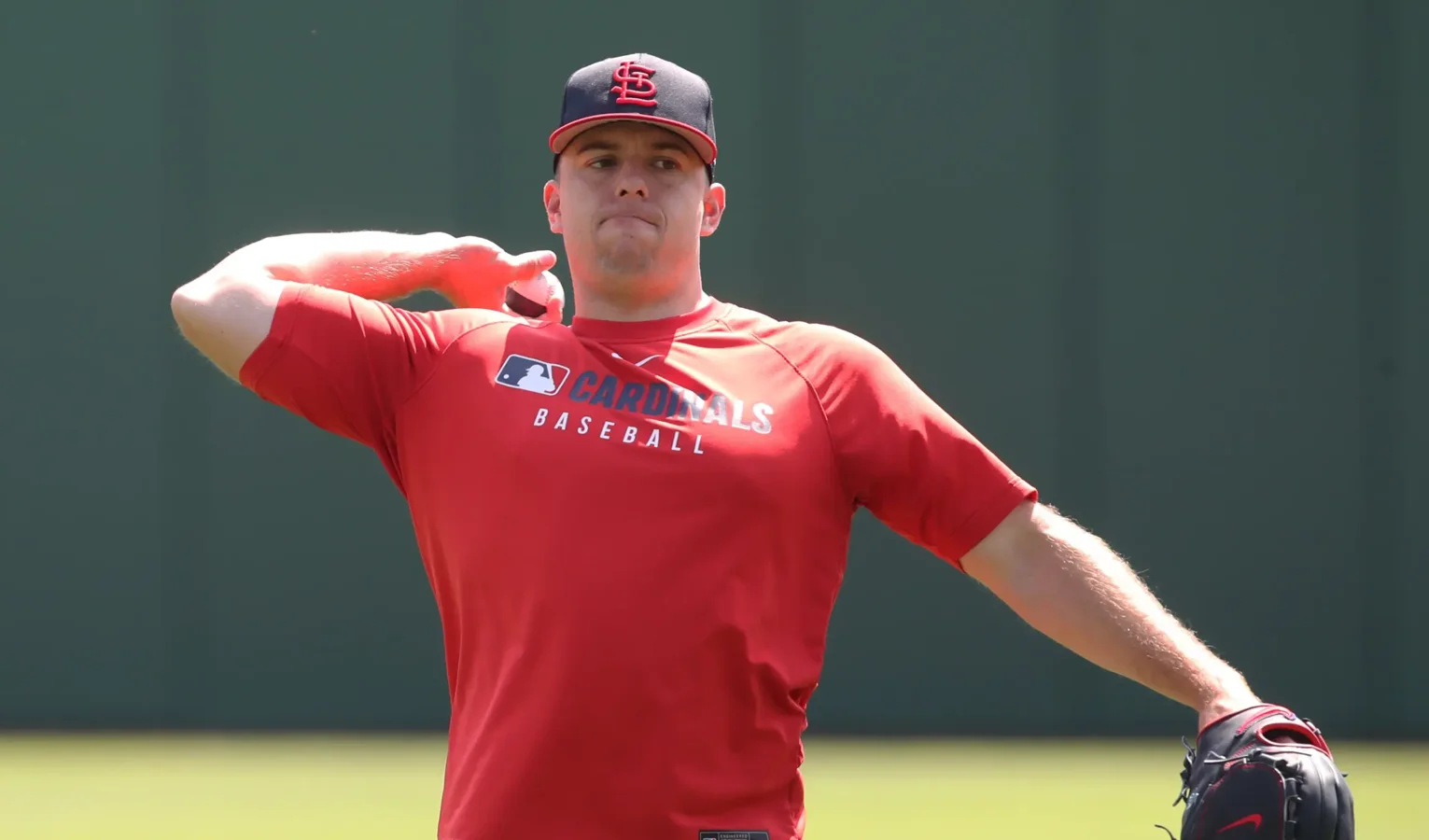

The St. Louis Cardinals are facing a crucial point in their season as the trade deadline draws near, making the Ryan Helsley trade deadline decision increasingly significant. Their performance throughout July is set to determine whether the organization positions itself as a contender or shifts focus to future assets.
Currently, the Cardinals carry a 47-41 record, sitting five games behind the Chicago Cubs in the National League Central and sharing the third wild-card position with the San Diego Padres. Entering the midseason stretch, the team’s ability to stay competitive is under close watch, as their next moves could influence not just this season, but also the team’s long-term makeup.
Questions Surround Ryan Helsley’s Status as the Deadline Approaches
Among the key figures in St. Louis is reliever Ryan Helsley, whose immediate future with the team remains uncertain amid ongoing trade speculation. According to <a href=”https://www.buzzineintl.com/category/baseball/mlb/”>MLB commentator Jim Bowden, Helsley is considered the sixth most likely reliever to change teams before the deadline. Bowden weighed in on the team’s dilemma:
The Cardinals are in the NL Central and NL wild-card races and appear closer to being a buyer than a seller.
—Jim Bowden, MLB Insider
Despite that assessment, Helsley’s vulnerability in trade talks stems from his contract status, as he is set to enter free agency at the end of the current season. Should the Cardinals falter in July, there is a distinct possibility management will opt to trade the veteran right-hander to secure prospects, rather than risk losing him without compensation.
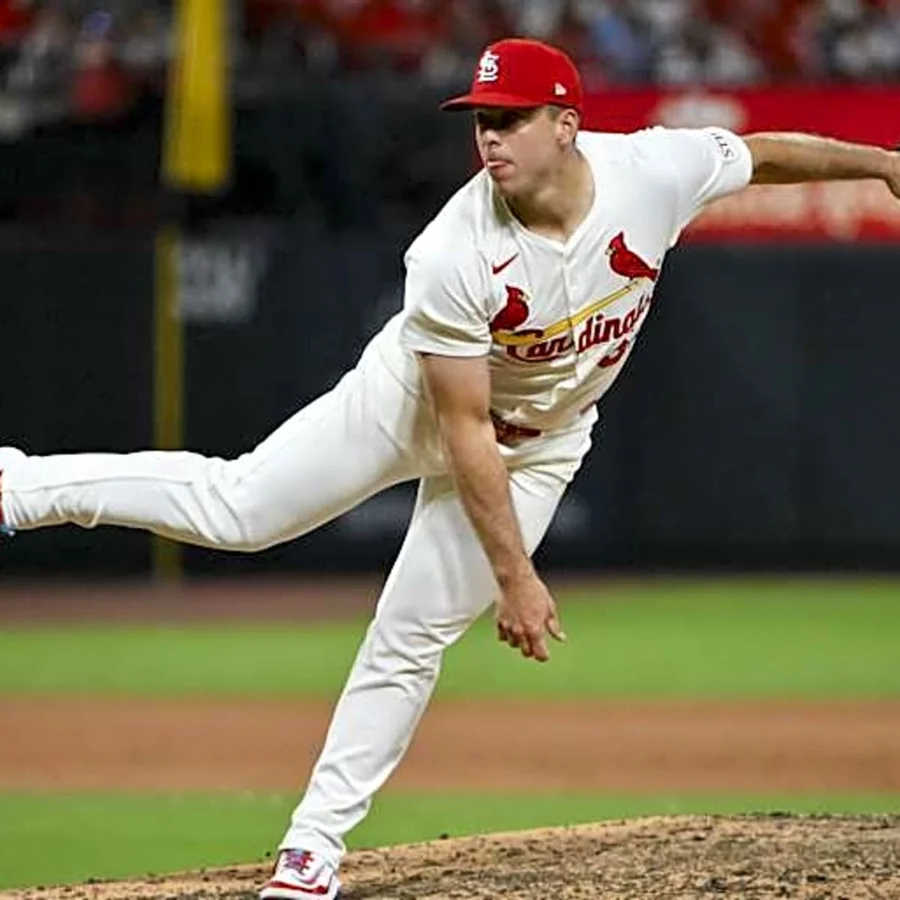
This season, the 30-year-old reliever has been a force for the bullpen, recording a 3.41 ERA over 29 games along with 16 saves. His effectiveness largely comes from his slider, which opponents have struggled against, managing a meager .077 batting average. Conversely, hitters have fared much better against his high-velocity fastball, with a .429 average on his 99 mph four-seamer. The contrast points to a need for Helsley to adapt and refine his pitch selection, particularly if the Cardinals intend to retain him as part of their future core.
Cardinals Offense Struggles Heading Into Pivotal Series
While pitching remains a focal point, the Cardinals’ path forward is also hindered by their ongoing offensive challenges. The team’s recent performance against the Pittsburgh Pirates was especially troubling, with St. Louis suffering a three-game sweep without scoring a single run. This shutout extended an ongoing drought to 49 straight innings without a run against National League Central opponents, underlining the urgency for improvement at the plate.
Key players such as Nolan Arenado and Willson Contreras are on the mend, and their return from injury should inject some much-needed energy into the lineup. Until then, the pitching staff, featuring the likes of Miles Mikolas, is tasked with keeping games within reach. Mikolas is scheduled to start Friday’s series opener against the Chicago Cubs, a matchup that could be instrumental in shaping the Cardinals’ direction near the trade deadline.
July Performance to Influence Helsley’s Fate and Team Outlook
As the team approaches a series of critical games, the impact of July’s results goes beyond the standings. The upcoming stretch will help determine not only the Cardinals’ playoff hopes, but also the future of their roster, with Ryan Helsley’s status a focal point. St. Louis supporters and MLB observers alike are watching closely as the organization weighs tough deadlines decisions in the coming weeks under pressure from both competition and circumstance.
Our Reader’s Queries
Q. How fast does Ryan Helsley throw?
A. Ryan Helsley throws a fastball that reaches 100 MPH and a slider at 91 MPH.
This video shows an overlay highlighting the speed difference between his pitches.
You can see how both pitches look similar at first, but the speed and movement set them apart.
Q. How fast can Ryan Helsley throw?
A. Pitch Repertoire Overview
In 2025, they mostly use a four-seam fastball at 99 mph and a slider at 89 mph.
They also throw a curveball at 80 mph and a cutter at 93 mph.
These four pitches make up the main options they use during games.