


Stuart Skinner, as the focus of the Edmonton Oilers’ goaltending questions, finds his role and performance influenced not only by his skills but also by the team’s body language. The impact of the Oilers’ star players’ on-ice reactions on Skinner’s confidence and the team’s championship ambitions is now drawing complex attention.
Team Dynamics Affecting the Goalie’s Mindset
For years, criticism has been directed at whoever stands in the Oilers’ net after disappointing playoff exits, with Skinner now enduring much of that scrutiny. Yet, the deeper issue might lie beyond simple goaltending errors. The actions and nonverbal cues from Skinner’s elite teammates—slumped shoulders, silent exits after surrendered goals—can signal disapproval or frustration, subtly undermining the 26-year-old goalie. These moments, visible to thousands in Edmonton’s hockey community, weigh heavily on anyone guarding the toughest position in town.
In professional hockey, particularly in markets with passionate fans such as Edmonton, the psychology surrounding goaltending becomes crucial. While blame is easy to assign when a goal is let in, persistent negative signals from team leaders can erode a goaltender’s confidence more than any technical critique.
The Path Skinner Carved for Himself
Unlike many, Skinner did not step into his spot by default; his journey was one of perseverance. Originally intended to back up Jack Campbell—brought in with expectations to resolve long-running issues in the net—Skinner took over as Campbell struggled. In his rookie year, the young, homegrown netminder seized the crease and kept his team competitive in critical playoff matches. He quickly became a cost-effective <a href=”https://www.buzzineintl.com/category/hockey/nhl/”>NHL All-Star, but despite his value, he’s now an easy scapegoat for the team’s failure to claim the ultimate prize, as unsold ‘Western Conference Champion’ merchandise lingers in Edmonton.
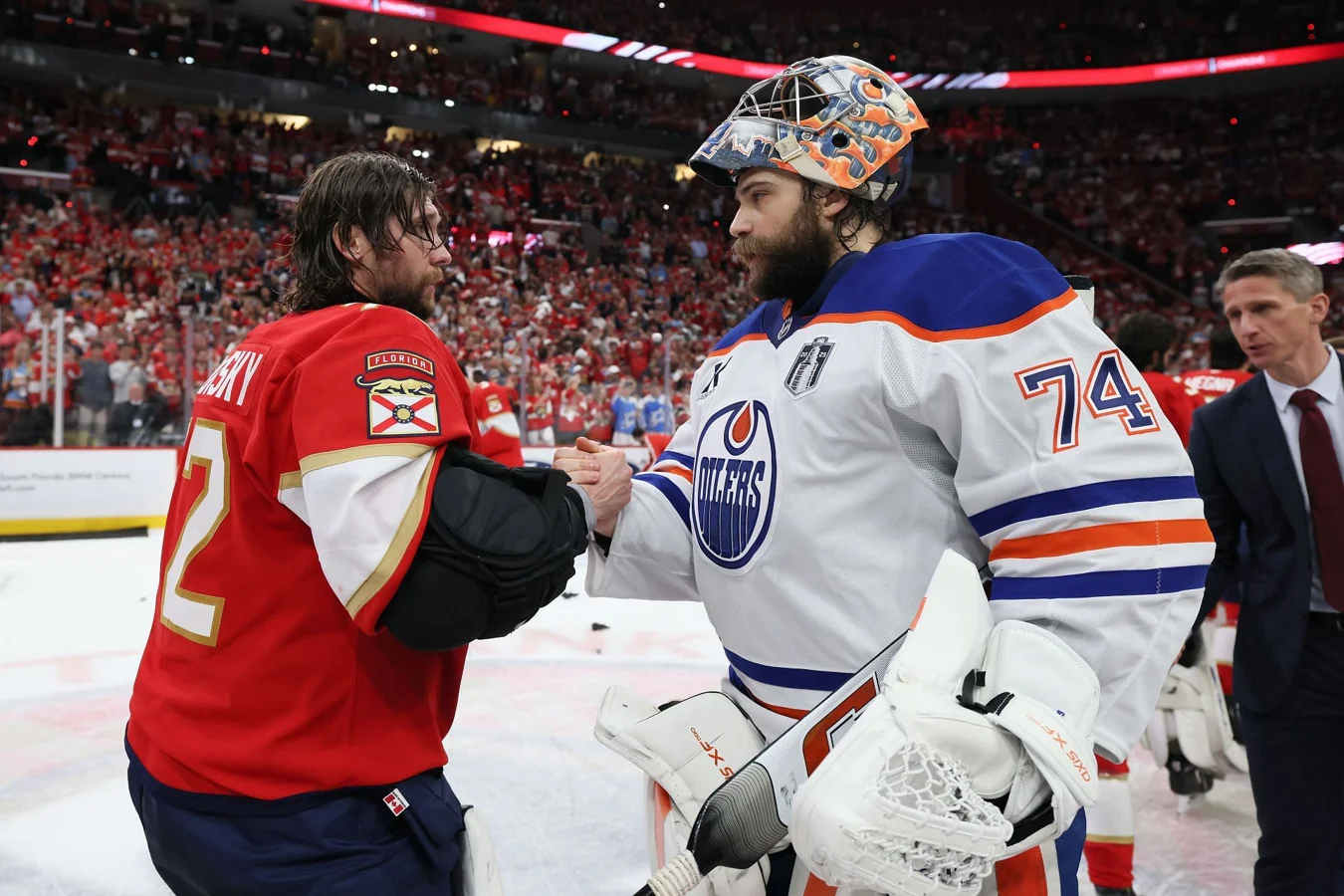
This focus on Skinner misses the larger context. Blaming one player simplifies a multi-layered situation that involves more than netminding struggles or game-day statistics.
Constant Changes at the Helm and Its Impact
Ryan Nugent-Hopkins’s lengthy tenure offers a window into Edmonton’s tumultuous organizational culture. Since being drafted in 2011, Nugent-Hopkins has seen nine head coaches—Tom Renney, Ralph Kruger, Dallas Eakins, Todd Nelson, Todd McLellan, Ken Hitchcock, Dave Tippett, Jay Woodcroft, and new appointments like Kris Knoblauch—as well as seven general managers, including Steve Tambellini, Craig MacTavish, Peter Chiarelli, Keith Gretzky (interim), Ken Holland, and Jeff Jackson (interim).
This revolving door demonstrates significant instability, with a trend of persistent resets rather than sustainable direction. While there’s no definitive evidence of imminent changes for Knoblauch or current GM Stan Bowman, the pattern suggests nothing is guaranteed. This lack of consistent leadership creates unpredictable environments for developing players like Skinner, compounding the typical pressures of NHL goaltending.
A Deeper Problem: Rethinking the Culture of Support
Popular narratives argue that the Oilers are just one exceptional goaltender away from hoisting the Stanley Cup. But this perspective oversimplifies the issue, overlooking the culture of accountability and encouragement required for long-term success. Winning teams rally behind their goaltenders, offering tangible and intangible support during adversity—a tap on the pads, a nod from a veteran, or steadfast confidence in tough moments.
Although some Oilers have provided these crucial signals of support, they aren’t universal. With the persistence of cold shoulders and isolating gestures from certain star players after conceded goals, the challenge becomes less about performance and more about fostering a culture of mutual trust. Accountability does matter, but the manner and timing of player reactions can have a significant psychological effect, especially on someone in Skinner’s position.
Lessons from Goalie Journeys Across the NHL
Developing an NHL goalie is rarely a linear process. Sergei Bobrovsky, now celebrated with the Florida Panthers as a two-time Stanley Cup winner, previously endured inconsistent years moving between the Philadelphia Flyers and Columbus Blue Jackets, often locked in conflict with coaches. Yaroslav Askarov failed to secure a spot with the Nashville Predators, while John Gibson re-established his credentials after earlier doubts and is now frequently discussed as a potential solution for other teams, including—ironically—the Oilers.
The risk for Edmonton is letting go of Skinner too hastily, potentially watching him achieve ultimate success on another team. With Skinner’s roots in Edmonton and his proven willingness to battle for his hometown club, his value extends beyond statistics; he’s an inspiration for young hockey players growing up dreaming of emulating local heroes like Dwayne Roloson, who led the Oilers on their unforgettable 2006 run.
What It Will Take for Skinner to Succeed in Edmonton
For Skinner to fulfill his potential as a long-term solution, he requires thoughtful management. Instable rotation between the pipes—swapping out Skinner for someone like Calvin Pickard, who faces far less scrutiny—can undermine confidence and performance. The psychological aspect matters, particularly in a high-stakes environment where belief in goaltenders fluctuates with every goal allowed.
More than technical feedback or tactical changes, Skinner needs open endorsement from his team, coaches, and the city. As Edmonton moves into the 2025-26 season, belief—expressed through encouraging body language and support during tough moments—is paramount. Hockey’s nature all but guarantees that pucks will occasionally end up in the net, but how the Oilers respond to those moments could determine both Skinner’s future and the franchise’s long-term fate.
While internal competition is part of sports, letting a cost-controlled, promising goalie like Skinner languish for two seasons behind high-profile acquisitions may represent a lost opportunity. A shift in organizational mindset—placing trust and patience in players who have earned their roles—could be as vital as any off-ice signing or tactical shift.
What’s at Stake for the Oilers and Their Goaltender
The Edmonton Oilers, with a roster of top-tier talent and a history of instability, stand at a crossroads regarding their approach to goaltending and team culture. For Stuart Skinner, the challenge is not only making physical saves but also weathering the emotional effects of visible disappointment or lukewarm support from the same teammates who could help him thrive. Without a meaningful change in attitude and a commitment to mutual trust, the Oilers may risk losing not just a promising goalie, but also their best path back to Stanley Cup contention.
Our Reader’s Queries
Q. Why is Stuart Skinner number 74?
A. Stuart Skinner will have a restaurant in Edmonton named after him. Pizza 73 plans to change its name to Pizza 74 to match Skinner’s jersey number.
The partnership will also introduce a temporary menu item called the “Skinner Dinner.” This special includes a large pizza with two toppings and three drinks for $18.99.
Q. Has Stuart Skinner ever scored?
A. On March 18, 2016, Skinner played for the Lethbridge Hurricanes and scored a goal into an empty net against the Medicine Hat Tigers. He became the first goalie for his team ever to score a goal and the seventh goalie in WHL history to achieve this.