
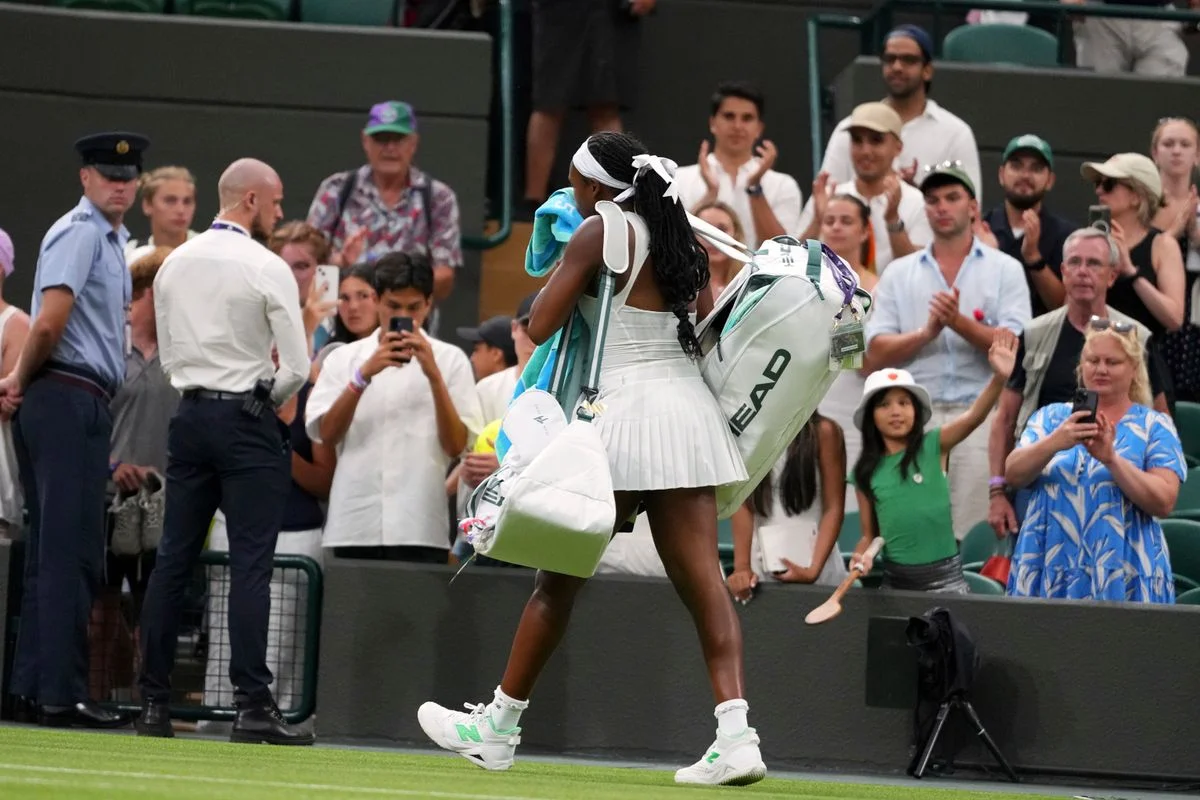

At the Wimbledon Championships on Centre Court, Aryna Sabalenka adopted a psychological tactic similar to Coco Gauff’s recent approach to manage the intense crowd support for British player Emma Raducanu. Facing a packed stadium loudly backing Raducanu, Sabalenka used mental resilience to maintain focus and silence the overwhelming home-fan advantage.
During their intense third-round match on June 30, 2025, Sabalenka overcame the vocal support for Raducanu to secure a straight-sets victory, 7-6(6), 6-4. The Belarusian star employed a mental trick inspired by Gauff’s previous struggle against French Open contender Lois Boisson, who had drawn a powerful French crowd cheering her name.
How the Crowd Noise Tested Sabalenka’s Concentration
The first set of the match was highly competitive, pushing Sabalenka to a tiebreaker where she narrowly prevailed. Throughout the contest, the noise from Raducanu’s fans constantly echoed across Centre Court, creating a challenging atmosphere. Sabalenka admitted the crowd’s volume was almost physically overwhelming during the post-match press conference.
“The atmosphere, sometimes my ears were like really blocked from how loud it was,”
Sabalenka shared, acknowledging the difficulty of playing amid such fervent support for her opponent.
Mental Strategy: Turning Opponent’s Cheers Into Personal Motivation
Rather than letting the clamorous environment disrupt her, Sabalenka devised a unique mental countermeasure. She pretended the cheers were directed at her, effectively confusing her brain to focus positively rather than becoming irritated or distracted by the constant chanting of “Emma.”
“But I really enjoyed. And I was like, I was trying to trick my brain and I was pretending that people were cheering for me. And sometimes when they were screaming Emma, it sounded like Aryna or so. I don’t know why. But yeah I think that’s why I wasn’t getting really annoyed by that you know.” —Aryna Sabalenka, World No.1 Tennis Player
This technique echoes the words shared by Coco Gauff earlier in the season when she faced similar challenges against a fervent French crowd. Gauff described her method simply:
“When you were chanting her name, I was saying to myself, my name!”
—Coco Gauff, American Tennis Player
Implications for Mental Resilience in Tennis and Beyond
Sabalenka’s approach highlights the crucial role of mental strength in handling the psychological pressures of elite sports environments, especially when facing hostile or vocal packed arenas. As tennis players regularly encounter intense crowd support favoring their opponents, techniques like these might become vital tools for maintaining composure and performance.
This mental adaptability could also inspire athletes across disciplines who must deal with external pressures and distractions. Sabalenka’s victory over Raducanu, achieved under such difficult conditions, demonstrates how turning adverse environments into motivational fuel can tip the balance in high-stakes matches.
As Wimbledon progresses, it remains to be seen if more competitors will adopt similar crowd-management strategies, shaping the psychological battles alongside the physical contests on the court.
Our Reader’s Queries
Q. What has happened to Coco Gauff?
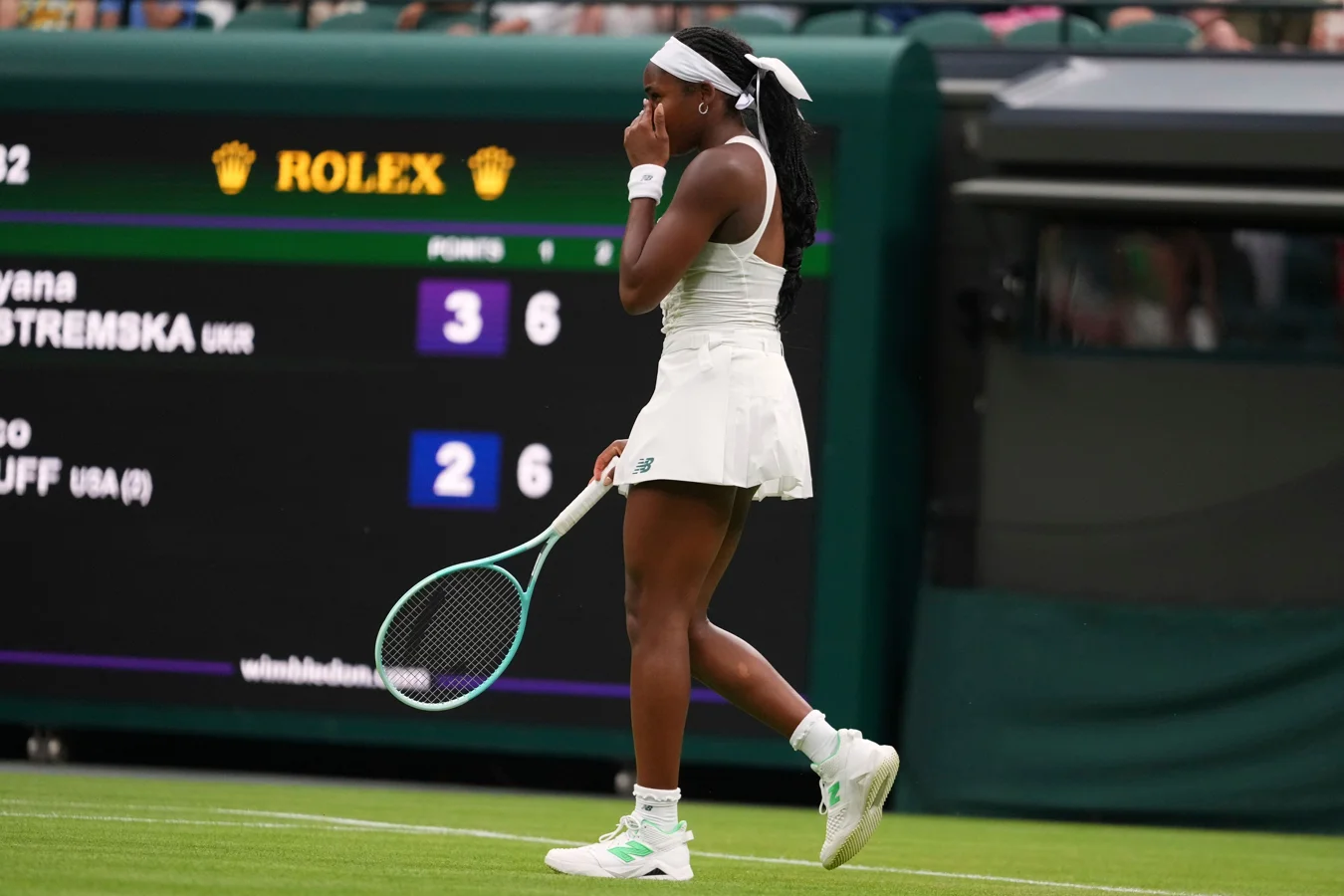
A. Coco Gauff, the second seed in the women’s tournament at Wimbledon, faced a surprising first-round defeat. Dayana Yastremska defeated Gauff in straight sets, making Gauff the highest-seeded player to be eliminated during the first two days of the competition.
Q. Does Coco Gauff have a degree?
A. Gauff earned her diploma from the Florida Department of Education after finishing her classes through Florida Virtual Flex. At 18 years old, she managed both her studies and a thriving tennis career, juggling these commitments for four years.
Q. Is Coco Gauff the highest paid tennis player?
A. Here is the rewritten answer:
1. Coco Gauff, a tennis player, earned $30.4 million.
2. Eileen Gu, known for skiing, made $22 million.
3. Iga Swiatek, also a tennis player, brought in $21.4 million.
Q. Why is Coco Gauff called Coco?
A. She explained to Sports Illustrated Kids that having the same name as her dad caused some family confusion. She thinks her aunt suggested, “Let’s call her Coco.” In his youth, people called her dad “Co.” From that point, she’s been known as Coco.