
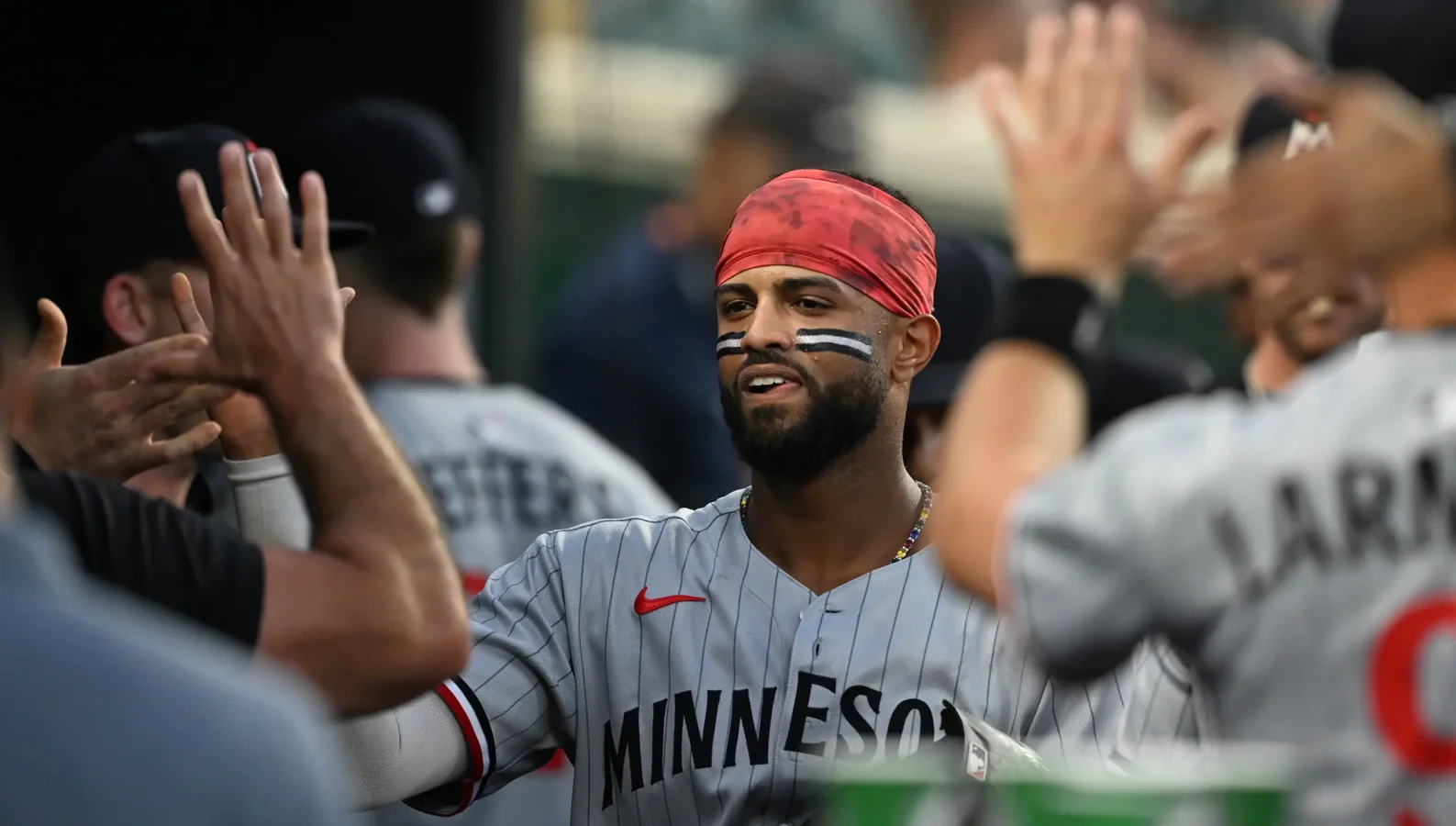

With the MLB trade deadline approaching, the Minnesota Twins are confronting uncertainty after a difficult June marked by a 9-18 record and the worst ERA in baseball. These struggles have cast doubt on their ability to make the playoffs, prompting speculation that the front office might look to trade key players like Willi Castro. For the New York Yankees, seeking to strengthen their roster, Castro could represent a valuable and flexible addition.
Castro’s Versatility Makes Him a Strategic Asset for Contenders
Yankees’ general manager Brian Cashman may be looking for a versatile player who can immediately contribute, and Willi Castro fits that description well. As a switch-hitter capable of playing multiple positions, Castro earns a relatively affordable $6.4 million in a contract year before free agency. The Yankees showed interest in him during the offseason, making a trade discussion between Minnesota and New York plausible. His ability to cover a variety of defensive roles is especially appealing for a roster that needs flexibility.
Castro’s Ability to Cover Multiple Defensive Roles Is Not Just Talk
Castro has proven his adaptability by starting across the field, including third base, second base, shortstop, the corner outfield positions, and even making a brief pitching appearance. His experience includes playing in six playoff games over the past two seasons with the Twins. Although he may not be an elite defender at any single position, his role as a versatile player adds significant value over a long season and into the postseason.
Consistent Offensive Contribution Amid Team Struggles
While not a powerhouse hitter, Castro’s performance is steady and suited to winning baseball. After achieving his first All-Star selection this year, he has maintained an OPS+ above 100 for three consecutive seasons, reaching a career-high 121 OPS+ in 2024, which is nearly 20 points higher than last season. This offensive stability contrasts with the Yankees’ declining lineup, which has seen OPS drop monthly from .829 in April to .719 in June.
How Castro Could Provide Lineup Flexibility for the Yankees
Adding Castro would offer Yankees manager Aaron Boone more tactical options, potentially allowing Jazz Chisholm Jr. to return to his natural second base position after being shifted to third base. Castro’s presence could also offer insurance if outfielders Trent Grisham or Paul Goldschmidt experience continued slumps. His speed, contact hitting, and experience make him a sensible addition without disrupting the core of the Yankees’ lineup.
Castro as a Practical Alternative Amid Bigger Trade Targets
Although the Yankees may pursue more prominent players such as Eugenio Suárez, Castro offers a cost-effective and versatile alternative. With no excessive salary demands, he could serve as an insurance piece for various positions, ideally fitting the Yankees’ goal of deep postseason contention rather than filling a middle-of-the-order power slot.
Minnesota’s Perspective: Castro as a Valuable Trade Chip
The Twins’ decision to hold or move Castro largely depends on their performance in July. Continued struggles would increase pressure to trade players like Castro, who is not viewed as part of Minnesota’s long-term plans. Younger, controllable players behind him in the infield and outfield are waiting for opportunities, making Castro one of the most logical assets to trade for future rebuilding.
Potential Trade Return from the Yankees
New York is unlikely to trade high-ranking prospects for a utility player on an expiring contract, but a promising arm with upside might appeal to Minnesota. Multiple teams are expected to compete for Castro’s services, allowing the Twins to seek the best offer. While the Twins could use depth in their farm system, the Yankees’ system ranks in the lower half of MLB, making a mid-tier prospect an appropriate trade piece. This would align with Castro’s short-term value while providing Minnesota with potential future assets.
Youthful Pitching Prospects That Could Be Involved
Several young pitchers in the Yankees organization could fit a trade for Castro:
Chase Hampton (RHP): Drafted in the sixth round out of Texas Tech, Hampton impressed with a mid-90s fastball and strong slider. His ability to strike out over 12 batters per nine innings in his first full pro season suggests potential as a mid-rotation starter if he continues to refine his command.
Brock Selvidge (LHP): A 6-foot-3 lefty with a four-pitch arsenal and polished approach, Selvidge has quickly ascended in the Yankees system. While not overpowering, his durability and control fit the Twins’ value profile for pitching prospects.
Cam Schlittler (RHP): Drafted from Northeastern, Schlittler offers projectability as a backend starter or long reliever. His three-pitch mix and strike-throwing ability could develop into a dependable arm, particularly with further progress at the Double-A level.
A Subtle Yet Smart Move for Both Teams
If the Twins opt to sell, Willi Castro stands as their most versatile trade asset, while the Yankees gain a utility player capable of addressing multiple needs. Although not a headline-grabbing acquisition, this trade would strengthen New York’s depth and flexibility in the competitive AL East. For Minnesota, it signals a strategic step toward reshaping their roster for future seasons beyond 2025.