
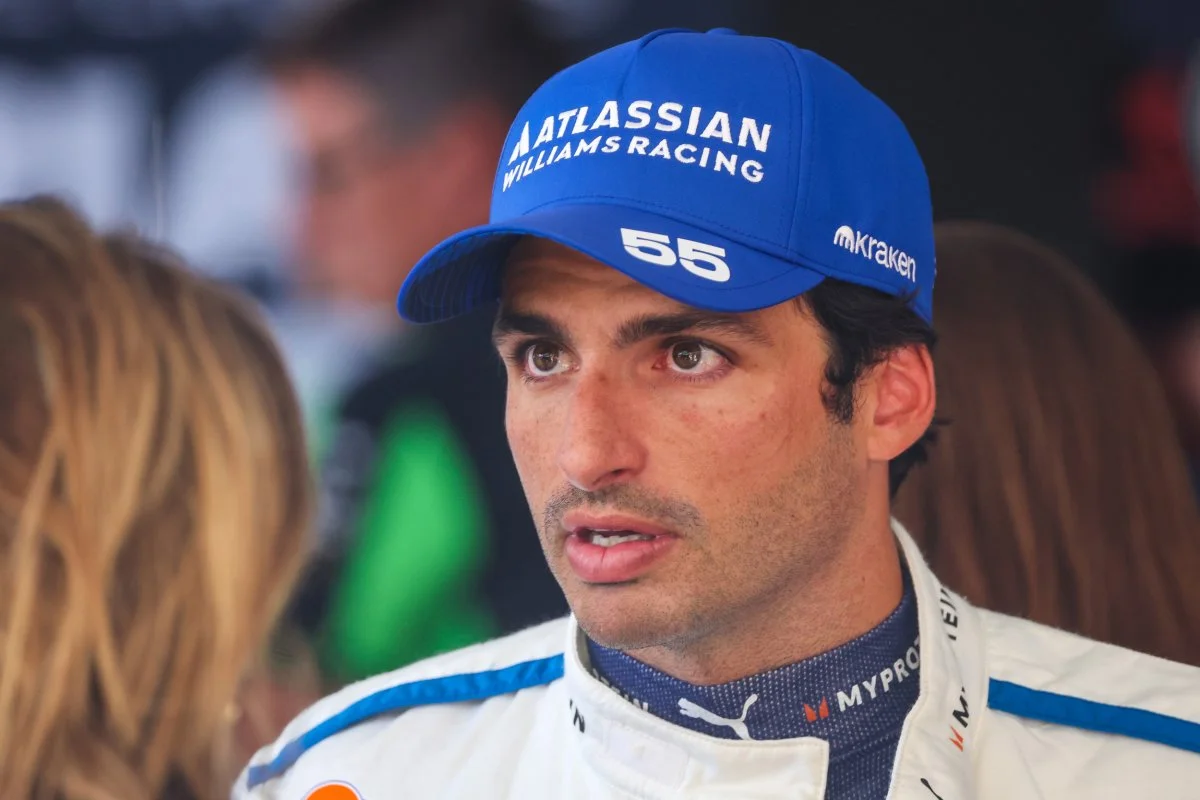

Carlos Sainz’s transition to Williams for the 2025 F1 season has not gone as smoothly as many anticipated, with fluctuating performances marking his first races. Although he initially struggled at the start of the year, Sainz showed signs of improvement before his form faltered once more, leaving questions about what is causing his difficulties.
Williams expected Sainz to bring steady performance and consistency in extracting maximum potential from the FW47 car. Instead, his season has been marked by significant highs and lows. After overcoming a slow start, he delivered regular points finishes, but this momentum stalled due to underwhelming results in circuits such as Barcelona and Canada, and a mechanical failure that prevented him from even starting the race in Austria.
Comparing Carlos Sainz and Alex Albon’s Performance at Williams
A closer look at the 2025 season head-to-head statistics reveals a clear performance gap between Sainz and his teammate, Alex Albon. Albon has accumulated 42 points, while Sainz trails with only 13, highlighting a consistent disparity. Recent practice sessions at Silverstone further suggest challenges ahead, with neither driver appearing likely to score points there.
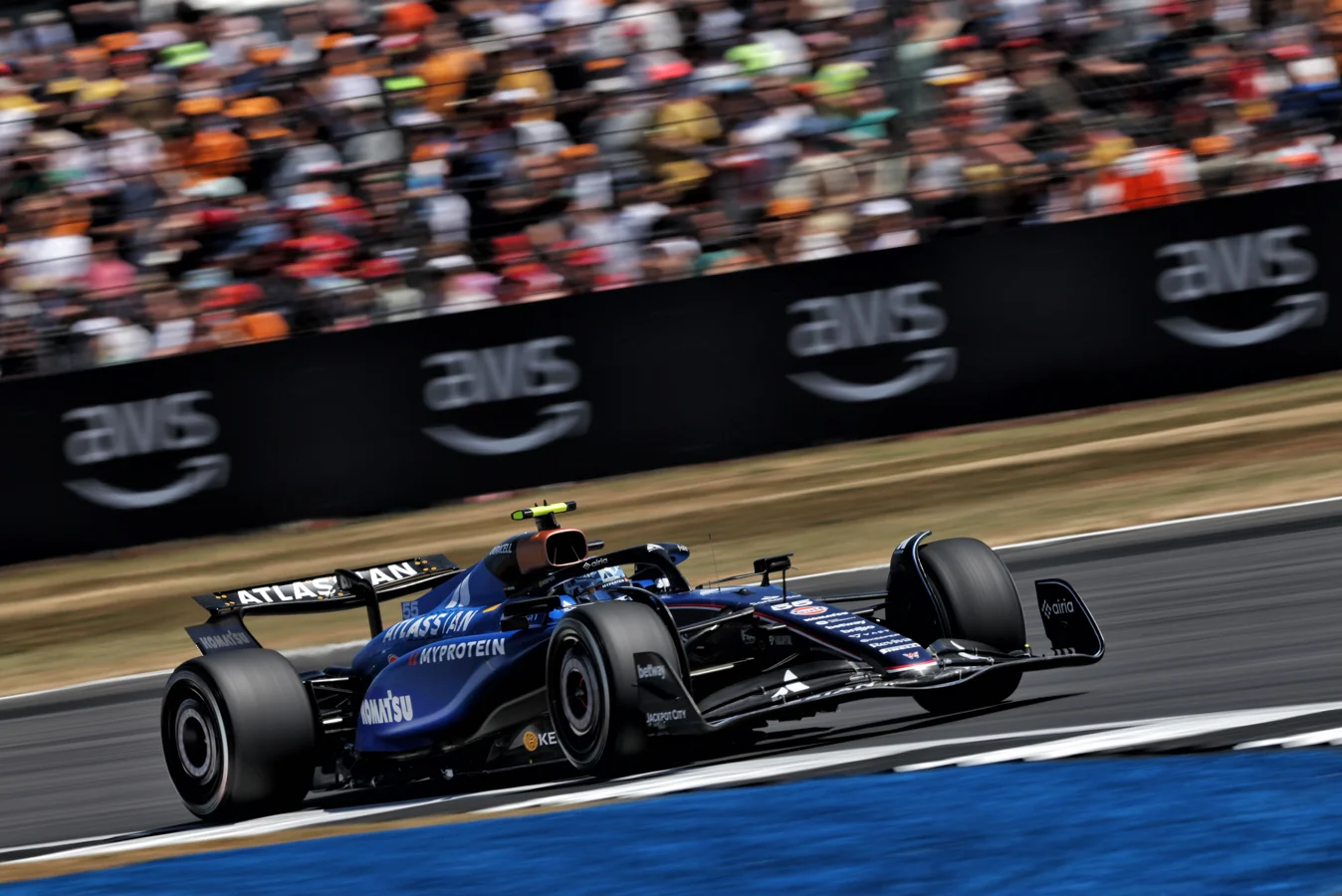
The primary contributor to these struggles appears to be the FW47 itself. The car performs best on circuits featuring heavy braking zones, short corners, and long straights, as demonstrated by strong showings at Miami and Imola. On the other hand, tracks with long, fast corners, such as Barcelona and Bahrain, pose problems for the Williams package and coincide with non-scoring outcomes, except for Austria where technical retirements affected both drivers.
Detailed Analysis: Where Sainz Is Losing Ground to Albon
Telemetry data indicates that the sections most problematic for Sainz are the fast corners, especially Copse and the high-speed stretch from Turn 10 to Turn 13. At Copse corner, Sainz’s speed through the apex is notably lower than Albon’s, with the additional factor that Sainz applies slight braking where Albon does not, costing valuable time.
Altogether, these differences add up to a loss of approximately three tenths of a second in this sector. Minor errors at Turn 4 and the final chicane further widen the gap, leaving Sainz 0.319 seconds behind Albon over a full lap at Silverstone.
The root causes likely combine adaptation to the FW47’s specific handling characteristics—different from Sainz’s previous car—and Albon’s greater familiarity with the team’s machinery. Evidence from FP2 includes Sainz losing rear grip exiting a quick corner and nearly spinning, an episode that resulted in a close call with Lewis Hamilton but no damage, underscoring Sainz’s ongoing learning curve.
Race Pace and Tyre Strategy Insights from Practice Data
On race pace, Sainz’s performance appears slightly more encouraging. In FP2, he completed a long stint on soft tyres, similar to Hadjar and Hamilton, although comparisons are limited due to differing fuel loads and run strategies. While Hamilton was predictably faster in his shorter runs, Sainz managed lap times that held up reasonably well against Hadjar’s Racing Bulls car and were competitive compared to Albon, who ran on medium tyres.
However, these practice figures should be interpreted cautiously since fuel loads and team strategies are unclear. Additionally, soft tyres are unlikely to be pivotal during Sunday’s race unless an unforeseen event such as a safety car intervenes. The overall picture suggests that Sainz’s adaptation to Williams remains incomplete even this far into the season.
Broader Context: Team Issues and Future Outlook
The difficulties faced by Carlos Sainz are not isolated to his individual adjustment but also tied to broader challenges within the Williams team. Organizationally, the team is not at its strongest, as indicated by both Sainz and Albon retiring from three races each, a costly situation in terms of points and momentum. Yet, there is acknowledgment that Williams has made tangible progress compared to last year, signaling potential for improvement.
Sainz’s ongoing learning process echoes challenges seen by other drivers, such as Lewis Hamilton, when adapting to cars with distinct characteristics. Both driver and team seem to require more time to fully unlock the FW47’s potential and regain consistent competitiveness. How they manage the coming races could determine whether Sainz overcomes this difficult phase or if his struggles at Williams continue to hinder his results.
Our Reader’s Queries
Q. Why does Carlos Sainz have 55?
A. Throughout his career, the number 55 has become closely linked with the Spanish driver. It’s a vital part of his identity in racing and in life. Sainz chose this number because of a smart personal connection: Carlo5 5ainz.