

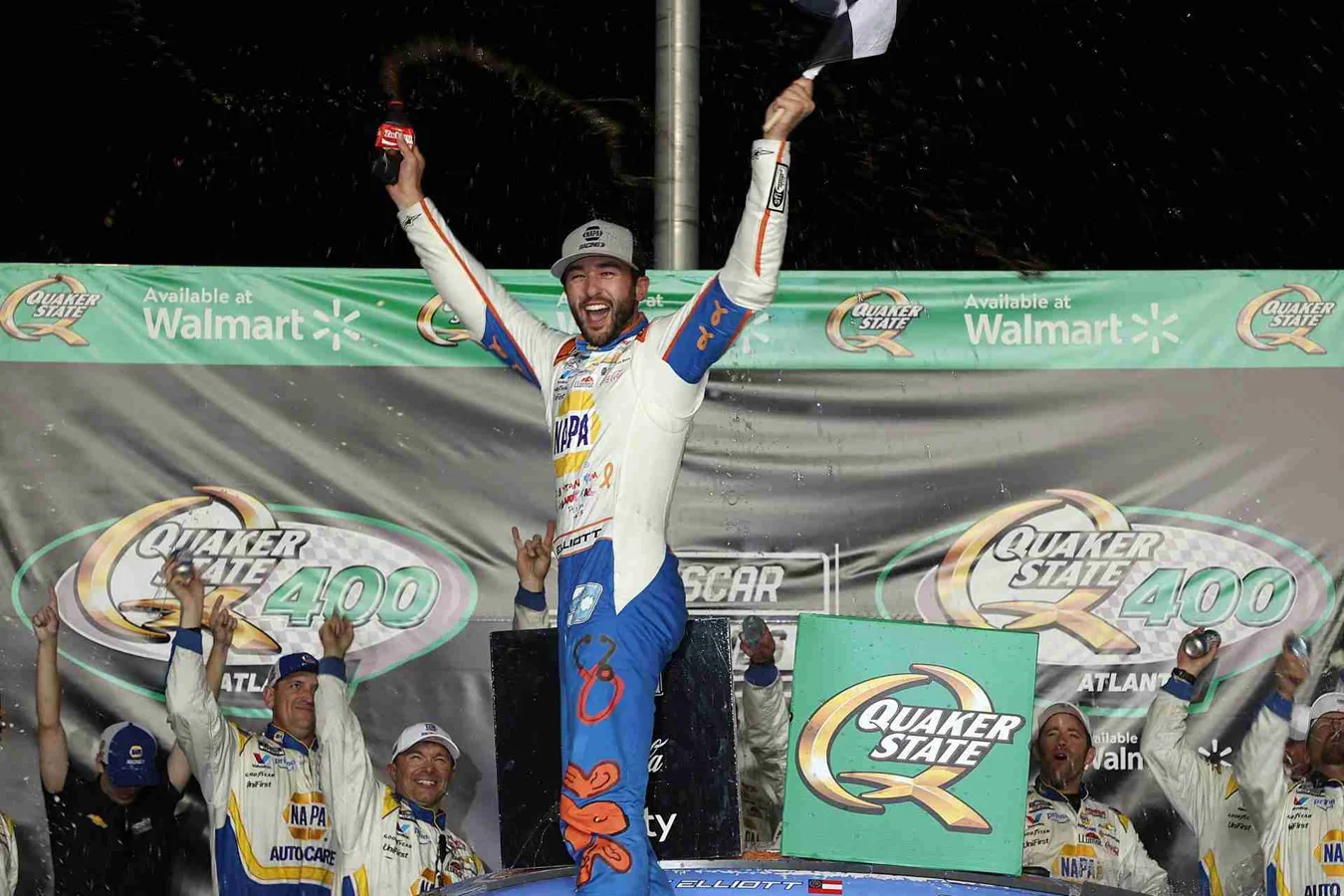
Chase Elliott expressed a clear preference for Nashville over Chicago when discussing the future of NASCAR street races during his media availability on Saturday. Citing the challenges and advantages of each location, Elliott suggested that if NASCAR must prioritize certain venues, the Nashville Superspeedway should take precedence over the Chicago Street Race.
The ongoing third annual Chicago street race is set for Sunday in downtown Chicago, while Nashville has successfully hosted Cup races at its 1.33-mile oval track for the past five years, including a race held just last month. This contrast highlights the ongoing debate about which markets are more viable for NASCAR’s growth.
Uncertainty Surrounds the Continuation of Chicago’s Street Race
The future of Chicago’s street race remains in question, as NASCAR considers whether to extend the event beyond its initial three guaranteed years. Meanwhile, other cities like San Diego, Philadelphia, Vancouver, and Toronto are under consideration for future street race locations. This evaluation raises questions about what will replace Chicago if its tenure ends after the current event.
Elliott recognizes the concept of racing on public city streets as exciting and worthwhile but emphasizes the value of traditional oval racing.
“I think it’s a great idea, for sure, and I’m all for that,”
he said.
“The biggest reason I’m such a big advocate of Nashville is because, to me, oval track racing is kind of our bread and butter, right? So we have that there. This is a great second choice to get to a city, but there’s nothing that’s going to top giving people a true short track.”
The Nashville Superspeedway, while shorter than many traditional circuits, is not classified as a true short track in NASCAR terms—those titles belong to tracks like Bristol, Martinsville, Richmond, as well as the one-mile tracks at Phoenix and New Hampshire.
Elliott Highlights Nashville’s Fan Accessibility and Logistical Benefits Over Chicago
The former Cup Series champion underscored Nashville’s advantages when compared to Chicago, noting that fans can easily take a short Uber ride from downtown Nashville to the race venue about 25 miles away. He also pointed out that Nashville’s standalone racetrack causes far fewer disruptions than the Chicago street race, which requires extensive setup and teardown that impacts the city’s traffic and roads.
If I lived here (in Chicago) and I wasn’t a NASCAR fan, I could totally see the frustration of roads being blocked and traffic and all that sort of thing,
Elliott said.
He further implied that Sunday’s Cubs race might mark Chicago’s final appearance on the NASCAR street racing calendar, stating that the original 10-year agreement only obligated NASCAR to hold three races, with the remainder optional. Though rumors suggest a return to the Chicagoland Speedway (CLS), a facility located about 50 miles from downtown Chicago that hosted NASCAR events from 2001 to 2019 and remains owned by NASCAR, Elliott’s remarks signal a possible shift away from the urban street circuit.
Elliott Reflects on Chicago’s Reception and Hopes for Future Street Race Locations
While acknowledging mixed public sentiment in Chicago, Elliott expressed appreciation for the city’s support.
I hope there’s been more positive than there has been negative for the people of Chicago,
he stated.
Whether this is the last year or not, I appreciate them having us, even the ones that didn’t want us.
Looking forward, Elliott voiced support for rotating the street race among different cities to keep the concept fresh.
I look forward to wherever it goes next. I hope that somewhere down the line, we can take it to a different city, just to switch it up, just like the championship race rotating.
He added,
I think a city street course moving around would be really healthy and good. If this is the last year, I don’t think there’s any bridges burned. I just think maybe we move it around and, who knows, maybe come back (to Chicago) another time.
Challenges and Prospects for the Street Race Model
Despite potential changes, Elliott acknowledged that Chicago’s format has set a respectable standard.
From a driver’s side, it is nice to not have massive changes on the road from year to year because it can be tough to adapt to that stuff,
he said.
Obviously the marketing side is a whole other answer,
continuing,
But yeah, it’s been fun from a competition perspective and I think they’ve done a good job with it.
The success of Chicago’s race depends heavily on public attendance and weather conditions. With rain affecting the event in its first two years and an 80 percent chance of precipitation forecasted for this year, the race’s future could be jeopardized if fan turnout falls short or weather disrupts the competition again.
What Lies Ahead for NASCAR’s Street Racing Events
Chase Elliott’s endorsement of Nashville over Chicago underscores a broader conversation within NASCAR about balancing urban racing excitement with logistical feasibility and fan experience. Whether the street race will continue in Chicago or migrate to other cities remains uncertain, but Elliott’s views suggest a willingness to embrace new locations and formats that honor NASCAR’s oval racing traditions while exploring innovative street circuits.
As NASCAR evaluates its racing calendar, the likelihood of the Chicago street race ending after three years increases, with Nashville positioned as a stable and fan-friendly alternative. The future may see street courses rotating among various cities to maintain enthusiasm and adapt to market demands, potentially reshaping NASCAR’s approach to urban racing over the coming years.