
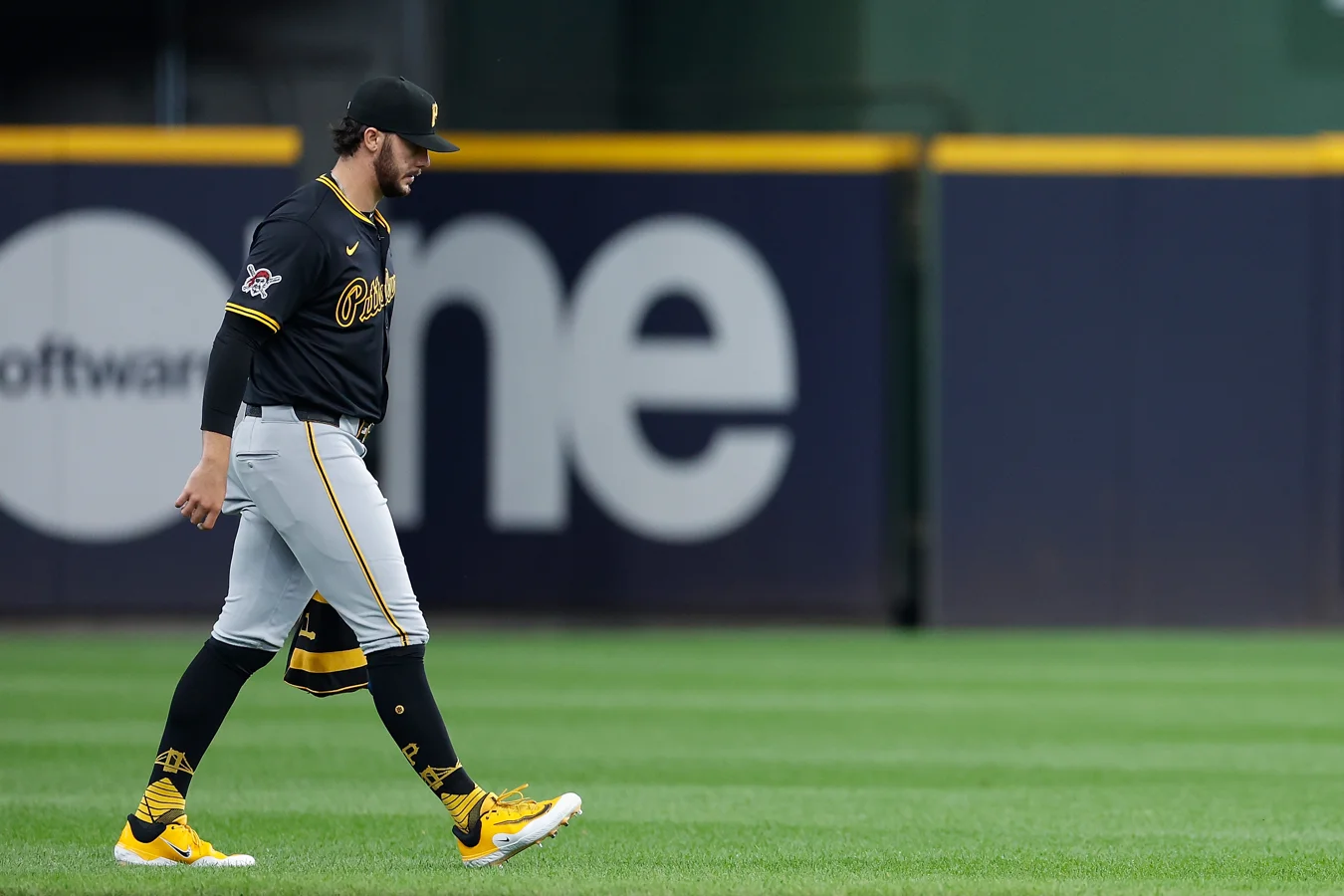

As the Chicago Cubs pursue a World Series title with just over 75 games remaining, their pitching rotation is under severe strain due to multiple injuries and limited depth. The team is urgently evaluating options to bolster their rotation, with Paul Skenes‘ teammate Mitch Keller emerging as a critical candidate to help stabilize the roster before the postseason.
The Cubs currently face the challenge of maintaining competitive pitching amid key arms sidelined and others stretched thin by heavy workloads. Mitch Keller, a right-hander controlled through 2028 and sporting a 3.90 ERA, presents a possible solution to this crisis, potentially slotting into the No. 3 starter role behind pitchers like Imanaga and Boyd. This would provide not only crucial innings but also playoff experience and reliability.
Urgency in Adding a Reliable Arm to the Cubs’ Rotation
Boog Sciambi, a broadcaster closely following the Cubs, voiced concerns about the pitching shortage during a conversation on Nothing Personal with David Samson. He stated,
“You’ve still got 75 games left… and they need a dude. They don’t have a ton of pitching depth,”
highlighting the precarious situation facing the team. Sciambi added,
“They’ve sustained Steele for the year, Imanaga for 45 days… I don’t think they could sustain something else again.”
Emphasizing the stakes, he concluded,
“If you’re trying to win the World Series… you need a dude up front and some depth to shore up in case somebody were to go down.”
Given these warnings, acquiring someone like Mitch Keller would serve as more than a short-term fix for the Cubs. Keller has demonstrated the ability to compete effectively against top-level hitters, showcasing the kind of talent the team needs to contend deep into October. Nevertheless, obtaining him is expected to come at a significant cost, since the Pittsburgh Pirates, his current team, would demand a package rich in promising prospects.

Trade projections suggest the Cubs might have to part with prized farm system players such as No. 4 prospect Kevin Alcantara and No. 16 Pedro Ramirez to secure Keller’s services. This represents a delicate balancing act for Chicago’s front office, weighing the immediate need for playoff-caliber pitching against preserving future potential within their minor leagues.
Rotation Worsens as Veteran Jameson Taillon is sidelined
The Cubs’ situation deteriorated further on July 4 when veteran right-hander Jameson Taillon suffered a strained calf during a bullpen session, leading to an expected absence exceeding one month. This injury occurred amid a July 4 game where the Cubs rather spectacularly set a record with eight home runs in a blowout victory against the St. Louis Cardinals, yet the celebration turned to concern with the announcement from manager Craig Counsell.
Though Taillon struggled in June with a 5.57 ERA over six starts and seven homers allowed, his veteran presence had remained valuable in a rotation marked by instability. Counsell’s update forces the Cubs into a position where they must rely heavily on makeshift pitchers to fill innings, amplifying the urgency of reinforcing the staff.
One hopeful development is the emergence of reliever Chris Flexen, who has been exceptional this season with a 0.62 ERA across 29 innings. The Cubs are considering transitioning Flexen into a starting role to cover Taillon’s absence. However, relying on a reliever to carry starter duties poses a significant risk, underscoring the organization’s need to act decisively ahead of the trade deadline.
Front Office Pressure and Implications for the Postseason
General manager Jed Hoyer has signaled intentions to make impactful moves before the deadline, as the Cubs face the combined setbacks of Steele’s season-ending injury, Imanaga’s ongoing recovery, and Taillon’s recent misfortune. The pitching depth, which was already stretched dangerously thin, now requires urgent attention to sustain the team‘s postseason ambitions.
Without rapid reinforcements potentially including acquisitions like Mitch Keller, the Cubs risk their rotation unraveling, which could derail their World Series dreams. Flexen’s transition may provide temporary relief, but the team’s survival in October depends on securing robust starting options able to withstand the rigors of playoff competition.
Moving quickly to address these pitching challenges will be a decisive factor in whether the Cubs can advance deep into the postseason or face another year of uncertainty clouded by “what-ifs.” The coming weeks will reveal how the front office balances immediate needs against future potential, and how effectively Paul Skenes’ teammate Mitch Keller can be integrated to bolster Chicago’s hopes for a championship run.
Our Reader’s Queries
Q. Is Paul Skenes really good?
A. Skenes had an outstanding debut season. He pitched 133 innings, striking out over five batters for each walk, and achieved a 1.96 ERA. Scott Perry was the last rookie to have an ERA below 2.00 while starting at least 20 games, and he did it back in 1918, towards the end of the dead ball era.
Q. Why did Pirates pull Paul Skenes?
A. The Pittsburgh Pirates manager, Derek Shelton, decided to take Skenes out of the game after he threw 99 pitches and tied his personal record with 11 strikeouts. Speaking to the media, such as SportsNet Pittsburgh, Shelton stated that he didn’t find it difficult to make this choice. “Not at all. He was tired,” Shelton explained.
Q. Has anybody pulled the Paul Skenes card?
A. The dad mentioned he reached out to three auction companies: REA, Heritage Auctions, and Fanatics Collect. The family first spoke to Fanatics Collect on January 2. Nineteen days after this, Topps reported that an 11-year-old collector discovered the Skenes card in one hobby box.
Q. Why is Paul Skenes’ card so expensive?
A. The card was extremely valuable because it was unique, being the only one of its kind. This rarity made its worth surpass Skene’s Major League Baseball salary of $875,000. Fanatics facilitated a lengthy two-week auction by the child and their family. Eventually, Dick’s Sporting Goods purchased it for a significant amount.