
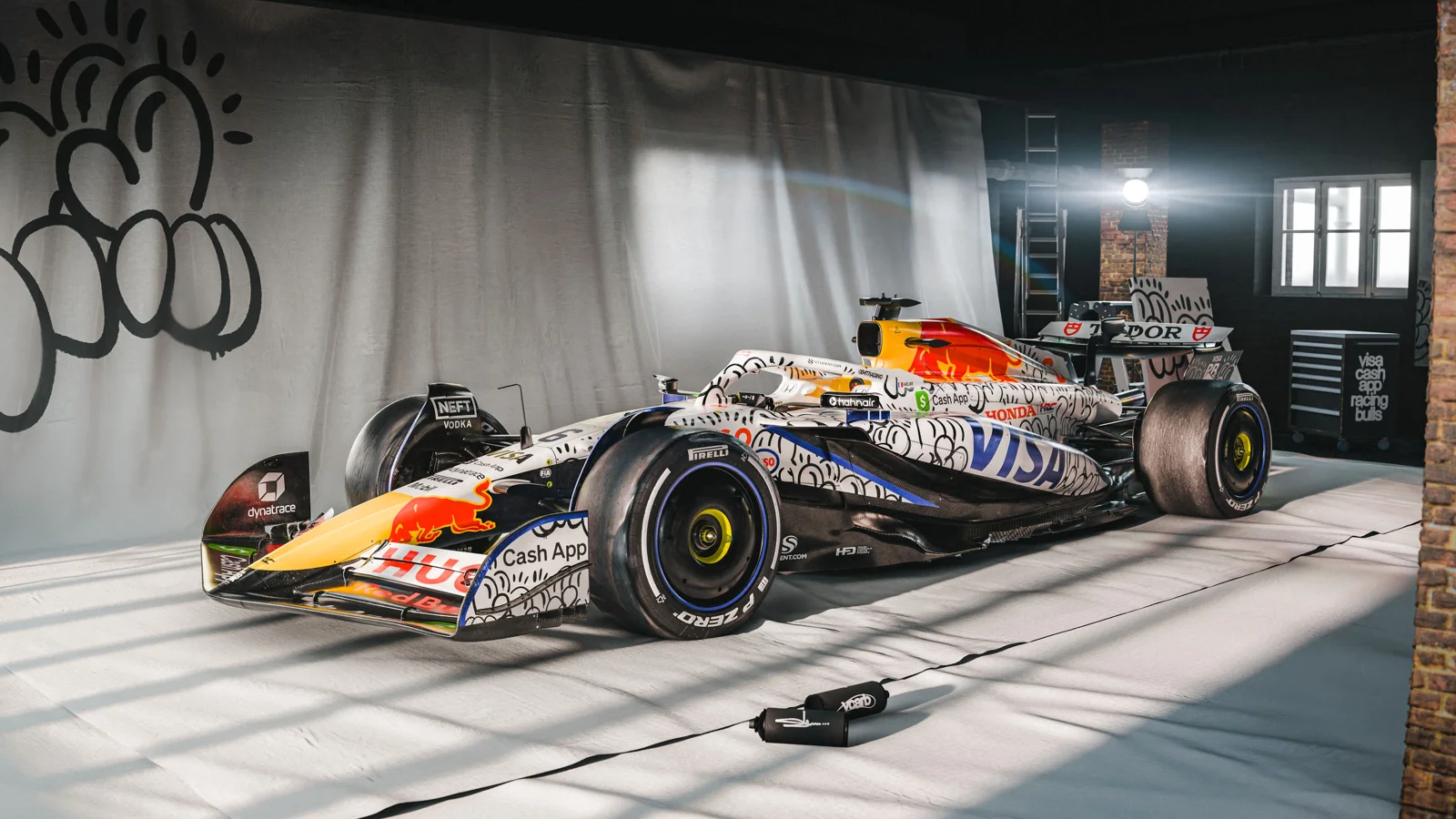

Christian Horner, Red Bull Racing’s team principal, has acknowledged that the 2026 Formula 1 season presents a significant challenge as the team launches its in-house engine programme, Red Bull Powertrains, supported by Ford. With new power unit regulations coming into effect, the team is focused on delivering competitive performance while managing the uncertainty surrounding Max Verstappen’s future in the sport.
Despite Verstappen’s contract with Red Bull running until 2028, speculation continues about his long-term plans. Discussions between Verstappen’s team and Mercedes have fueled rumors, though it remains expected that the four-time world champion will remain with Red Bull through 2026. After that, Verstappen could evaluate which manufacturer leads with the new power units before making decisions about his career beyond 2026.
Verstappen’s Future Linked to Red Bull’s Engine Performance
While Verstappen shows no clear intention to leave, his position may depend heavily on Red Bull’s success with the new engine rules. The ambitious move to bring engine development in-house introduces risks, as falling behind could influence the Dutch driver’s options moving forward. Horner emphasized the scale of the challenge ahead, noting that a strong start with the new power units is essential.
“We understand the pressure that there is next year, with us coming in as a new power unit manufacturer,”
Horner said, outlining the stakes for Red Bull Powertrains.
He continued by highlighting the difficulty of outperforming established rivals at the outset.
“To expect us to be ahead of Mercedes next year is… It would be embarrassing for Mercedes if we were, or for any manufacturer. But I think we’re going to be in a competitive position, potentially even to where we are today relative to our other PU manufacturers. There’s everything to play for.”
Advantages of Integrating Engine and Chassis Teams
Red Bull’s decision to manage its power unit development internally reflects a strategic long-term vision. Combining engine engineers and chassis teams under one roof aims to improve communication and collaborative design, facilitating faster problem-solving and better packaging for the car. Horner stressed that this proximity is a valuable asset for future progress.
“What’s great is having it all under one roof, chassis engineers sitting next to engine engineers – that shouldn’t be underestimated when you’re talking about the packaging,”
he explained.
This integrated approach could provide competitive advantages not only in the initial year of the new regulations but also in subsequent seasons. Horner remains confident the investment will pay off, even if immediate results in 2026 are mixed.
“Maybe it won’t be in ’26, but ’27, ’28, and beyond, long-term for Red Bull, 100% it is the right thing.”
Regulatory Adjustments and Long-Term Outlook
As the 2026 regulation changes approach, teams and regulators are working to ensure fair competition among power unit manufacturers. Discussions continue around mechanisms that might help balance performance disparities, such as allowing more dyno testing time or providing additional cost-cap cap flexibility to those falling behind early in the cycle.
For Red Bull, the next few years will be pivotal. Successfully developing and fine-tuning their own power units is crucial not just for immediate competitiveness, but to secure Verstappen’s continued commitment and maintain the team’s standing at the top of the sport. How well Red Bull adapts to the new technical landscape will shape the Formula 1 grid for years to come.
Our Reader’s Queries
Q. Is number 13 banned in F1?
A. Yes, using 13 is acceptable. Pastor Maldonado chose #13 when Formula 1 introduced a permanent number system in 2014. Even though some view it as unlucky, drivers decide their own numbers.
Q. Which F1 driver has ADHD?
A. Sir Lewis Hamilton, born in 1985, is a British Formula One driver. He races for Mercedes and has also competed for McLaren in the past. Hamilton openly talks about his experiences with ADHD and shares his wide range of interests and hobbies.
Q. Why is 17 not allowed in F1?
A. In Formula 1, the number 17 is not used anymore to honor Jules Bianchi, who had it during his racing career. If a racer doesn’t select a permanent number, they are given a number linked to their team’s past entries.
Q. What F1 driver has ADHD?
A. Lewis Hamilton, born in 1985, is a British race car driver competing in Formula One. He currently drives for Mercedes and previously raced for McLaren. Hamilton openly talks about having ADHD and shares his various interests and passions.