
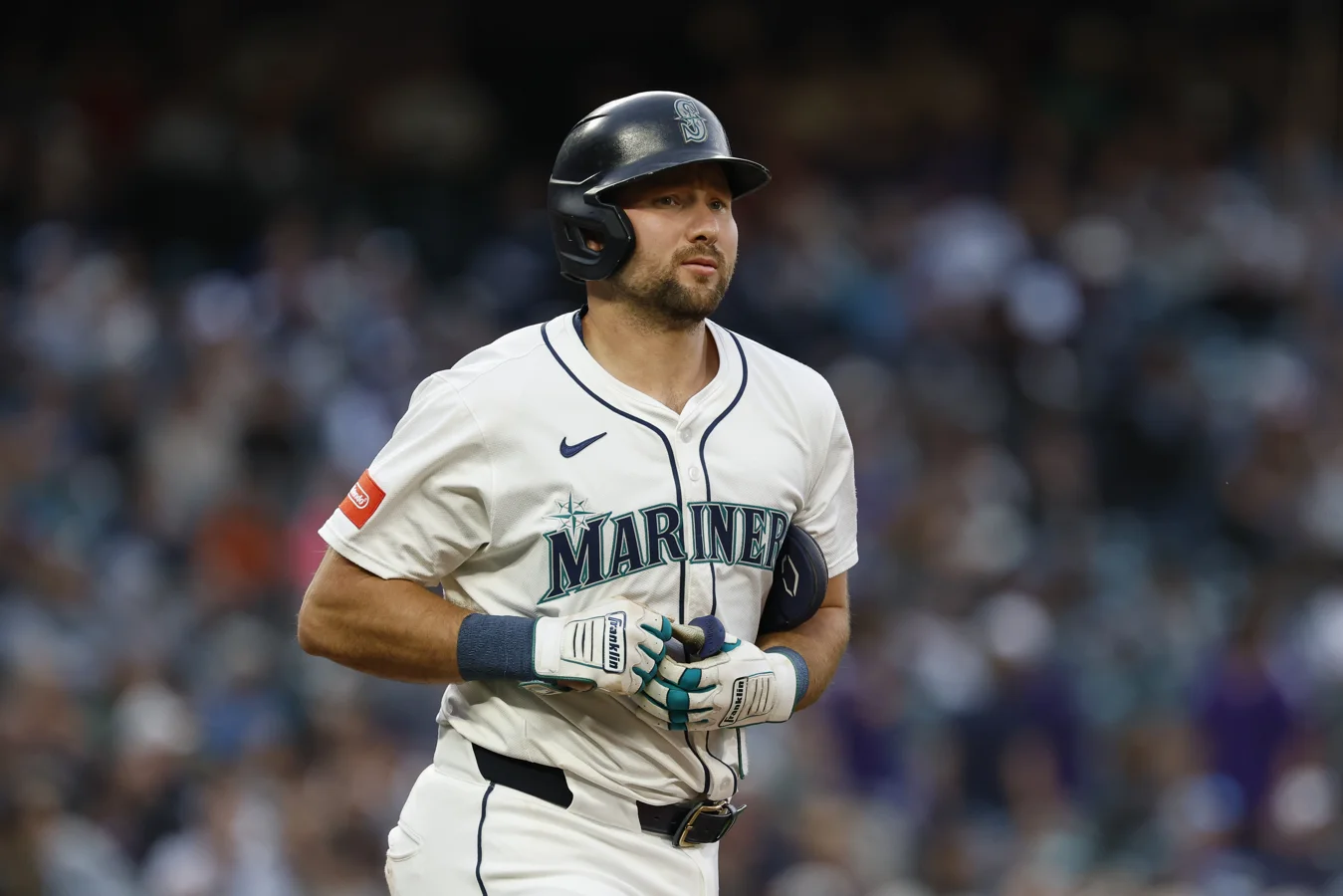

Heading into the current season, Cal Raleigh had already established himself as a standout catcher, combining solid defensive skills with a respectable on-base plus slugging (OPS) around the mid-700s. This combination made him one of baseball’s top catchers before his recent surge. However, his offensive explosion—boasting an OPS above 1.000 and 32 home runs through just 83 games—has shifted the conversation from whether Raleigh is among the best to whether he is on track for one of the greatest offensive seasons ever recorded at the catcher position.
The dramatic leap in Raleigh’s performance suggested that the improvement might be rooted in some mechanical adjustments to his swing, prompting a detailed examination of what has changed this year. It became clear that a significant shift in his batting approach transformed a previous vulnerability into a decisive strength.
Early Struggles Against Velocity and How His Swing Adapted
Over the 2023 and 2024 seasons, Raleigh struggled significantly against fastballs thrown at 93 miles per hour or faster, slashing just .201/.302/.399 overall against those pitches. His right-handed batting side showed even greater difficulty facing velocity, hitting merely .123/.188/.274 during that period. Despite this, Raleigh managed to maintain a competent .755 OPS by capitalizing on poorly located fastballs and excelling against breaking balls, where his OPS reached .810, surpassing league averages. Additionally, he flourished against slower fastballs, producing a .950 OPS against pitches under 93 MPH.
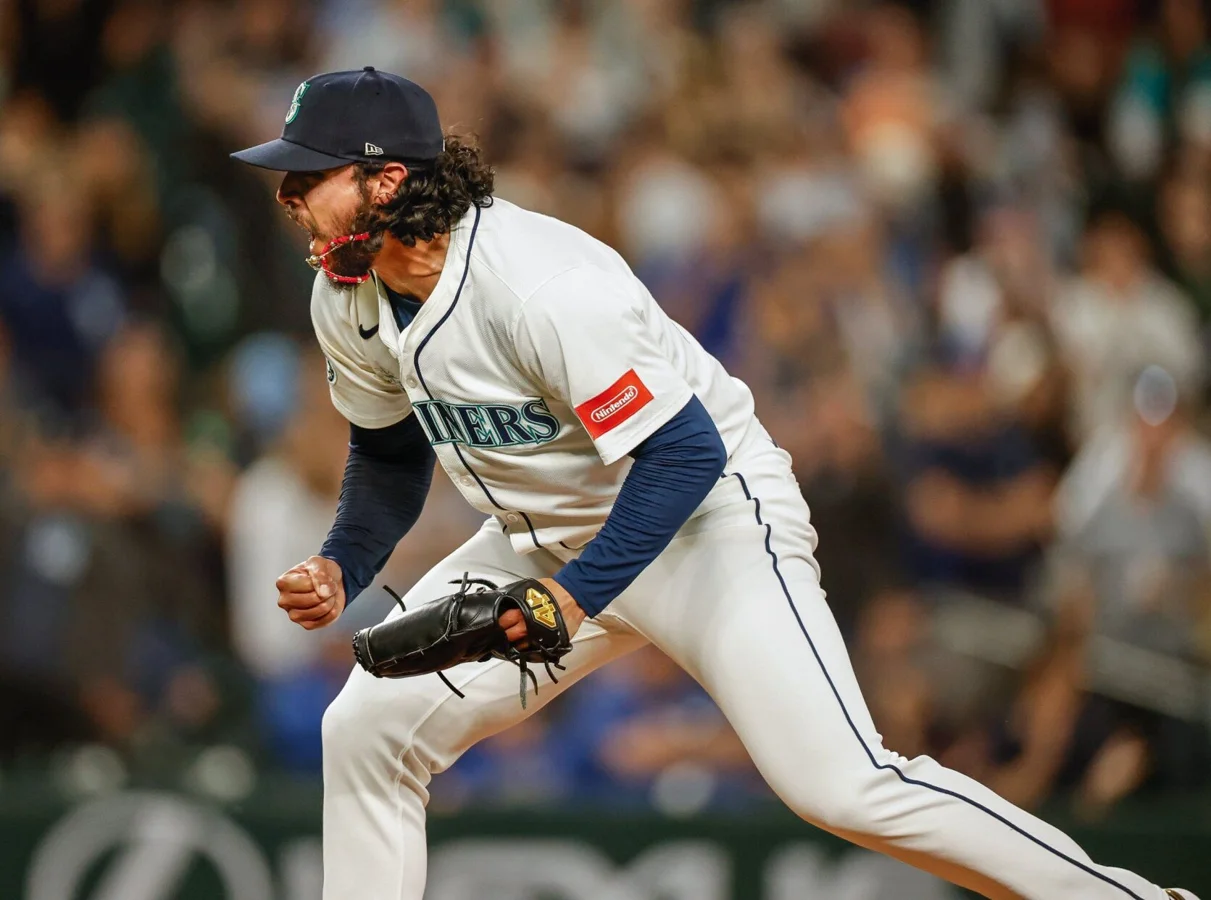
Key Adjustments to Raleigh’s Swing Mechanics
When hitters face challenges with high-velocity fastballs, conventional wisdom advises initiating their loading sequence earlier to better react to speed. Raleigh’s use of a substantial leg kick complicated this, as starting the load sooner requires balance and the ability to stay back, even when seeing off-speed pitches. Raleigh’s history of excelling against breaking balls but struggling with velocity suggested that adjusting his timing was crucial.
Raleigh’s updated setup features a more upright stance, with his hands held higher and the bat barrel flatter compared to previous years. Adopting a more upright posture allows him to begin his load earlier and creates space for a counter-movement, which was limited when he was more crouched. This adjustment enables him to sink and coil into his back side as he strides, helping retain balance and weight distribution that let him start the load sooner without rushing forward.
His flatter bat barrel is noticeable both in his setup and during his load phase. This change aids in aligning with the plane of the pitch more effectively, a common adjustment for hitters who struggle to connect consistently. From a centerfield view, the rhythm of Raleigh’s load now appears much smoother and begins significantly earlier.
One of the most telling signs of his revised timing is the position of his front leg at the moment the pitcher releases the ball. Raleigh’s new swing finds him already lowering his foot, while his old swing had him still peaking the leg kick. This altered timing allows Raleigh to maintain control of his tempo instead of feeling forced to quickly plant, letting him dictate his own rhythm.
Improved Timing Creates an Advantage Against Fastballs
A pitcher’s primary goal is to disrupt a hitter’s timing, but Raleigh’s slower, more controlled early load helps him avoid being rushed. This approach also puts him in a better position to execute his primary swing, particularly against high-velocity pitches, allowing him to make contact further out in front. The effects are even more dramatic from the right side, where Raleigh had previously been most vulnerable.
In the combined 2023 and 2024 seasons, Raleigh’s right-handed batting line against all fastballs was .158/.233/.350 with only seven home runs, and the OPS against those 93+ MPH fastballs dropped to a mere .461. In contrast, his performance in 2025 from the right side has seen him surpass that home run total with eight in just a quarter of the games, backed by an outstanding .386/.426/1.026 slash line.
The swing refinements on both sides have contributed to this rise, but the improvements have been most significant from the right. Previously, Raleigh’s hand movement was noisy, with his barrel waving before and during his load, adding timing inconsistencies. Reducing this extra movement has permitted him to feel less rushed and gain more time during his load phase.
Supporting these changes, Raleigh’s OPS against off-speed and breaking pitches has increased nearly 200 points, while his ground ball rate has dropped by six percent and chase rate—the frequency of swinging at pitches outside the strike zone—has decreased by four percent, illustrating his improved plate discipline and more efficient swing path.
On Pace for One of the Greatest Catcher Seasons in MLB History
Cal Raleigh’s current performance ranks among the best offensive campaigns ever for a primary catcher. Historically, only six catchers in Major League Baseball have hit 40 home runs in a single season, including Javy Lopez in 2003 and Salvador Perez in 2021, both post-2000 sluggers. Neither were known for elite defense as Raleigh currently is, suggesting Raleigh might surpass their home run totals with time remaining in this season.
Raleigh has seen his wins above replacement (fWAR) rise each of the past four years, now reaching a career-high 5.7 as of early July. Fangraphs notes that the greatest fWAR season by a catcher was Buster Posey’s in 2012, and Raleigh’s pace closely parallels that benchmark. Posey’s 2012 campaign earned him the National League MVP, a distinction that now places Raleigh in MVP conversations, although Aaron Judge remains a formidable contender.
While it may seem odd to label this a breakout year because Raleigh was already elite, this season stands out as his moment of full realization, where superior talent meets peak performance. His ball-striking data from MLB’s Savant platform indicates his quality of contact has not fundamentally changed in percentile rankings compared to prior years. Raleigh consistently hit the ball hard and in the air, but now he does so at an elite level across the league.
Our Reader’s Queries
Q. Why is Cal Raleigh called dumper?
A. Raleigh got the nickname “Big Dumper” because of his backside. Former teammate Jarred Kelenic began using it in 2020. He tweeted it in 2021 when Raleigh joined the Mariners. Raleigh’s mom doesn’t like the nickname but appreciates the fans’ backing of her son.
Q. How much is Cal Raleigh paid?
A. JT Realmuto from the Phillies signed a contract worth $115.5 million, covering the years 2021 to 2025. Meanwhile, Cal Raleigh of the Mariners has a deal for $105 million from 2025 to 2030.
Q. How much does Cal Raleigh make?
A. Cal Raleigh, who plays for the Mariners, has a contract worth $105 million starting from 2025 through 2030.
Q. Is Cal Raleigh a free agent?
A. The Mariners and Raleigh have agreed on a six-year contract extension worth $105 million, lasting until 2030. This new deal starts this season. It covers the next two years when he could have been in arbitration and adds three more years before he would become a free agent, according to several sources.