
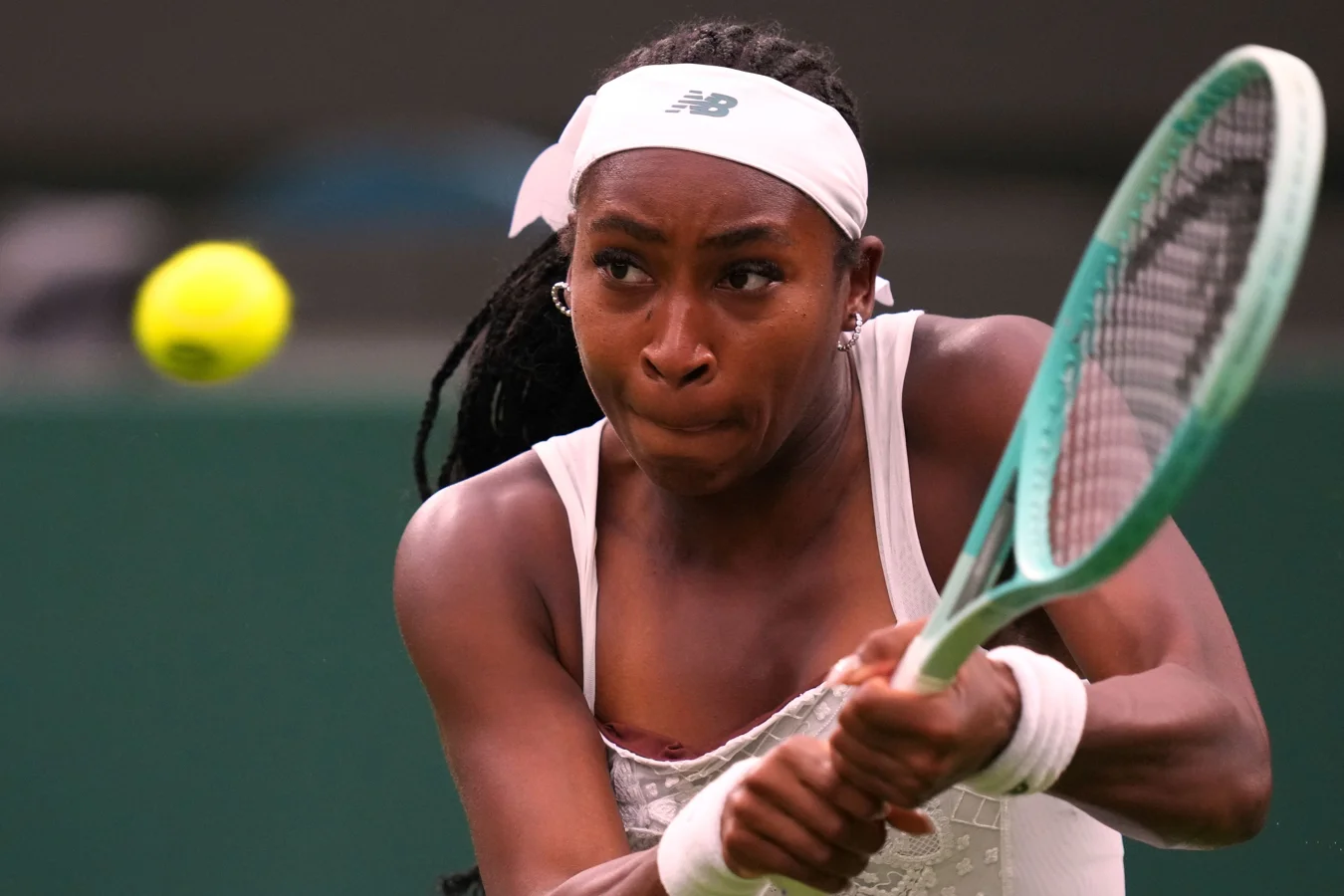

Brad Gilbert, who was Coco Gauff‘s former coach until recently, revealed he witnessed Novak Djokovic use tactics he had never seen before during the Wimbledon match against Alex de Minaur. Despite the Serbian champion’s legendary status, Djokovic began the encounter on an unexpectedly weak note, falling behind by a set in less than 35 minutes. This swift deficit was unprecedented for Djokovic, as De Minaur claimed a set in a way never recorded against him.
Nonetheless, Djokovic’s experience and resilience prevailed as he staged a comeback after the shaky start, demonstrating his ability to recover under pressure. Gilbert expressed fascination not only with Djokovic’s slow beginning but also with the way he adapted mid-match to regain control.
Insights into Djokovic’s Tactical Shift and Resilience
During an interview with ESPN, Gilbert analyzed Djokovic’s performance and highlighted a noticeable difference in his style. He noted,
“I’ve never seen Novak in so many slicing points, slice to slice on the backhand. Normally, he’ll get out of that. On this rally, after a couple, he said Enough with that. Then he starts dictating a little bit more and watch him open up on these two forehands, take the lungs out a little bit, and that is an unbelievable shot from below the net.”
—Brad Gilbert, Former Coach of Coco Gauff
Gilbert also compared Djokovic’s early struggles to a fresh start opportunity, saying,
“But I really felt like Novak. You know, I guess in golf, I don’t play golf, but every once in a while, you duck hook one on the first tee, and you ask for a mulligan, or you get, you know, you lose all your chips in the first hand, you got to get a re-buy-in. That’s exactly what Novak did. He knuckled down at the end of the first set.”
—Brad Gilbert, Former Coach of Coco Gauff
He further described Djokovic’s gameplay as uncharacteristic at first, noting,
“I thought, you know, in the first set, he started aimlessly coming in a little bit. He was diving. He was just doing things uncharacteristic, but at 38 years young, he still has amazing resilience to be able to turn things around.”
—Brad Gilbert, Former Coach of Coco Gauff
Reflecting on Djokovic’s longevity at Wimbledon, Gilbert remarked on the significance of advancing to the quarter-finals for the 16th time, a record that speaks to Djokovic’s durability across nearly two decades. Looking ahead to Djokovic’s next opponent, Gilbert commented,
“’First of all, I just had to process that for a second, so that’s almost 16 years of quarter-finals. That sounds like, you know, Chrissy, minus a quarter, she’d be semis. But that’s just ridiculous.”
—Brad Gilbert, Former Coach of Coco Gauff
Gilbert compared Djokovic’s upcoming challenger, Cobolli, to the player Musetti, noting the latter’s impressive rise the previous year. He added,
“’But Cobolli reminds me a lot of Musetti last year, who had his breakout here, getting to the semis, returning well and moving well, making opponents play an extra ball. I was very impressed with how he played today. Did not think that he was at that level. It’s great to see somebody blossoming on a surface that you haven’t seen before.”
—Brad Gilbert, Former Coach of Coco Gauff
Speculations Surrounding Djokovic’s Physical Condition During the Match
Djokovic’s struggle in the early stages of the match led many fans and analysts to question whether he was hampered by an injury. While Djokovic had shown strong form in the first three rounds at Wimbledon, his sudden difficulty contending with De Minaur sparked speculation. Visuals showing the Serb shirtless, icing his stomach during the match, and performing difficult stretches during changeovers, fueled these concerns.
Despite these observations, Djokovic addressed the rumors in his post-match interview, clarifying,
“It was all good. I was just trying to manage the breathing. After 30-plus shots rallies from the back of the court, you need a breather, and you don’t have much time.”
This explanation left many uncertain, suggesting that what appeared as physical issues might merely have been an unusually poor start. Djokovic will be looking to improve his performance and avoid similar struggles as he moves into the next rounds of Wimbledon.
Implications and Outlook Following Djokovic’s Wimbledon Performance
The match served as a reminder of Djokovic’s ability to adapt tactically and mentally under pressure, despite signs of vulnerability at times. His resilience at 38 years old continues to defy expectations in a sport often dominated by younger athletes. For Brad Gilbert and tennis observers alike, Djokovic’s prolonged presence at the highest level remains astonishing.
With Djokovic advancing to his 16th Wimbledon quarter-final, attention now turns to how he will handle the energetic and rapidly improving Cobolli. This upcoming clash could test Djokovic’s enduring stamina and strategic prowess, potentially shaping his quest for another Grand Slam title. Meanwhile, Gilbert’s reflections emphasize the rarity of such longevity and constant evolution in tennis, underscoring Djokovic’s unique place in the sport’s history.
Our Reader’s Queries
Q. Does Coco Gauff have a degree?
A. Gauff often mentions her hometown and even named her signature shoe “Coco Delray” after it. Due to her busy tennis schedule, she didn’t attend a local high school. However, she completed her high school education in 2022.
Q. Is Coco Gauff the highest paid tennis player?
A. Coco Gauff, a tennis player, earned $30.4 million. Eileen Gu, who is known for skiing, made $22 million. Iga Swiatek, another tennis athlete, earned $21.4 million.
Q. Why is Coco Gauff called Coco?
A. When my dad, Corey Gauff, was younger, folks called him ‘Co.’ So, he decided to name me Coco. I’m not sure which story is true, but both my parents insist I mention them both.