
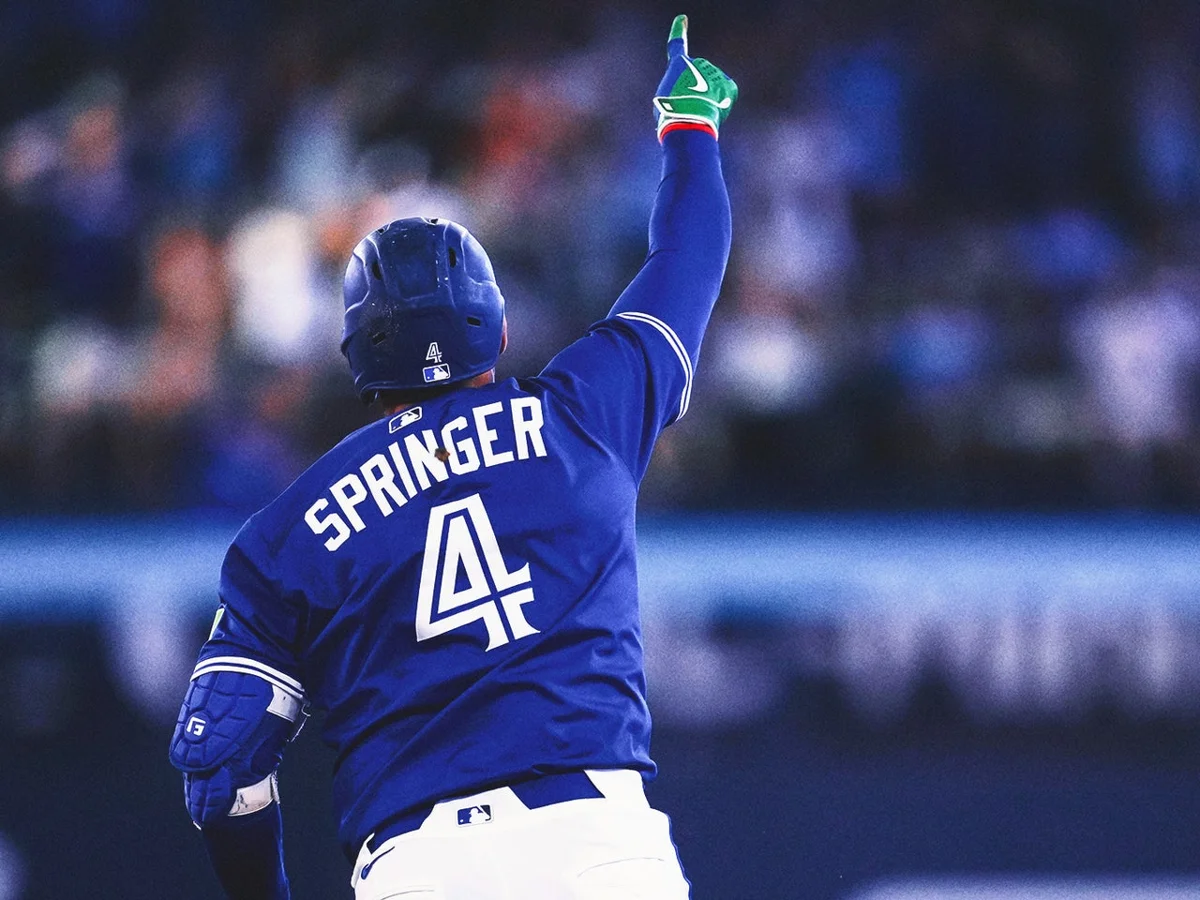

George Springer’s 2024 batting resurgence has caught many by surprise, especially after an underwhelming start to spring training. Despite concerns over a possible decline given his recent track record, Springer has flipped the script, delivering what looks like a true comeback for the Toronto Blue Jays. Approaching his 36th birthday, he is producing at a level not seen since his prime years with the Astros, combining both power and discipline in a way that’s fueling a blossoming offensive resurgence.
Springer’s improvement is clear through his first months this season: he’s accumulated 1.8 WAR and boasts a 143 weighted runs created plus (wRC+), the best score since 2020. His home run pace hints at the highest total since 2019, while his 12.4% walk rate marks a career best, signaling patience at the plate that’s rare for any hitter, let alone one at this stage in his career.
Plate Discipline: Cutting Back to Gain More Control
One of the core facets of Springer’s success this year lies in his refined plate discipline. His chase rate—the percentage of swings on pitches outside the strike zone—has plummeted to 19.4%, the lowest of his career, as he reduces swings at fastballs, breaking balls, and offspeed pitches alike. This more selective approach has not only limited bad swings but increased the number of walks and on-base opportunities.
Interestingly, Springer is also swinging less frequently at pitches within the strike zone, which has increased his called strike and strikeout totals, though these factors have proven a worthwhile trade-off given the increase in walks and quality contact. By better recognizing which pitches to attack, he has maximized his plate appearances more efficiently than in previous seasons.
Targeting the Heart of the Plate for Maximum Impact
Springer’s swing distribution reveals another crucial adjustment: a higher tendency to swing at pitches right over the center of the plate. Nearly half of his swings this season occur on pitches directly in the sweet spot, the highest such rate since 2015. This concentration on ideal pitches to hit has enabled him to maximize damage when he does swing.
At the same time, Springer has reduced swings on pitches in less advantageous areas, especially those up and away or low in the strike zone. This makes strategic sense because these are zones where breaking balls often land, and those pitches are typically harder for hitters to drive effectively. Cutting his swing rate on low breaking balls from 75% last season to 68% this year correlates with an important shift back towards more productive contacts.
Reclaiming Power Through Smarter Swing Decisions
Springer’s renewed emphasis on selectivity and quality pitches has helped restore his fly ball rate, which has surged this year. Now, 71% of his hard-hit balls are airborne, the second-highest mark of his career. This resurgence in fly ball production is a vital factor driving his surge in power numbers and overall offensive value.
His weighted on-base average on contact (wOBACON) and expected wOBACON reflect this improvement, reaching levels unseen in years. While some fly balls still head to deep center field rather than being pulled for home runs, Springer is also consistently delivering line drives down the left field line, showcasing a versatile approach at the plate.
Hitting the Ball Harder and Smarter
Along with better pitch selection, Springer’s contact quality has reached new heights. His hard-hit rate sits at a career-best 45.1%, matched by an average exit velocity of 90.1 mph, which ties the highest in his playing tenure. Although his 90th percentile exit velocity at 105.7 mph isn’t far from what he managed in past seasons, the key is a reduction in soft contact. Only 13% of his balls in play are classified as soft this year, the lowest rate of his career.
These numbers suggest that rather than solely increasing power, Springer is doing a better job of consistently making solid contact, effectively cutting out weak swings and mishits. This precision, combined with increased bat speed—which has risen from 71.9 mph to 73.1 mph compared to last year—demonstrates his ability to meet the ball with more force and loft.
Improved Performance Against Fastballs and High Velocity Pitches
Springer’s approach has also made him far more effective against high-velocity pitches. After posting a .332 weighted on-base average (wOBA) against fastballs over the past two seasons, he’s jumped to .427 this year. The difference becomes even starker against elite velocity pitches, those clocked at 97 mph or higher. Against those offerings, his wOBA jumped from a paltry .232 in the last two seasons to an impressive .449 this season.
Among players seeing at least 50 pitches traveling 97 mph or more, Springer ranks in the 94th percentile with a .438 expected wOBA. This transformation positions him as one of the most dangerous hitters in Major League Baseball against the fastest pitches.
Trade-Offs with Offspeed Pitching and Adjusting to New Strengths
However, with greater dominance against fastballs comes some vulnerability. Springer’s production against offspeed pitches has slipped compared to previous years. While he hasn’t necessarily been fooled more often, his contact quality off soft pitches has declined, leading to weaker outcomes. Since offspeed pitches account for a smaller fraction of pitches faced league-wide than breaking balls or fastballs, this trade-off is often favorable for hitters like Springer who excel at pounding fastballs.
Analyzing these shifts, it appears Springer is intentionally gearing his approach toward fastballs more than in past seasons, optimizing his strengths and adapting his swing accordingly.
Springer’s Intentional Swing Changes and Mental Approach
Springer has been somewhat reserved with the media about the specifics of his adjustments but has highlighted the importance of consistency and control. He stated,
“I don’t want to not have a good swing,”
underscoring his focus on maintaining a reliable and effective swing plane.
He added,
“I think last year and some times in spring I got myself into trouble not taking the swing that I want to take. But now every game it’s about having my stuff I need to do beforehand, and then getting in the box and getting my A swing off.”
—George Springer, outfielder
This mentality reveals a deliberate process of preparation and execution, which complements the mechanical improvements made to his swing.
The Uncommon Combination of Patience and Power
Springer’s 2024 resurgence features a unique blend of selectivity and aggression that does not always come together in most hitters. While many players who cut back on swings tend to lose power, or those who swing harder increase their strikeouts, Springer has managed to enhance both tilt angles. He swings harder and more loftily, meets the ball further out in front, and yet has also reduced unnecessary swings, which helps maintain balance at the plate.
He hasn’t increased his pull rate yet, a metric often associated with power hitters, as many of his fly balls go to deep center field. Nevertheless, his ability to make more consistent hard contact while being patient at the plate suggests that his current streak is not an anomaly or fluke.
What This Means for Springer and the Blue Jays Going Forward
While no hot streak lasts forever and his batting average on balls in play (BABIP) is likely to fluctuate, the underlying improvements Springer has made project sustained benefits. Enhanced bat speed, smarter plate discipline, and refined pitch recognition create a foundation for continued success. His ability to attack fastballs and harness higher velocity pitches places him in an elite category for the remainder of the season and beyond.
For the Blue Jays, Springer’s resurgence adds a critical offensive weapon, complementing their diverse lineup and improving their overall run production potential. His transformed approach at the plate reinforces his role as a reliable and impactful contributor in the outfield and the batter’s box. If Springer maintains this approach, the team stands to benefit immensely in tight matchups and playoff pushes.
Our Reader’s Queries
Q. Does George Springer have a disability?
A. Springer has a stutter. It wasn’t until he reached the major leagues that he started to embrace himself and find new speaking methods.
Q. Is George Springer an all-star?
A. Toronto Blue Jays’ George Springer, who plays as a designated hitter (DH), is notably missing from the All-Star selections. Despite this, he’s having an outstanding season. Springer has been a key player in Toronto’s rise to the top of the American League East standings.