
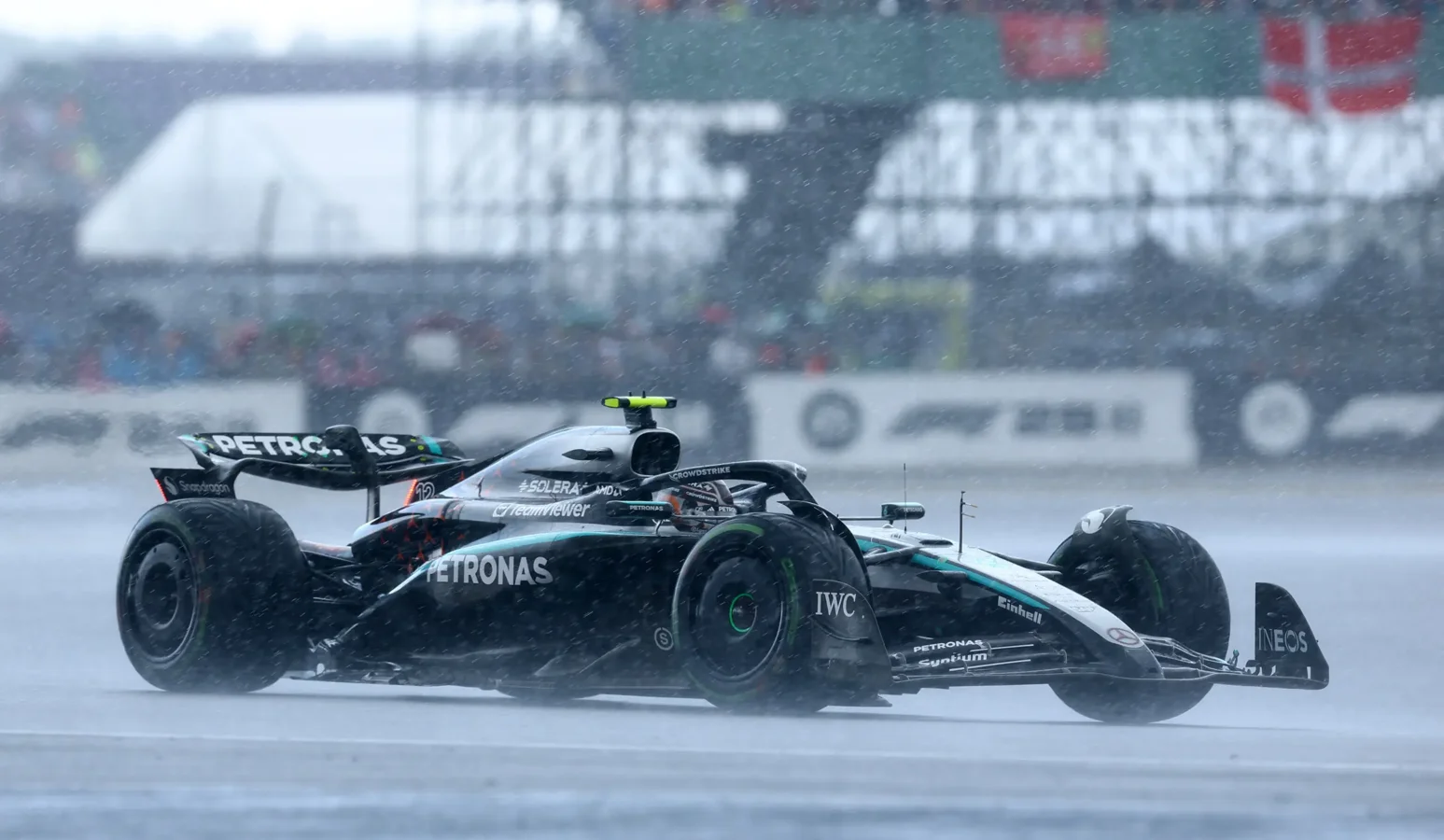

During the British Grand Prix at Silverstone, Kimi Antonelli‘s Mercedes suffered catastrophic damage following a severe crash with rival driver Isack Hadjar, forcing Antonelli to retire from the race. This incident marked Antonelli’s fourth Did Not Finish (DNF) in just six races, highlighting a troubling pattern in his performance.
Severe Loss of Downforce Significantly Impacts Performance
The crash caused devastating damage to Antonelli’s car, with the driver revealing that he lost an incredible 100 points of downforce. This deficit was far greater than what Lewis Hamilton experienced during his incident in Canada, where a collision with a groundhog resulted in a slower lap time of about half a second. For Antonelli, the damaged Mercedes translated to a race pace loss estimated at 2.5 seconds per lap, making any chance of recovery nearly impossible.
Antonelli Reflects on Misfortune and Challenging Conditions
Antonelli expressed his frustration after the crash, explaining,
“It just seems like everything is going wrong at the moment, and it is hard to find positives.”
The early race gamble he took backfired, compounded by difficulties in maintaining tire temperature following a pit stop. Poor visibility during the incident was a major contributing factor, with Antonelli admitting,
“Obviously, the visibility was extremely poor, and I don’t know why, but I could feel it coming.”
Despite holding on to the track after impact, damage to the diffuser severely impaired his control over the car.
Both Drivers Consider Crash in Light of Hazardous Conditions
Both Antonelli and Hadjar appeared to accept that the collision might have been unavoidable, given the poor visibility around Silverstone. Hadjar commented that the crash felt foreseeable considering the weather, prompting questions about whether restarting the race in such dangerous conditions was the right decision. This incident underscores the peril drivers face when competing under adverse circumstances in high-speed motorsport.
Implications for Driver Safety and Future Races
The collision and resulting destruction of Antonelli’s Mercedes put a spotlight on the ongoing safety challenges in Formula 1, especially when unpredictable weather affects race conditions. The severity of the crash raises concerns about protective measures and protocols for managing race restarts during inclement weather. As teams and officials review this event, its impact will likely influence how upcoming races address visibility and driver risk to enhance safety on the track.
Our Reader’s Queries
Q. How did Kimi Antonelli crash?
A. Eighteen-year-old Mercedes rookie Antonelli collided with Verstappen’s Red Bull after his brakes locked at the third corner of Sunday’s first lap. The crash damaged both cars so badly that neither driver could continue racing, seriously hurting Verstappen’s chances at a title.
Q. Why did Kimi Antonelli crash?
A. “I didn’t really brake too late,” said Antonelli. “But when I pressed hard on the brakes, the rear wheels locked up. I couldn’t steer the car after that. I was going too fast, so a crash couldn’t be avoided.”
Q. How old was Kimi Antonelli when he was in F4?
A. Just three weeks past his 15th birthday, Antonelli started his junior formula racing career in the fifth round of the 2021 Italian F4 Championship. He raced for Prema at the Red Bull Ring.
Q. How old was Kimi Antonelli in F4?
A. He began racing cars at the young age of 15. Soon after, he won several titles in the Italian and ADAC F4 championships in 2022. The following year, he achieved more victories in the Formula Regional Middle East and European series.