
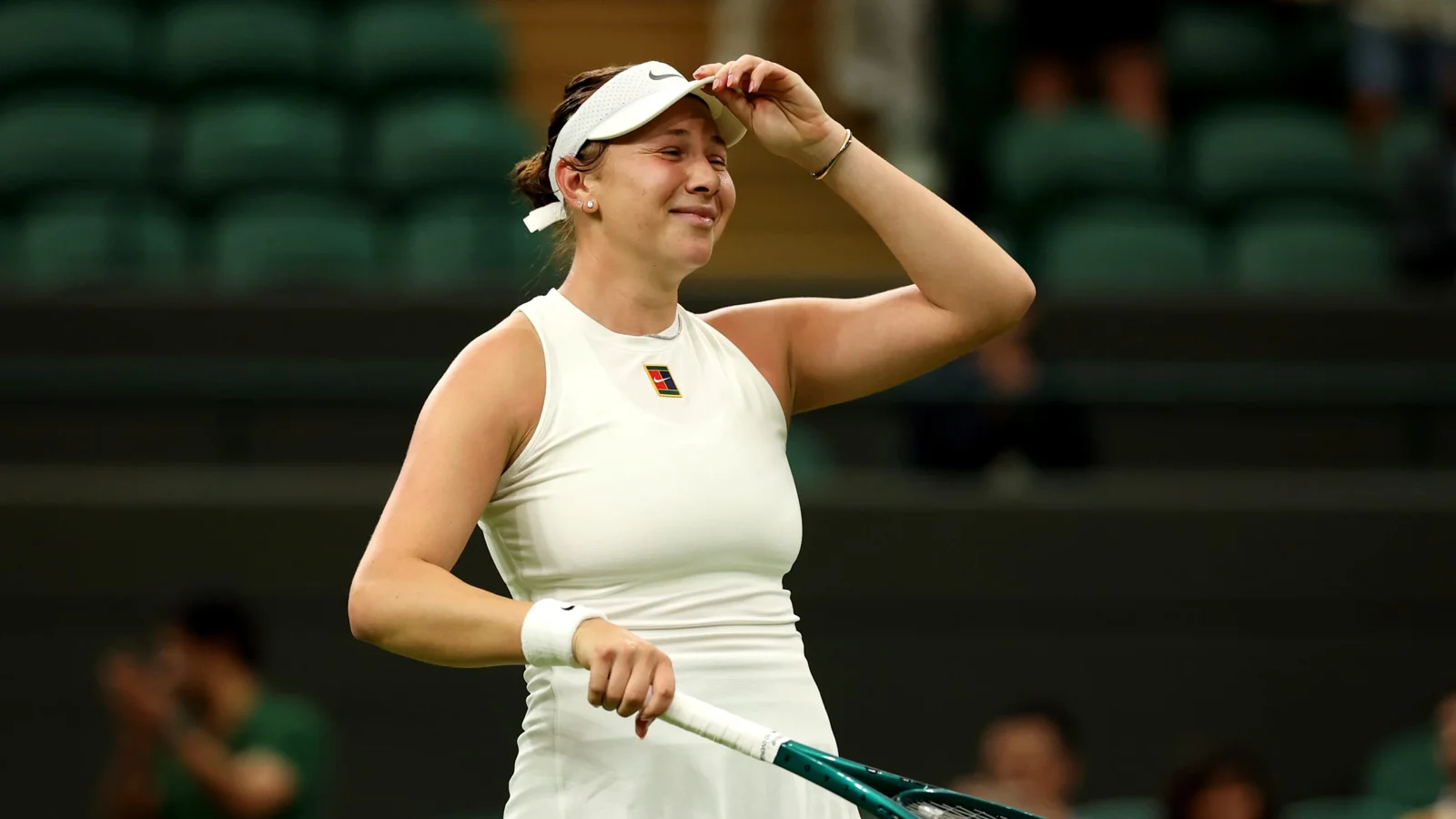

Amanda Anisimova secured her first Wimbledon semifinal berth on Tuesday, July 8, after defeating Anastasia Pavlyuchenkova 6-1, 7-6(9). The World No. 12 credits a mental health break she took in 2023 as crucial to her revitalized performance and success at the prestigious Grand Slam event.
Since turning professional in 2016, Anisimova has faced significant challenges related to burnout and mental health, common concerns among tennis players due to the sport’s demanding 11-month schedule. She stepped away from competition to focus on her wellbeing and returned in 2024 with renewed perspective. Speaking to ESPN, she emphasized the importance of addressing such issues openly and balancing the pressures of a professional sports career.
“I feel like just me being honest and vulnerable about a topic that might be a bit stigmatized in a way, I think that was super important…and for other people to have a different outlook or perspective on, you can struggle with your mental health. It’s just as important as your physical health. Especially when it comes to sports and pursuing this as a career. The lifestyle can be different if you don’t find that right balance.”
—Amanda Anisimova, Tennis Player
Anisimova’s deep run at Wimbledon marks her second Grand Slam semifinal appearance, having previously reached the last four at the 2019 French Open where she lost to eventual champion Ash Barty. Before Wimbledon 2024, her results at other majors included a second-round exit at the Australian Open, losing to 2021 US Open winner Emma Raducanu, and a fourth-round loss at the French Open to Aryna Sabalenka, who eventually finished as runner-up.
Throughout her career, Anisimova has captured three WTA singles titles, including a victory earlier this year at the Qatar Open, where she defeated Jelena Ostapenko in the final. Ahead of Wimbledon, she competed in two grass-court tournaments, showing consistent form even though she fell short of titles. She reached the final at the Queen’s Club Championships but was bested by Tatjana Maria, and then lost in the Berlin quarterfinals to Liudmila Samsonova.
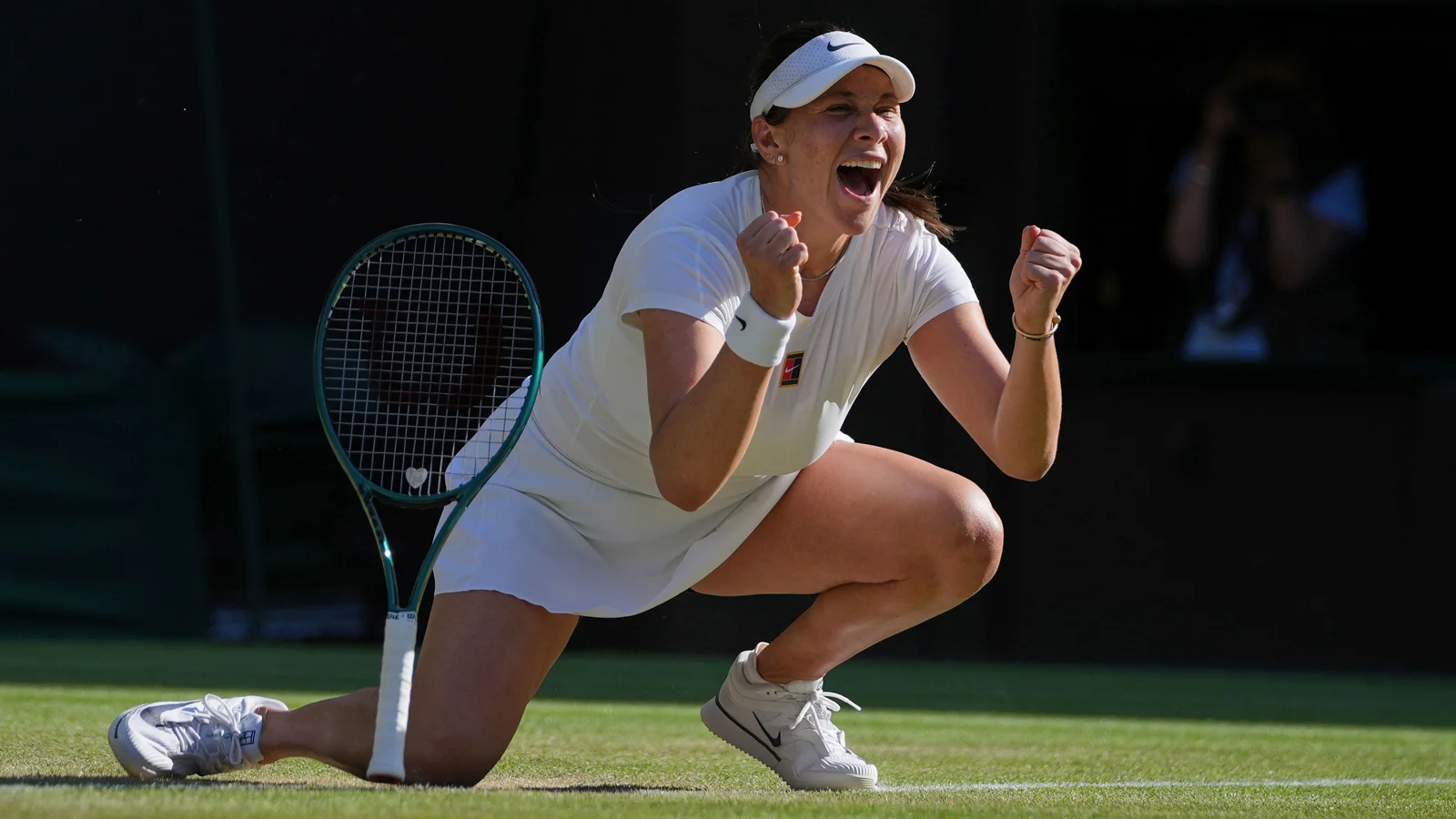
An Upcoming Wimbledon Duel Against Aryna Sabalenka
Amanda Anisimova’s next opponent at Wimbledon is Aryna Sabalenka, a formidable adversary who recognizes the threat Anisimova poses. The two have met eight times, with Sabalenka holding a slight edge by winning three matches. Notably, Sabalenka defeated Anisimova in the fourth round of the recent French Open.
Their head-to-head encounters span various surfaces: five matches on clay and three on hard courts, but none have taken place on grass to date. Sabalenka has reached the Wimbledon final twice but has yet to claim the title. After her quarterfinal victory, Sabalenka expressed respect for Anisimova’s game and warned of an intense contest ahead.
“I think this surface suits her game very well. That’s why she’s playing so well so far. She’s serving well. She’s hitting very clean and strong shots. We just played in the French Open. I had to work very hard to get the victory. I think it’s going to be very aggressive tennis. I expect fewer slices from her. But yes, it’s going to be a completely different match from the one I played today.”
—Aryna Sabalenka, Tennis Player
Sabalenka narrowly escaped a tough quarterfinal against Germany’s Laura Siegemund, dropping the first set before mounting a comeback to win 4-6, 6-2, 6-4. This marks Sabalenka’s third Wimbledon semifinal appearance following 2021 and 2023 seasons, after missing last year’s tournament due to injury. She aims to secure her fourth title of the year, having already triumphed in Brisbane, Miami, and Madrid.
This season, Sabalenka also reached finals in two other Grand Slams, finishing as runner-up at the Australian Open to Madison Keys and the French Open to Coco Gauff. Both she and Anisimova are therefore poised for a highly competitive semifinal showdown on grass.
The Influence of Mental Health Awareness in Professional Tennis
Anisimova’s candid discussion of mental health highlights a growing conversation in the tennis world about player wellbeing. The sport’s demanding calendar often leads to physical and emotional exhaustion, making it challenging for athletes to maintain peak performance year-round. Anisimova’s story underscores the importance of prioritizing mental health as part of athletic success.
Her willingness to speak openly about her struggles helps reduce stigma around mental health in sports and encourages others to seek support. With teams increasingly focusing on balance and enjoyment both on and off the court, players may find it easier to sustain long careers without sacrificing their personal wellbeing.
As one of the rising stars who has embraced this approach, Anisimova sets an example for her peers, showing not just resilience but the value of self-care in reaching the highest levels of competition.
What’s Next for Amanda Anisimova and Wimbledon
Having advanced to the Wimbledon semifinals for the first time, Amanda Anisimova faces a critical test against Sabalenka, who has more experience at this stage in the tournament. The outcome will significantly influence both players’ careers moving forward, especially with ranking points and major titles at stake.
For Anisimova, maintaining her mental and physical balance will be key as she navigates the pressures of elite competition. This match also carries broader implications for the role mental health plays in sports, possibly encouraging even more athletes to prioritize their wellbeing alongside their training.
Fans and analysts alike will watch closely to see if Anisimova’s breakthrough mental health journey translates into a Grand Slam final appearance and could even inspire lasting changes in how tennis players approach their demanding careers.
Our Reader’s Queries
Q. Why did Amanda Anisimova take a break?
A. Feeling overwhelmed by the stress of the tennis world and struggling with depression, the 23-year-old decided to take a break from playing two years ago.