
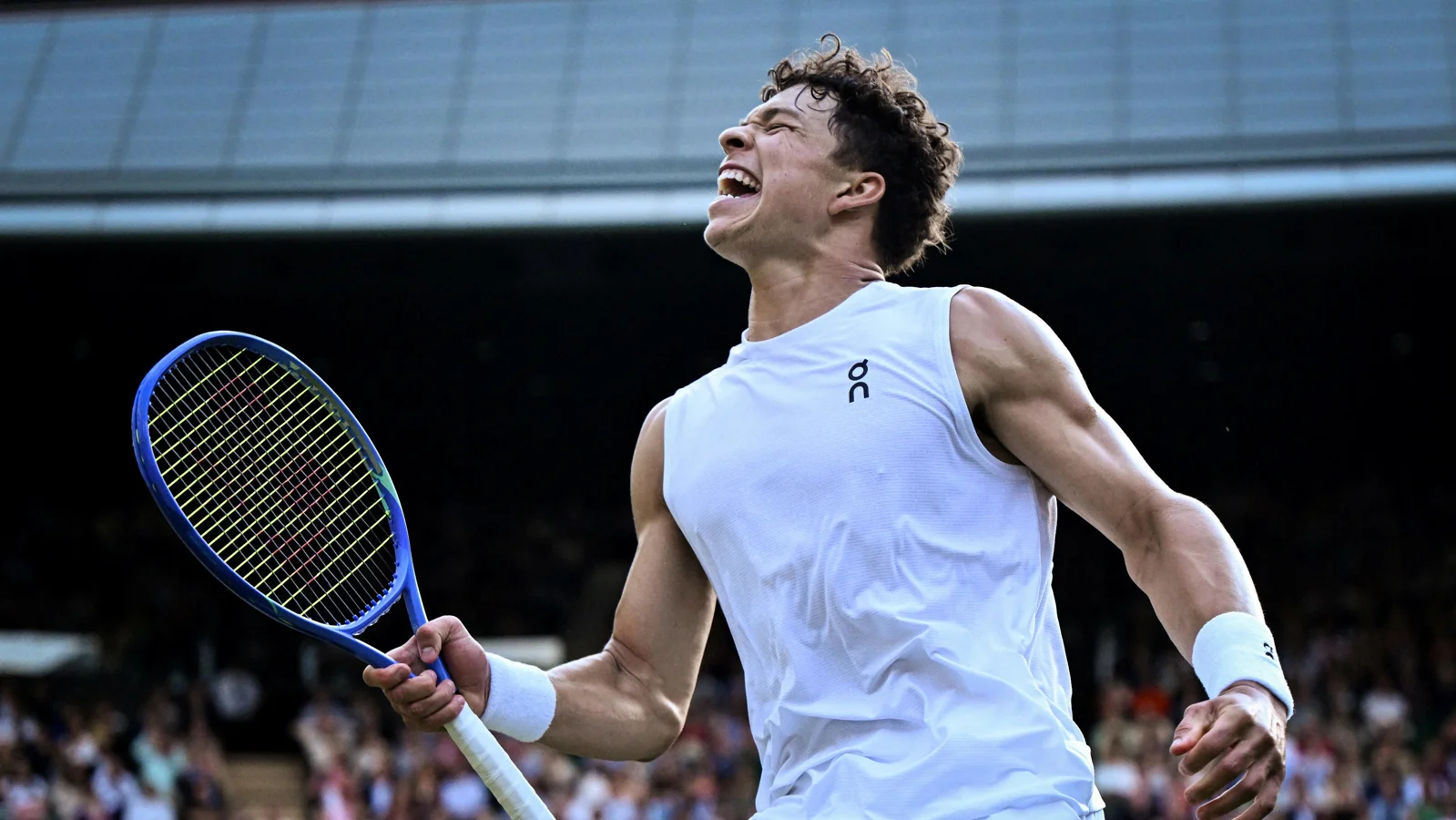

Ben Shelton reached the quarterfinals of the 2025 Wimbledon Championships, marking a significant milestone in his quest for a first Grand Slam title. His ascent in professional tennis is deeply rooted in his Ben Shelton college tennis success, shaped by years of disciplined training under the watchful eye of his father and coach, Bryan Shelton.
From Early Training to Collegiate Stardom with the Florida Gators
Ben began his tennis journey at age 12, coached directly by his father, Bryan. This close coaching relationship continued through Ben’s time at the University of Florida, where Bryan was the head coach of the Florida Gators men’s tennis team. During his college career, Shelton quickly made his presence felt, playing a pivotal role in guiding the Gators to their first-ever national championship at the 2021 NCAA Championships. Demonstrating his talent and competitive edge, Ben won the NCAA Singles Championship in his sophomore year and finished the season ranked as the nation’s top collegiate player.
Turning Professional After College Success
Although Shelton had entered his junior year at Florida, he decided to forgo traditional college completion and turned professional, opting to finish his degree online. This transition followed an impressive 6-3, 6-3 victory over then-World No. 5 Casper Ruud at the 2022 Cincinnati Open. Shelton’s rise on the professional circuit was rapid, highlighted by making it to the quarterfinals of the 2023 Australian Open, semifinal round of the US Open, and earning his first ATP title at the Japan Open. These achievements positioned him as one of the emerging stars on the ATP tour.

Lessons Learned from a Demanding College Environment
In reflecting on his rapid development, Shelton has credited the rigorous challenges he faced during his college tennis years with shaping him into a better player and competitor. When he first arrived at Florida, Shelton admits he was far from polished, especially struggling with managing his emotions on court.
“I was pretty underdeveloped when I got to college. I had a lot of holes in my game. I was a little bit of a mental case on the court, I got angry pretty easily,” Ben Shelton said.
Ben quickly recognized these flaws and learned to control his temper as his father imposed stricter discipline on him than on other players on the team.
“But you know, when you don’t do the right things on a college team, when your dad’s the coach, the punishment is a lot harsher than other guys on the team would have. I learned fairly quickly to straighten things out and figure out how to be a good teammate, fly under the radar when I needed to, and have less of those outbursts or bad practices or missing a workout because I was sleeping in,” he added.
His father’s tough but fair approach included publicly holding Ben accountable to avoid any perception of favoritism. For instance, late arrivals by Ben meant running more laps than his teammates in full view of others.
“He would just get on me and scream at me more than the other guys, but I get it because you can’t show favoritism. Or I’d have to run sprints in front of everybody if I showed up late, but if someone else showed up late and then I showed up late, I was running a lot more sprints than they were,” he said.
Balancing Fatherhood and Coaching with Adaptability
Ben shed light on what makes Bryan Shelton such an effective coach: his ability to intuitively adjust his communication style to Ben’s needs. Whether offering direct advice or stepping back to let Ben find his own path, Bryan’s coaching is marked by flexibility and understanding.
“His ability to adapt is what makes him a great coach. He doesn’t have to just be talking in my ear all the time or just sitting back and watching. He kind of does both. He reads me and understands what I need in the moment, he gives me the information when he thinks I’ll use it. He’ll pull back some when he thinks that I got it myself,” Ben Shelton said.
Valuing Team Experience in an Individual Sport
Ben also reflected on how the team environment at college shaped him personally and professionally. He emphasized how being part of a team fostered a sense of support and allowed him to develop traits beyond just his tennis skills, qualities he finds lacking in the isolated world of professional tennis.
“But I had the opportunity of playing on a team and supporting my teammates, even being on the bench sometimes and letting other guys get the credit. I think it’s something that’s helped me as a person a lot, and it makes things tough sometimes out on the tennis tour, because you are out here by yourself and competing by yourself, and I do really miss the team aspect that I had in college and then other team sports,” he said.
Additionally, the experience of facing personal challenges from vocal college crowds helped prepare Ben for the often hostile and boisterous atmosphere on the ATP tour.
Looking Ahead: Continuing Growth on the ATP Tour
Despite Ben Shelton’s rapid success on the professional circuit, including his strong showing at Wimbledon, he remains focused on improvement. He openly acknowledges that he has not yet become the fully complete player he aspires to be, and he is committed to continuing his development as he pursues future successes.
Our Reader’s Queries
Q. Is Ben Shelton sponsored by Rolex?
A. In 2024, Ben Shelton was chosen to be a Rolex Testimonee.