
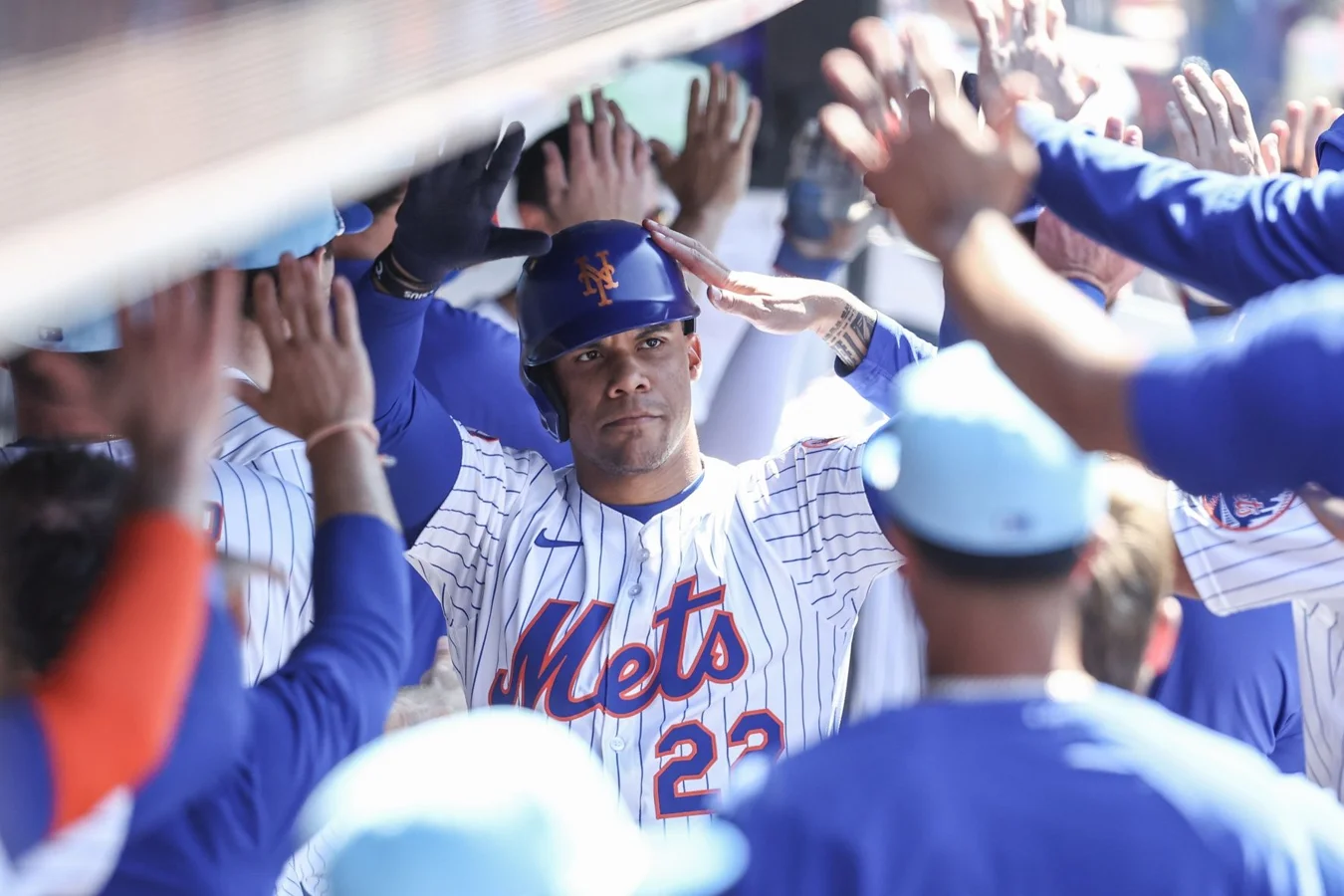

Francisco Lindor, shortstop for the New York Mets and close friend of Juan Soto, has openly criticized the decision to exclude Soto from this year’s All-Star Game, calling the omission surprising and difficult to understand. Soto’s absence from the All-Star roster has drawn attention given his impressive performance this season, making the snub an unexpected topic of discussion among players and fans alike.
Unexpected Omission Raises Questions About Selection Criteria
Lindor struggled to comprehend why Soto, known for his exceptional batting skills, was left off the All-Star lineup.
“With the way he handles a bat—like magic, it’s tough to stomach,”
Lindor said, highlighting Soto’s offensive prowess. Soto’s batting average hovers around .300, complemented by an on-base plus slugging (OPS) statistic that consistently challenges opposing pitchers. His keen eye and patience at the plate, drawing comparisons to a young Ted Williams, add to a case that many feel should have secured him a spot in the game.
This exclusion prompts a deeper look into the selection process and voting system, where advanced metrics like Wins Above Replacement (WAR) and Weighted Runs Created Plus (wRC+) usually provide a comprehensive measure of a player’s impact. Lindor’s comments imply that these modern statistics might not be fully appreciated in the traditional voting methods, leading to questionable omissions like Soto’s.
The Meaning Behind All-Star Recognition
Being named an All-Star is more than just a ceremonial honor; it’s a milestone that solidifies a player’s standing in baseball history. For a young talent like Soto, receiving an All-Star nod would be a significant career milestone.
“Every kid with a glove dreams of this moment. It’s where you showcase your talent to the world,”
Lindor reflected, emphasizing the importance of this achievement for players and fans alike.
Soto’s exclusion not only questions the fairness of the selection system but also underscores the evolving nature of baseball analytics and the need for their greater inclusion in decision-making processes. Ignoring a player of Soto’s caliber points to a possible disconnect between traditional assessments and current performance realities.
Lindor’s Support Highlights Their Close Bond
Beyond professional rivalry and competition, Lindor’s remarks reveal a strong personal connection with Soto. Describing them as more than just teammates, Lindor characterized them as comrades who share the challenges and triumphs inherent to the sport. “Juan’s going to persevere,” Lindor confidently stated, expressing his faith in Soto’s talent and resilience despite this setback.
This friendship adds a human element to a highly competitive environment, showing that respect and encouragement between players can endure even amid disappointing moments.
Looking Ahead: Soto’s Continued Impact on MLB
Although Juan Soto missed this year’s All-Star Game, both he and Lindor remain important figures in Major League Baseball as the season progresses. Soto’s demonstrated ability to rebound from adversity suggests that he will have many more opportunities to shine and earn his place among baseball’s elite. Lindor’s observations serve as a reminder that while official recognition may sometimes be delayed or overlooked, true talent ultimately persists and commands attention.
As the MLB season continues, fans can expect Soto to keep making headlines and contribute significantly to the sport, reaffirming why many find his All-Star snub so perplexing and unjustified.
Our Reader’s Queries
Q. Is Juan Soto a free-agent in 2025?
A. “I’m not performing as well as I should,” he admitted in an interview with Jon Heyman of the New York Post. At 26, he is playing his first season for the Mets. He joined the team after signing a 15-year free-agent deal in December 2024, valued at $765 million, marking the largest contract in MLB history.
Q. What is Juan Soto’s bat speed?
A. Ramos and Soto originally had bat speeds of over 75 mph, ranking them in the top 25. Now, their bat speeds are over 73 mph. This still places them within the top 75, which is much higher than the league’s average of 71.6 mph. Soto’s bat speed remains exceptionally fast, even with the decrease.