
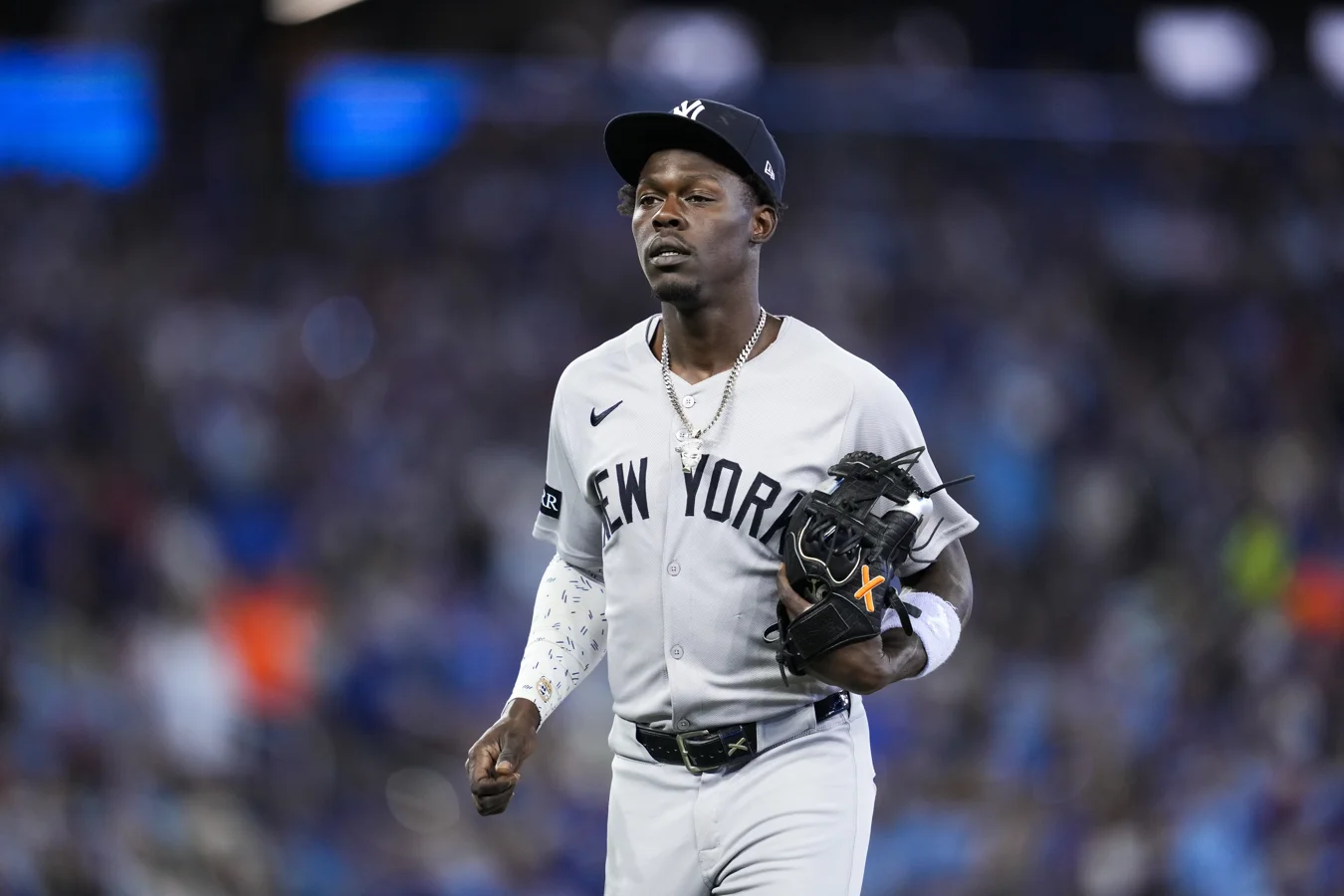

Max Fried has quickly established himself as a cornerstone of the New York Yankees’ pitching staff in 2025, following his signing of an eight-year, $218 million contract. Through 19 starts, Fried has averaged around 6.1 innings per outing with a remarkable 2.27 ERA and a 2.98 FIP, providing crucial stability amid injuries to Gerrit Cole and Luis Gil ahead of the season. His exceptional run prevention continues to energize the Yankees’ rotation, embodying the key elements behind the team’s 2025 pitching dominance.
Enhancements in Fried’s Pitch Arsenal Enable Pitching Excellence
Since 2020, Fried has ranked among MLB’s elite in limiting runs, a trend that has only intensified this year. Despite entering a new environment with the Yankees and adapting to a different ballpark and league dynamics, Fried has maintained the core components of his pitching while evolving his arsenal to maximize effectiveness. Classic elements like his slow curveball and hard-cut fastball still feature prominently, but he has refined other pitches with tailored adjustments, giving him one of the most comprehensive arsenals in the sport. This depth, combined with Fried’s superb control and command, has translated into superior run prevention.
Refinements in Pitch Movement Highlight Versatility
Fried’s approach in 2025 centers on preserving his strengths—high ground-ball rates, weak contact induction, and home run suppression—while enhancing his ability to strike out more batters than the league average. Among his seven distinct pitches, several key changes stand out:
- Introduction of a true four-seam fastball, which is faster and carries more than his hard-cut fastball; both pitches generate a similar slugging percentage of approximately .265 and .262 respectively.
- Modification of his sinker from a traditional two-seam to a heavier “one-seam sinker,” akin to fellow Yankee Carlos Rodon’s pitch, used primarily against left-handed hitters. This pitch boasts an elite 11.0% swinging strike rate and an impressive 69.0% ground-ball rate overall.
- Greater differentiation between his sweeper and curveball, with the sweeper exhibiting more carry and gloveside break, while the curveball maintains its spin rate but remains relatively unchanged. Both yield elite called-strike plus whiff percentages of 37.2% and 36.3%, respectively.
These innovations have earned Fried career-best ratings in Stuff+ for most of his pitches and his highest overall Location+ grade since 2022. The Yankees’ emphasis on high-quality pitch selection aligns perfectly with Fried’s extensive, refined arsenal, underpinning his dominance in run prevention.
Impact of Pitch Adjustments on Game-Level Performance
Max Fried has long been known for inducing optimal contact quality, a trend that continues in 2025 with him consistently producing above-average rates of hard-hit balls, grounders, and barrels allowed. However, nuanced shifts in his pitch selection have altered specific batted ball profiles. While weak contact remains a hallmark, Fried now generates more pop-ups and fewer pulled fly balls compared to last season, conceding a slight reduction in ground balls. This change correlates with increased use of his four-seam fastball and sweeper, giving him a diversified toolkit to retire hitters.
Another intriguing development pertains to Fried’s run values by pitch type. In 2024, Fried recorded positive run values with five different pitches, but in 2025 this has condensed to three pitches, all fastballs. Notably, his cutter has emerged as the linchpin, accumulating a remarkable 14-run value that leads all cutters in MLB. Batter results also confirm its efficacy, with opponents posting just a .177 batting average and .265 slugging percentage against it.
While the cutter stands out, Fried’s other offerings remain formidable. The only pitch with a negative run value is his sweeper (-2), despite allowing a respectable .382 slugging percentage and boasting an elite 37.2% called-strike plus whiff rate. Historically, Fried’s curveball ranked as his most valuable offering, but adjustments in usage patterns, the integration of the true four-seam fastball, and a smaller sample size in 2025 may explain the cutter’s current dominance.
Fried’s Consistency Bolsters the Yankees’ Rotation Stability
Max Fried’s dominance this season is reflected in his American League-leading 13 quality starts, anchoring a Yankees rotation grappling with early-season injuries. His ability to continuously adapt his pitch usage, coupled with elite command and a broad arsenal, positions him as a pivotal figure maintaining the team’s competitive edge. As Fried’s career in New York progresses, his refined pitching approach and health will remain vital to the Yankees’ sustained success and their quest for postseason glory.
Our Reader’s Queries
Q. Why does Max Fried wear 54?
A. He plans to wear the number 54, the same number he had while playing in Atlanta.
Q. What is Max Fried’s religion?
A. Fried was born and raised in Encino, California. He is the middle son of Carrie and Jonathan Fried and comes from a Jewish family. His younger brother, Jake, who is also a pitcher, went to the University of Arizona.
Q. Is Max Fried an ace?
A. The Yankees plan to use their top left-handed pitcher, Max Fried, who has a 10-2 record with a 2.13 ERA, to end their six-game losing streak. Fried has played 24 games, including 19 as a starter, against the Mets, achieving a 9-5 record with a 2.50 ERA.
Q. What religion is Max Fried?
A. Early life. Fried was born in Encino, California, and spent his childhood there. He is the middle child of Carrie and Jonathan Fried and is Jewish. His younger brother, Jake, who also plays baseball as a pitcher, went to the University of Arizona.