
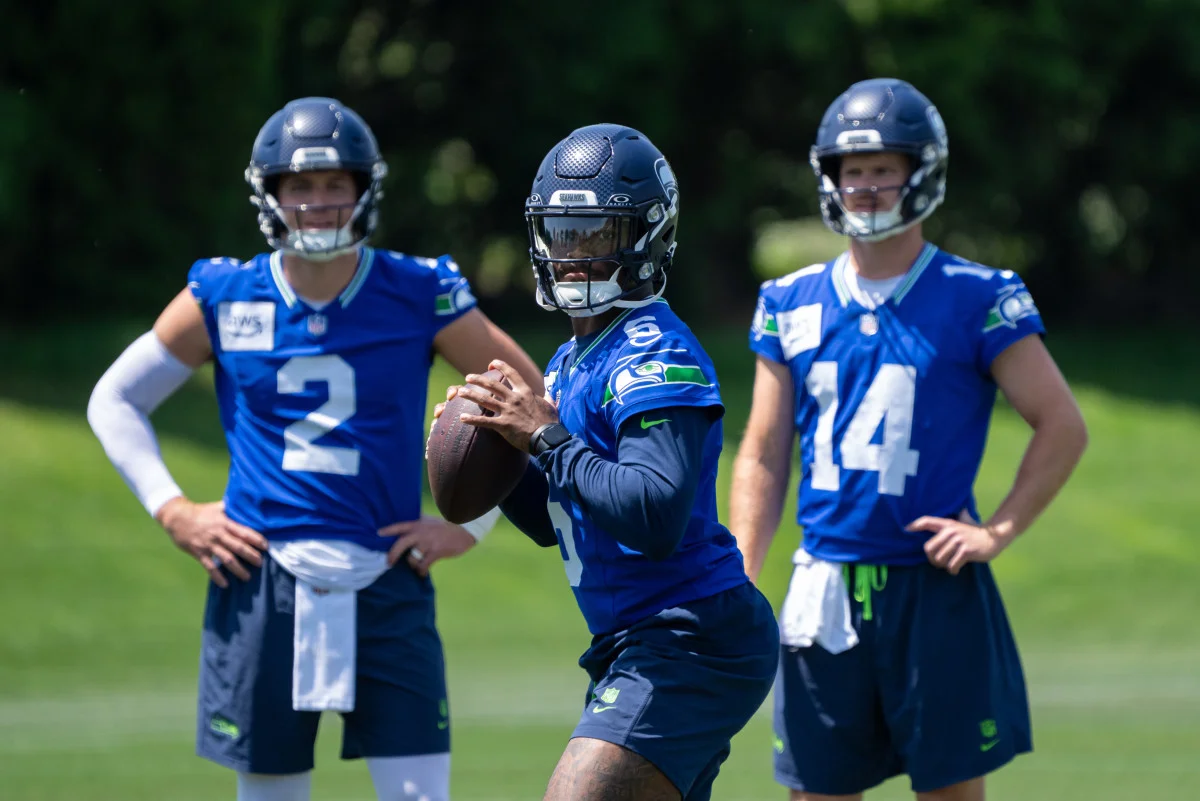

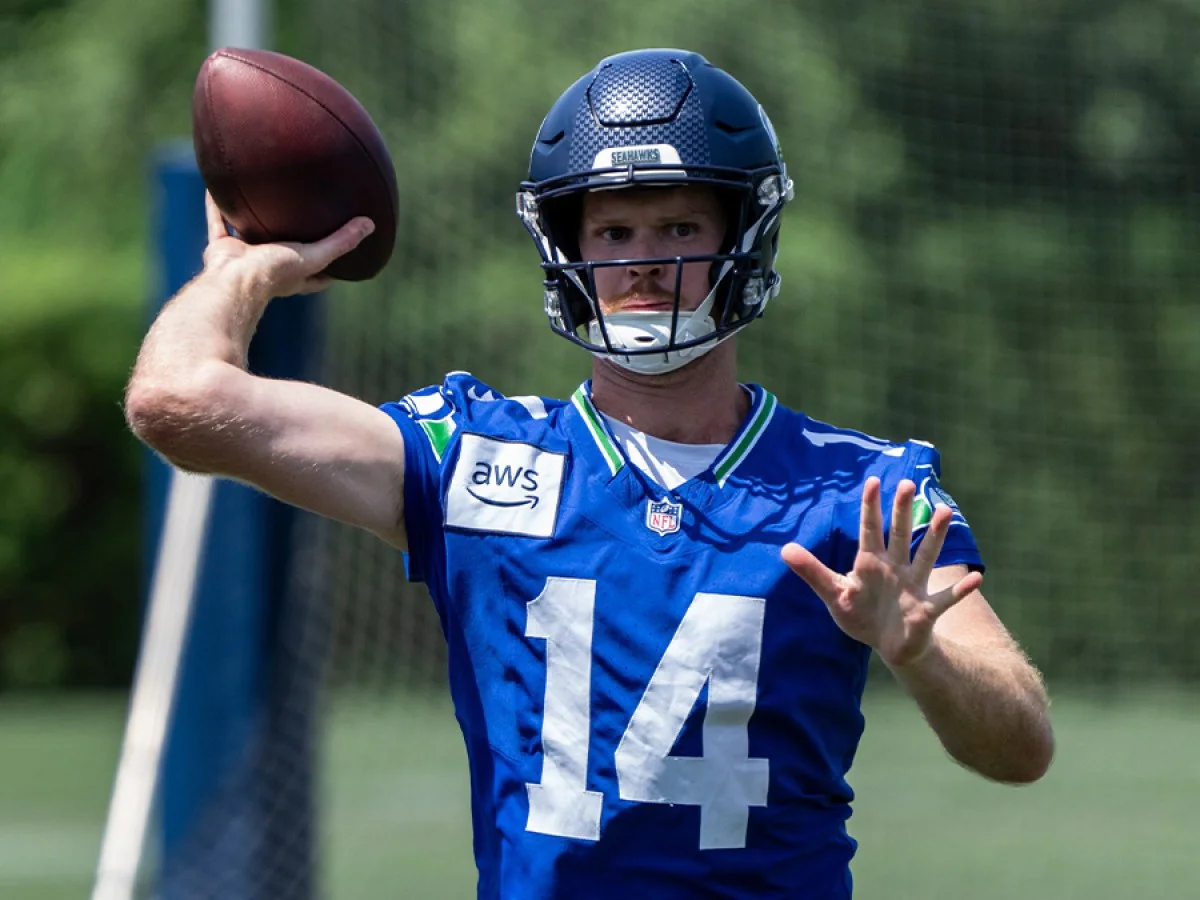
Sam Darnold, following a challenging end to his tenure as the Minnesota Vikings’ starting quarterback, has spoken candidly about the team’s offensive struggles and his personal performance. After the Vikings fell to the Rams 27-9 in the <a href=”https://www.buzzineintl.com/category/football/nfl/nfc/”>NFC Wild Card round, Darnold acknowledged that their offense underperformed and expressed regret over not playing up to his own expectations during the season. This reflection marks a key moment in the Sam Darnold Seahawks Season Reflection as he prepares for the next chapter of his career.
Darnold stated,
“For lack of a better term, we laid an egg as an offense,”
via Michael Silver of The Athletic.
“And I think, for me personally, that sucks. I felt like we were a really good team, but at the end of the day — and this is gonna sound a little pessimistic — but when you get to the end of it and you don’t win the whole thing, you failed. I feel like I could have played way better, to be completely honest with you. I feel I didn’t play up to my standard. I truly feel that way. I feel like if I would have just played better, I would’ve been able to give the team a chance.”
Insights Into Player Commitment and Leadership in NFL Teams
While Darnold reflects on his performance, other NFL figures like Frank Ragnow and Brandon McManus provide examples of leadership and perseverance. Former Lions general manager Bob Quinn shared his approach to building a team from the inside out, citing Frank Ragnow as a cornerstone of that vision. Ragnow’s under-the-radar status was partly due to an injury that prevented him from participating fully in the combine, yet Quinn admired his clean skill set and potential.
Dan Campbell, head coach of the Detroit Lions, described Ragnow as an unselfish player whose dedication to the team’s success sometimes came at a personal cost. Campbell said,
“The type of person that he is, he doesn’t want to let anybody down. That’s why this was such a hard decision—it was for us and not for him. Trying to hold on, I’m going to play another year, he was thinking about us and not himself. He’s an unselfish human being. He’s an unselfish teammate. He’s salt of the earth.”
Campbell also highlighted Ragnow’s role in establishing a team culture, noting,
“Frank’s always going to be a part of this. It’s hard when you put in the work and you don’t win. When a new coach comes in, you’re trying to get buy-in, [players] got to put on the blinders and got to trust. He was able to do that. He’s one of the reasons why we have our program to where we got it. We’ll be forever grateful to Frank for that.”
Veteran Presence Adds Stability to the Packers Special Teams Unit
Green Bay Packers kicker Brandon McManus brings veteran experience and leadership to the special teams unit, which Packers special teams coordinator Rich Bisaccia views as crucial. McManus remarked on the generational gap between himself and newer players, saying,
“A lot of these guys were in grade school or middle school when I was playing for Denver. Maybe they didn’t really know who I was, so … there’s always an added motivation every now and then to prove who you are.”
Bisaccia emphasized the importance of retaining McManus, stating,
“Keeping him, we think, is significant for us. His consistency that he had last year, the leadership that he started to bring to us the more he was in our locker room … it’s good to know we have our kicker coming back in this year.”
Despite his overall strong performance, McManus experienced disappointment after missing his first postseason field goal last year. Reflecting on that moment during exit interviews with general manager Brian Gutekunst, McManus revealed,
“I forget about the whole season because it’s such an easy kick. As the weather changes, it gets colder and a little windier. You can’t be a little lazy and not swing and still attack the ball because it’s a shorter field goal. I was extremely mad when I went into Gutey’s office and mad at myself because the best players have to play their best when the playoffs are around.”
Team Dynamics and the Path Forward for NFL Players and Coaches
The stories of Sam Darnold, Frank Ragnow, and Brandon McManus illustrate varying aspects of NFL career experiences, from personal accountability to leadership and resilience. Darnold’s honest reflection on his season with the Vikings offers a glimpse into a quarterback’s mindset as he prepares to contribute to the Seahawks. Meanwhile, the examples set by Ragnow and McManus reveal how commitment and steady leadership can influence team culture and performance.
The significance of these perspectives lies in their impact on team development and individual growth. For Darnold, embracing responsibility for past shortcomings may fuel his motivation in Seattle’s offense. For teams like the Lions and Packers, maintaining respected veterans and building trust between players and coaches remain essential strategies. As the NFL offseason progresses, observing how these individuals and organizations respond will shape their outlooks for the upcoming season.
Our Reader’s Queries
Q. Why does Sam Darnold wear 14?
A. The team announced Darnold will continue to wear number 14, which he has used with each NFL team he’s joined. This number opened up after the Seahawks traded wide receiver DK Metcalf to the Pittsburgh Steelers this offseason.
Q. Is Sam Darnold sober?
A. He stopped drinking alcohol, which he started when he was 12 at his parents’ home, back in 1980. Since then, he has focused on aiding teenagers in overcoming addiction. For many years, he has worked with young people at risk in Orange County, California. He has been sober and drug-free for 38 years.
Q. Why does Sam Darnold wear number 14?
A. Darnold is reportedly set to wear Metcalf’s old number 14 jersey, just like he did last year with the Minnesota Vikings. He has consistently chosen number 14 throughout his NFL career, playing for teams like the Minnesota Vikings, San Francisco 49ers, Carolina Panthers, and New York Jets.
Q. What disease did Sam Darnold get?
A. Darnold appeared on ESPN’s The Michael Kay Show, where they asked him how he got mono, often known as “the kissing disease.” Darnold laughed and replied, “I’m not sure, guys. It’s a tricky illness that you can have for months before it shows symptoms…”