

Taylor Fritz has raised concerns about the use of electronic linecalling at Wimbledon following a significant error during his quarter-final match. The 27-year-old American was playing against Karen Khachanov when the Hawkeye system malfunctioned in the fourth set, prompting a replay of the last point and sparking frustration among players and spectators.
Fritz Shares His Candid Opinions on Hawkeye’s Performance at Wimbledon
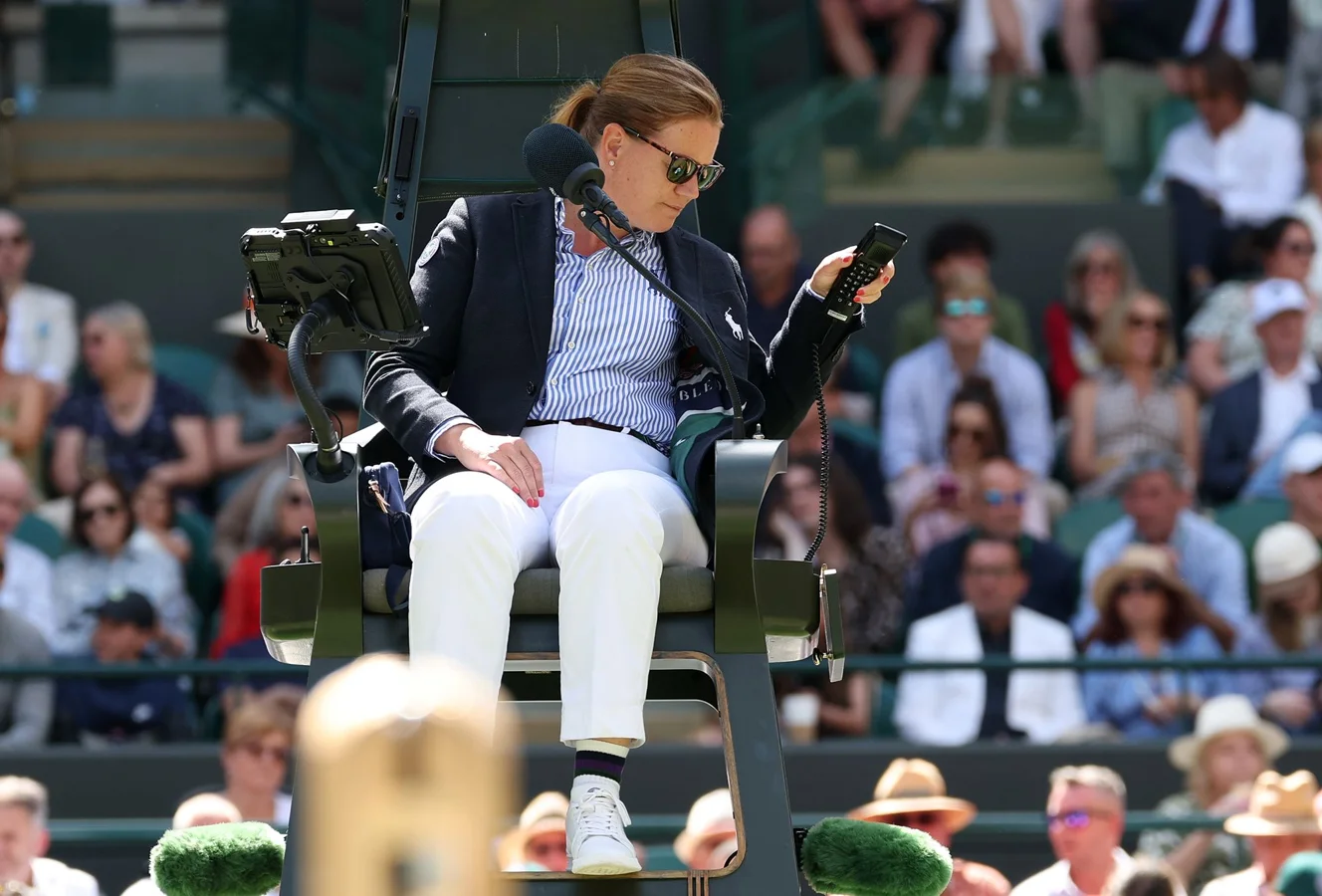
During his post-match press conference, Fritz openly criticized the electronic linecalling system after it made a questionable decision. The error occurred when Fritz was serving early in the fourth set, and mid-rally, the Hawkeye inexplicably called a fault. The umpire then announced:
Ladies and gentlemen, we will replay the last point because of a malfunction. The system is now working.
This announcement was met with boos from the crowd.
Fritz expressed a preference for traditional line umpires, saying,
“To be honest, I’m more for line umpires, to be honest. I don’t know. You feel a little bit [like the] court is too big, too alone without line umpires.”
He acknowledged that while technology and artificial intelligence require precision to avoid mistakes, recent incidents have raised doubts about their reliability.
Reflecting on the particular moment, Fritz added,
“Like today, I think there were a few calls. I don’t know, very questionable if it’s really touching the line or not. At the same time, during one point, the machine called it just out during the rally. Sometimes it’s scary to let machines do what they want, you know?”
Despite his frustration, Fritz accepted the situation as something beyond his control:
“Yeah, what can I do? I can argue, or I can be angry about it or just continue playing. It’s not in my power. It’s already happened. I need to kind of accept it, and that’s it.”
Regarding the timing of the malfunction, he noted,
It was not kind of super important point. If it would have happened on a break point or deuce or maybe a tiebreaker, okay, you can get more mad. But it was just the beginning of the set, 15-Love or Love-15. I don’t remember. It was maybe not that important a moment. That’s why I stayed really focused and calm.

Evaluating the Future Role of Electronic Linecalling at Wimbledon
The Wimbledon Championships, like other major sports events, have embraced technology for its potential to reduce human error in officiating. However, the introduction of electronic systems such as Hawkeye has not been without criticism, especially when glitches occur during critical moments.
While some argue that these errors undermine trust in AI-driven calls, the alternatives have significant drawbacks as well. Human line umpires, despite experience, are prone to mistakes, and with high stakes involved, relying solely on their judgment increases the risk of controversy.
The consensus among officials seems to be that technology, despite its imperfections, remains the best option available. Wimbledon, facing substantial financial and competitive pressures, is unlikely to abandon electronic linecalling but will instead work on minimizing malfunctions and improving accuracy.
As tennis continues to evolve, the reliance on systems like Hawkeye is expected to increase. The challenge lies in ensuring these tools operate flawlessly to maintain fairness and uphold the sport’s integrity in high-profile tournaments such as Wimbledon.