
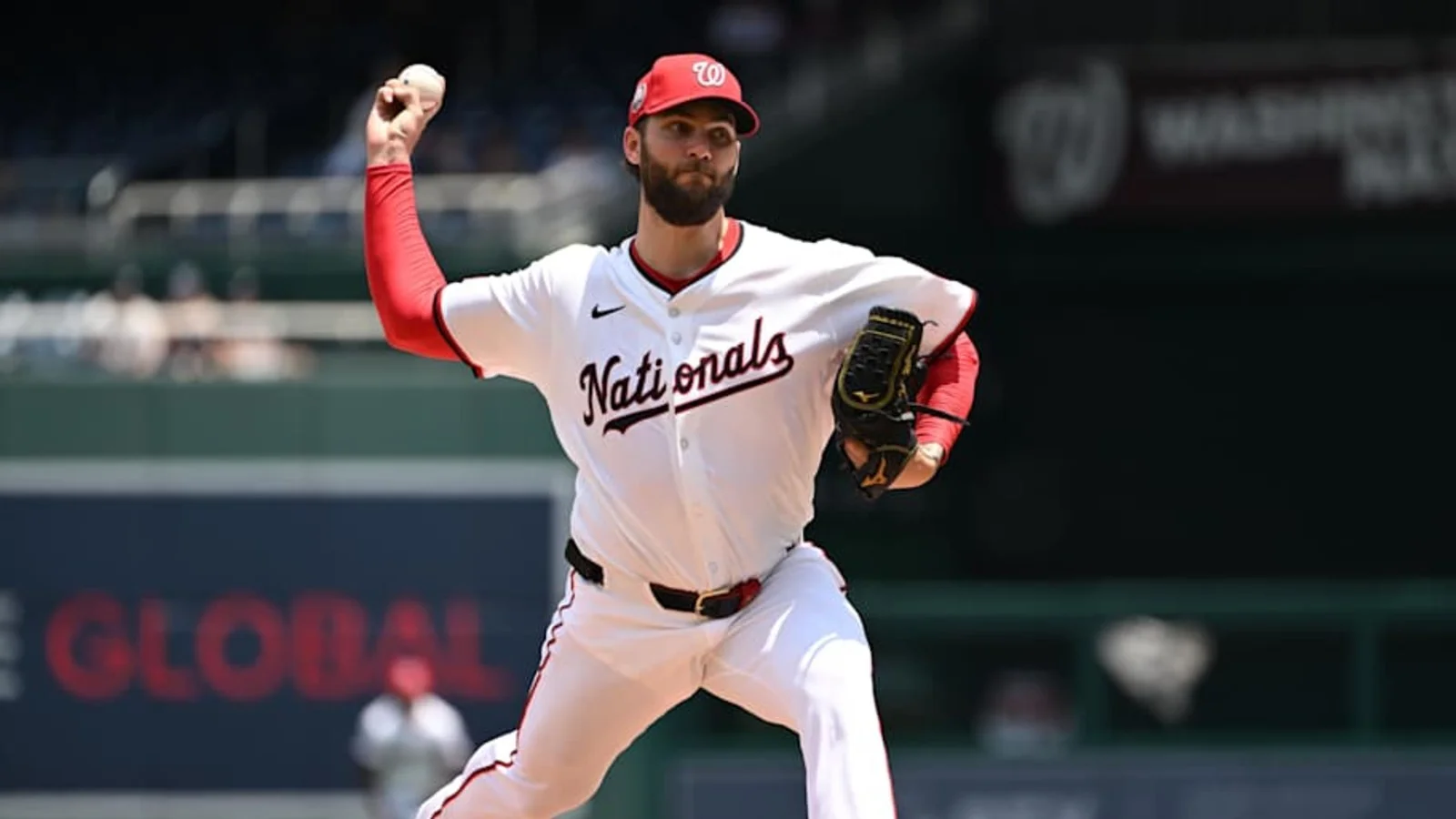

Washington Nationals right-handed pitcher Trevor Williams has revealed he has suffered a partial tear of his ulnar collateral ligament (UCL) and will have surgery to address the injury. This announcement confirms that Williams will miss the rest of the 2025 season and could be sidelined for the entire 2026 season as well. The procedure is likely to be an internal brace surgery, though a full Tommy John surgery remains a possibility. Williams is currently on the 60-day injured list.
Recent Performance and Injury Progression Leading to Surgery
Williams, 33, made his latest start during the first game of a doubleheader against the Detroit Tigers last week. He encountered significant difficulties early on, struggling through the top of the first inning. Despite the usual pitching limits of 30 to 40 pitches per inning, the Nationals allowed Williams to throw 54 pitches in the frame, eventually surrendering six runs. After enduring that challenging inning, Williams pitched two additional innings before being removed from the game.
Shortly after that outing, Williams was placed on the 15-day injured list due to an elbow sprain. The Nationals later transferred him to the 60-day injured list, signaling a more serious prognosis. The decision to proceed with surgery now indicates Williams’ recovery period will be far longer than initially expected. While the internal brace procedure can sometimes allow for a quicker return than traditional Tommy John surgery, it typically still requires about a year for full rehabilitation.
Williams’ Career with the Nationals and Recent Performance Trends
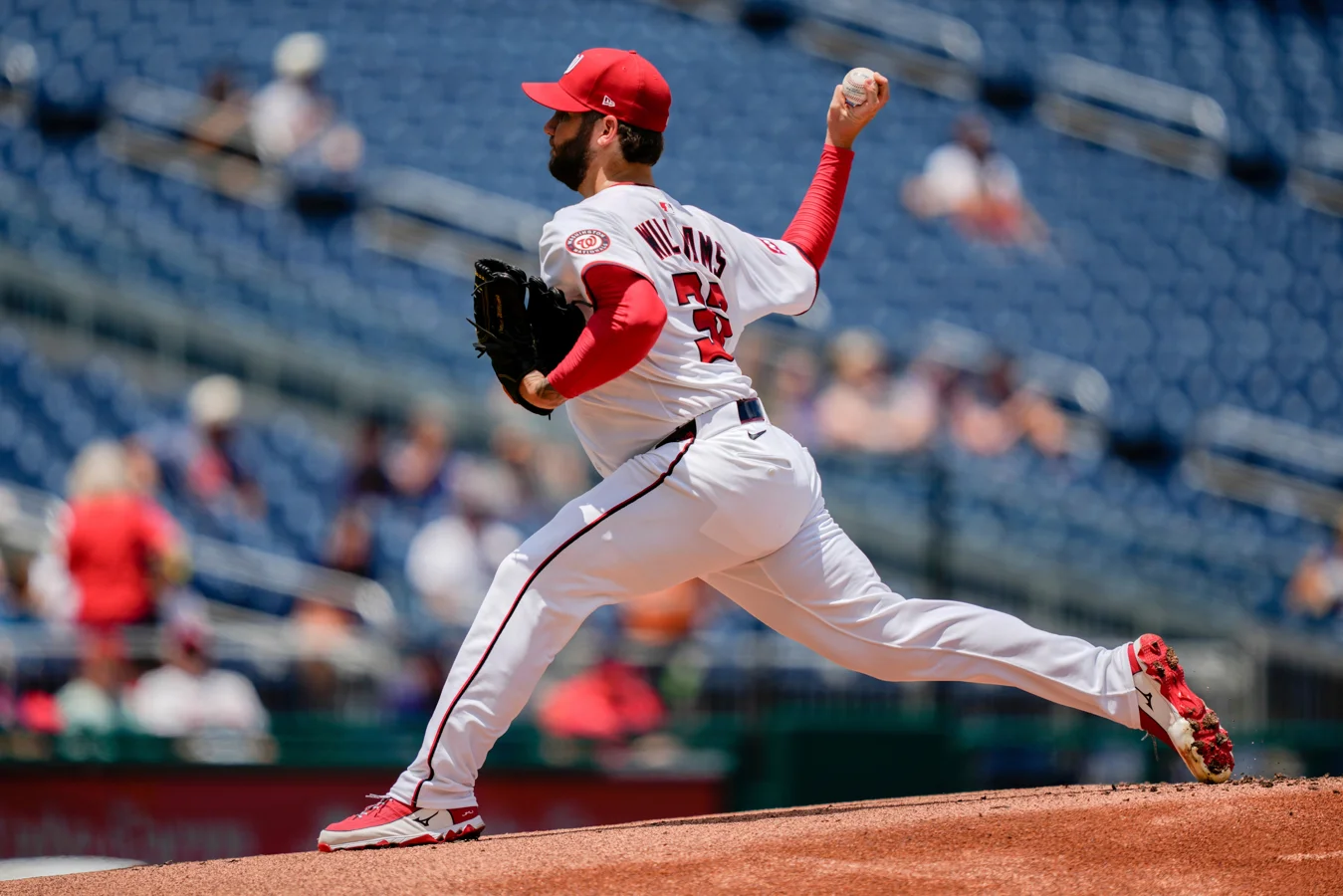
Williams joined the Nationals’ rotation in 2023 after signing a two-year contract worth $13 million. His first year with the team proved difficult, as he posted a 5.55 earned run average (ERA) across 31 starts. In 2024, despite a smaller sample size due to a flexor strain that sidelined him for several months, Williams showed marked improvement, recording a 2.03 ERA over 13 starts.
Last season’s success was aided by favorable luck indicators, such as a low batting average on balls in play (.267) and an 80.2% strand rate, meaning he managed to prevent a high percentage of runners on base from scoring. His home run rate dropped significantly, with only 4.2% of fly balls leaving the park compared to 17% the previous year. Williams’ strikeout rate was strong at 22.7%, his walk rate stayed reasonable at 6.9%, and his 45.4% ground ball rate was solid. His Fielding Independent Pitching (FIP) of 2.79 and Skill-Interactive ERA (SIERA) of 3.96 suggested his numbers were sustainable, even if some regression was possible.
Planning to rely on him as a veteran presence in their rotation, the Nationals re-signed Williams for two more years with a slightly higher $14 million guarantee. However, Williams struggled considerably during the 2025 season. Over 17 starts, his ERA ballooned to 6.21. His strikeout rate dropped to 17.4%, and his ground ball percentage fell to 33%. Although his walk rate remained relatively stable at 5.6%, his luck reversed sharply, evidenced by a high batting average on balls in play (.347) and a strand rate of just 61.6%. His FIP and SIERA values, at 4.08 and 4.46 respectively, implied some improvement was possible, but the necessary adjustments will now be delayed due to his injury.
Future of the Nationals’ Pitching Rotation Amid Uncertainty
Williams will spend the remainder of 2025 inactive and will begin the next season on the injured list. His potential return during the 2026 season depends heavily on the type of surgery performed and the success of his rehabilitation. Whether he will reclaim a spot in the Nationals’ rotation next year remains uncertain, particularly given the team’s offseason plans.
Currently, the Nationals’ starting rotation includes MacKenzie Gore, Michael Soroka, Mitchell Parker, Jake Irvin, and Shinnosuke Ogasawara. Soroka, signed to a one-year contract, is a probable trade candidate this offseason, while Gore has been the subject of trade discussions due to the Nationals’ prolonged rebuilding phase and his control for only two more seasons beyond 2025. Parker and Irvin serve as dependable back-end starters, and Ogasawara, who has only one major league start to his credit, has not yet shown consistent success.
Prospects and Additional Pitching Depth for the Nationals
The Nationals’ pitching depth also includes Josiah Gray, who underwent UCL surgery last summer and could return later in 2025. Cade Cavalli is currently in Triple-A and may rejoin the major league roster at some point. Promising prospects like Travis Sykora and Jarlin Susana remain long-term candidates for rotation roles but, as of now, both are injured and yet to reach Triple-A status.
Organizational Changes Cloud the Nationals’ Pitching Outlook
The Nationals face an uncertain future beyond Williams’ injury due to recent leadership changes. Both manager Dave Martinez and president of baseball operations Mike Rizzo were dismissed within the last few days, adding instability to a team already navigating a transitional rebuild. If the club aims to speed up their return to competitiveness, investing in strengthening the starting rotation during the offseason could be a logical step.
“Williams, 33, made his most recent start on Wednesday of last week. The first game of a doubleheader against the Tigers, Williams had a less-than-ideal experience. He struggled in the top of the first but, with a long day ahead, the Nats left him out there to take a beating.” —Spencer Nusbaum, The Washington Post
“Josiah Gray had UCL surgery last summer and could perhaps be back in the mix later this year.” —Spencer Nusbaum, The Washington Post
“If the Nats want to accelerate the end of their rebuild, spending some money to bolster this rotation group would be a sensible plan for this winter.” —Spencer Nusbaum, The Washington Post