
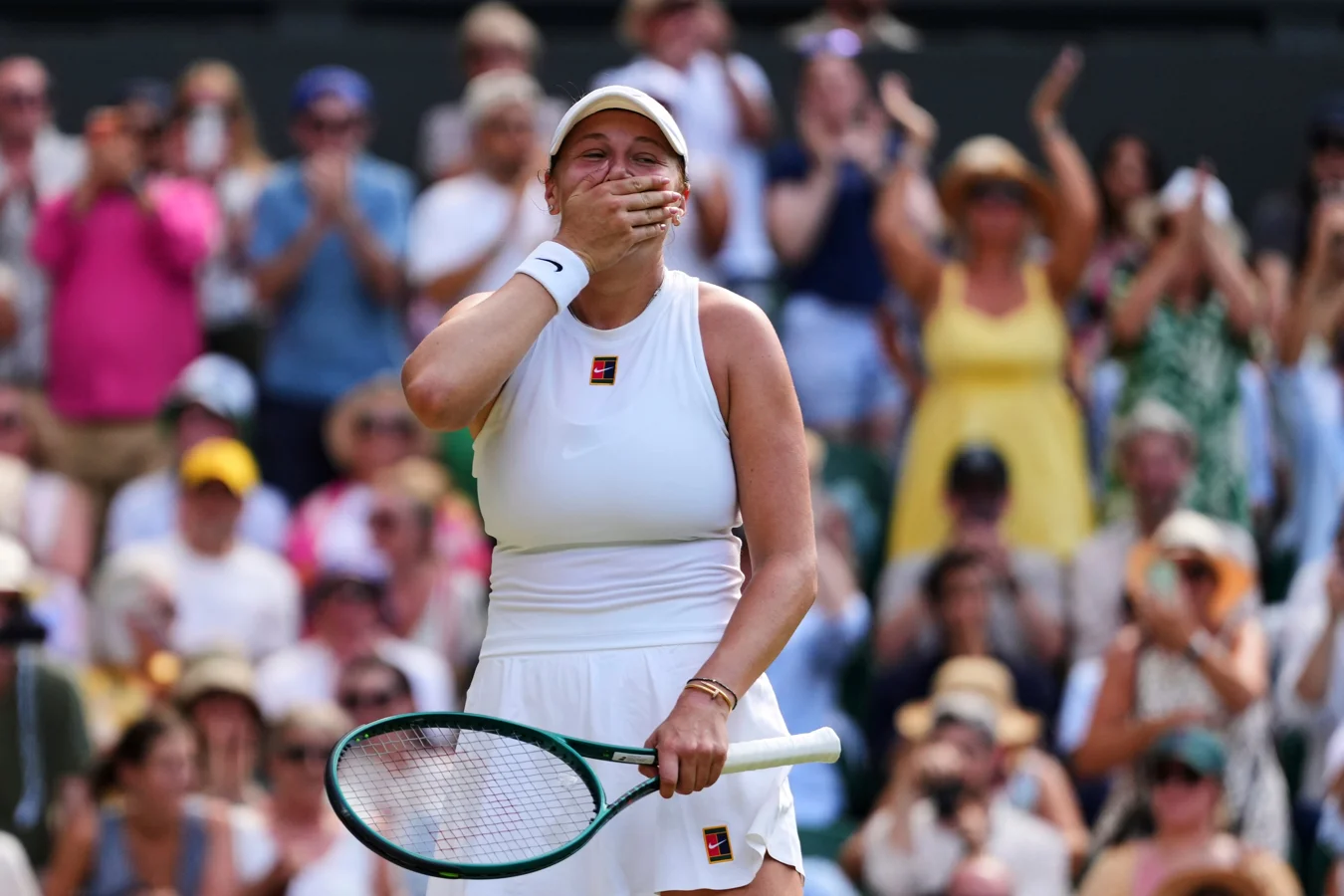

The Wimbledon semifinal witnessed an intense showdown between World No. 1 Aryna Sabalenka and thirteenth seed Amanda Anisimova on July 10, 2025, at the All England Club. In a match marked by high tension and unusual moments, Anisimova secured a hard-fought 6-4, 4-6, 6-4 victory, advancing to her first Grand Slam final. The match also sparked controversy when Sabalenka demanded an apology from Anisimova after a net cord point in the deciding set.
Sabalenka Faces Setbacks and Controversy in Intense Semifinal Clash
Aryna Sabalenka had endured a challenging Wimbledon run, frequently battling back from deficits since her third-round match against Emma Raducanu. Despite showing signs of frustration and committing numerous errors, the World No. 1 had managed to prevail in previous rounds by breaking back or recovering from leaving sets behind. However, her fortunes changed against Amanda Anisimova, who displayed composure under pressure and resilience on the grass courts.
The match’s turning point came in the third set at 4-2 in favor of Anisimova, when a forehand from the American clipped the net cord and fell short on Sabalenka’s side. Sabalenka rushed to return, but was unable to reach the ball, prompting a moment of confrontation. After winning the point, Anisimova celebrated quietly, but Sabalenka questioned her for not apologizing during the exchange.
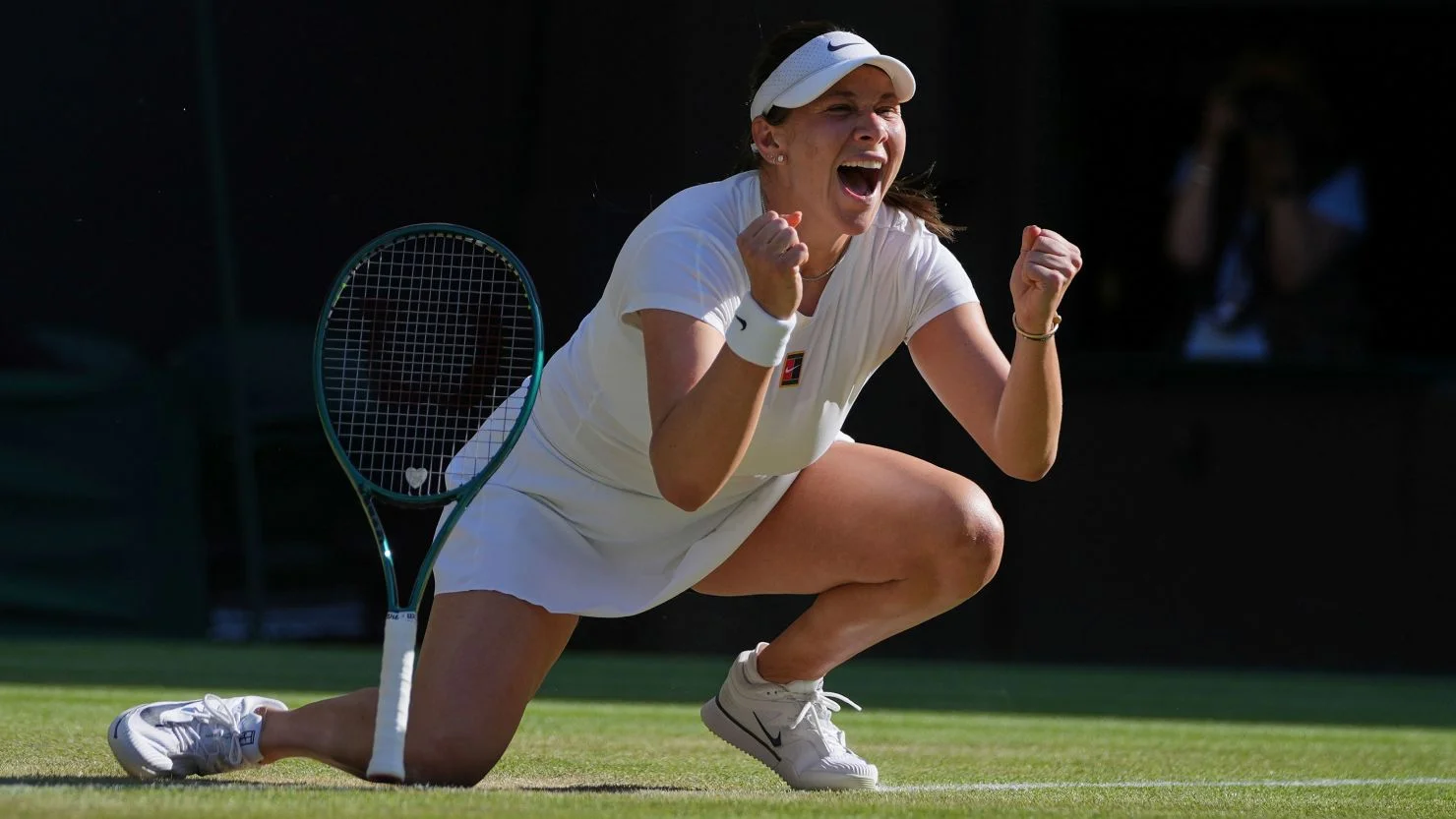
“Why didn’t you say sorry?” Sabalenka asked Anisimova, expressing her displeasure at what she perceived as unsportsmanlike conduct. This incident drew reactions online, with some criticizing Sabalenka’s reaction. As one commentator noted,
“At what point does the tennis community call out Sabalenka for her behavior? Here she is bullying Anisimova for not saying sorry for a net cord point. Let’s not forget her rudeness to Coco Gauff. #wimbledon #tennis” — Tim Tyrrell
Both players struggled with unforced errors throughout the match, with Anisimova committing 42 and Sabalenka 37. Double faults were also close, with 5 from Anisimova and 4 from Sabalenka. Nonetheless, Anisimova’s effectiveness on return and second serve helped her clinch the victory, marking a significant upset against the top seed.
Anisimova Maintains Steady Nerve to Secure Victory in Tight Sets
The match began with a tightly contested first set, where neither player could easily pull away. At 4-4, Anisimova capitalized on Sabalenka’s errors, including a crucial double fault that handed the American the set 6-4. This set experienced two medical timeouts lasting seven and five minutes, which briefly interrupted the pace of play but did not deter the competitors.
Sabalenka regrouped in the second set, varying her shot selection and applying pressure on Anisimova. A mirrored double fault from Anisimova allowed Sabalenka to break serve, and despite failing to convert four set points at 5-3 due to unforced errors, Sabalenka eventually sealed the second set with a well-placed winner.
In the decisive third set, Anisimova surged ahead to a commanding 4-1 lead. While Sabalenka held serve at 2-5 and managed to stretch the score to 4-5, the top seed was unable to reverse momentum. Anisimova saved two match points presented by Sabalenka’s fight, but ultimately sealed the match with a decisive forehand winner to the corner.
Anisimova’s Rise Marked by Mental Health Recovery and Strong Grass Court Form
Amanda Anisimova’s semifinal win at Wimbledon signifies a major milestone in her career, as she reaches her first Grand Slam final. This achievement comes after her deep run at Roland Garros in 2019 and breaks a six-year absence for American women in Wimbledon finals since Serena Williams’ last appearance. Anisimova also becomes the youngest American woman to reach the Wimbledon singles final since Williams did so in 2004.
Prior to the semifinal, Anisimova defeated a series of opponents including Yulia Putintseva, Renata Zarazua, Dalma Galfi, Linda Noskova, and Anastasia Pavlyuchenkova. Her journey is especially notable considering her recent hiatus from tennis; in May 2023, Anisimova announced a break to address burnout and mental health challenges on her Instagram account.
Returning to the WTA tour the following year at the Auckland Open, she gradually rebuilt form. Anisimova clinched her first title since the break at the Qatar Open in February 2025 and showed impressive results on grass courts, including reaching the final at the Queen’s Club Championships in London.
This Wimbledon semifinal win not only highlights Anisimova’s mental strength and determination but also positions her as a rising contender in women’s tennis, with the potential to impact the sport during upcoming major tournaments.