
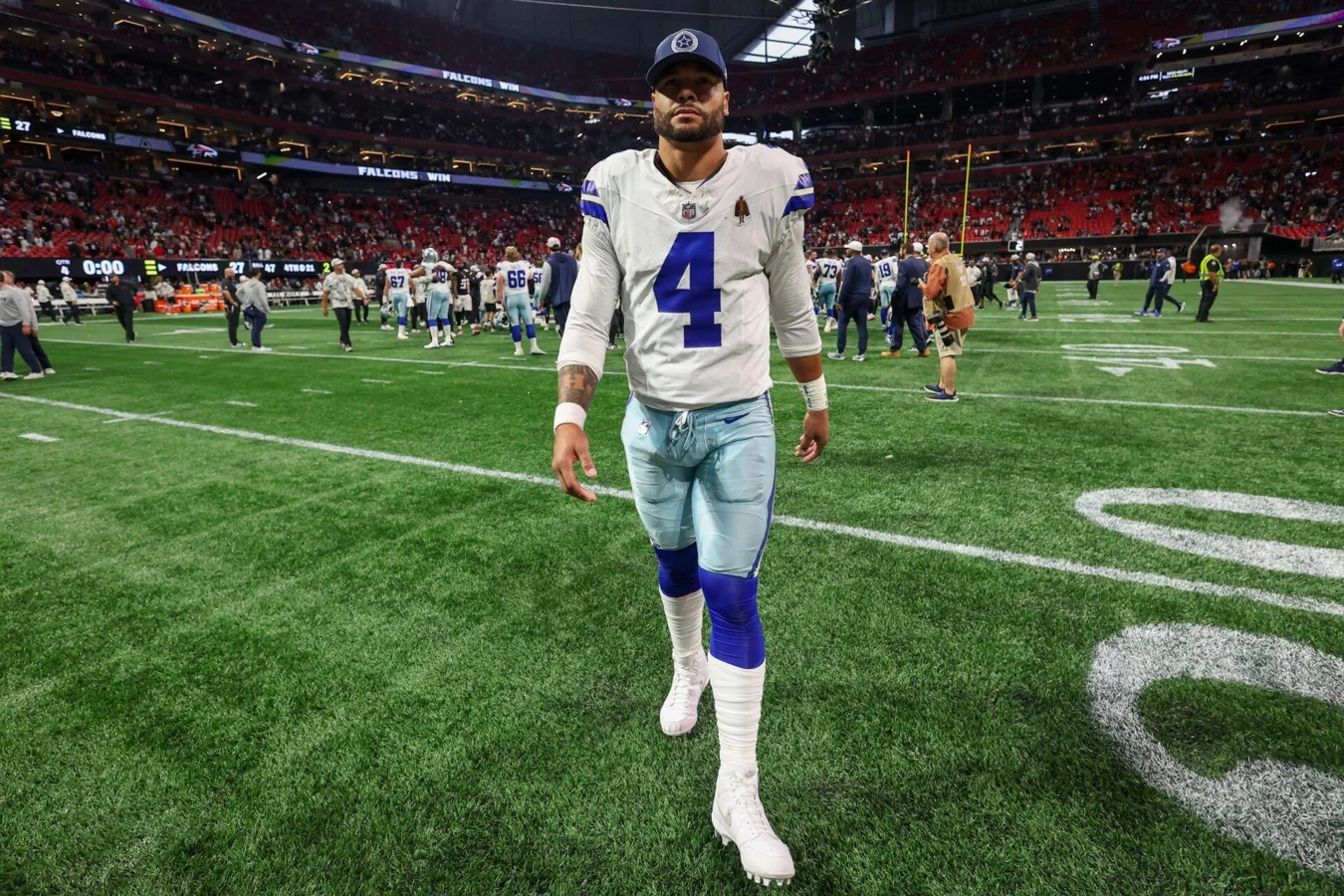

As the 2025 NFL season approaches, uncertainty surrounds Dak Prescott’s ability to lead the Dallas Cowboys to a Super Bowl, despite his reputation as a franchise cornerstone. With debates intensifying over the team’s direction, a combination of leadership hurdles and business decisions made by owner Jerry Jones threatens to overshadow the team’s championship aspirations.
Past Disappointments and the Quest for a Lombardi
The Cowboys’ history in recent years has been marked by frustrating near-misses, with key moments illustrating both Dak Prescott’s talent and the narrow margins separating success from heartbreak. One vivid memory for fans is the game against the Green Bay Packers during Prescott’s rookie season when he managed to tie the score at 31–31 late in the game, only to see Aaron Rodgers deliver a last-minute touchdown pass to Jared Cook, followed by a Mason Crosby field goal that sealed the 34–31 loss. That game symbolized the harsh realities of the NFL and the fine line between triumph and defeat.
Rather than breaking his spirit, that defeat became motivation. Prescott openly acknowledged the shadow of that loss driving the team’s ambitions for the following season. Though he denied that the motivation was pure revenge, he emphasized the desire to demonstrate the team’s capabilities in the playoffs. Over the years, Prescott has taken the Cowboys to the postseason five times and earned recognition as an MVP candidate, establishing himself as the face of the franchise. Yet, the elusive Super Bowl trophy remains absent from Dallas, leading many to question whether Prescott alone is enough to secure that Grand Prize for America’s Team.
Brice Butler’s Insight on Prescott’s Leadership and Team Culture
Former Cowboys receiver Brice Butler recently weighed in on the ongoing debate about Prescott’s potential to then bring Dallas a championship. In an interview on the Go Long TD Podcast with Tyler Dunne, Butler expressed confidence in Prescott’s leadership, stating,
“I do think he can take a team to the Super Bowl. I think he’s a leader enough to do so.”
Butler challenged the common notion that Prescott is solely responsible for Dallas’ failure to reach the Super Bowl, highlighting that the culture and leadership throughout the entire organization bear significant influence. He questioned skeptics who doubt Dak’s ability, saying,
“When people look at me and go, ‘Dak is not good enough to take his team to the Super Bowl,’ I’m like, ‘What quarterback in the NFL can take the Cowboys to the Super Bowl? Tell me.’”
Emphasizing his point further, Butler compared Prescott’s situation to that of Patrick Mahomes with the Kansas City Chiefs. He argued that switching Prescott and Mahomes’ teams might not change the outcomes dramatically, noting,
“Even if Pat Mahomes is the Dallas Cowboys quarterback and say Dak was in Kansas City. I’d say Dak goes to the Super Bowl at least one time and Pat doesn’t. I can honestly say that. Because it’s different dog. When you look at the organizations, I think we probably had these conversations, it’s bigger than football in Dallas.”
His message was clear: the franchise’s broader challenges extend beyond any single player, including Prescott.
Missed Opportunities Beyond the Quarterback Position
Beyond Dak Prescott, the Cowboys’ struggles to assemble a championship-caliber roster have been visible, with failed offseason pursuits of top-tier players sparking criticism. Derrick Henry, the powerful running back known for his dominant style, was a high-profile free agent target in 2024. Although Henry rents and trains in the Dallas area during the offseason, he revealed that there was no outreach from the Cowboys organization, stating,
“I thought it’d been some type of reach out, some type of talks or whatever. They never reached out,”
and added,
“I don’t really know too much about their organization. All I know is what I hear.”
Henry went on to rush for almost 2,000 yards with Baltimore that season.
Owner Jerry Jones later explained that financial constraints prevented signing Henry, a refrain echoed in the case of Saquon Barkley, who disclosed he was waiting for a phone call from Dallas that never came. This pattern of missed acquisitions reveals systemic issues within the franchise’s decision-making processes and budget priorities, underscoring concerns that Prescott cannot succeed without the necessary supporting cast.
The Organizational Culture’s Role in Dallas’ Championship Drought
Brice Butler highlighted that no quarterback, regardless of talent, could thrive in the Cowboys’ environment if the overall culture and leadership remain misaligned. He stated bluntly,
“In Dallas, even the best quarterbacks would struggle,”
while still maintaining belief in Prescott’s championship-caliber ability if he were on a different team.
Prescott himself has been clear about his championship ambitions. Approaching 32 years old, he said,
“Yeah, I want to win a championship,”
but the reality of the franchise’s politics and business decisions casts doubt on that goal. The tension between the desire to win and the financial and operational realities of the Dallas Cowboys remains palpable.
How the Cowboys’ Business Empire Influences On-Field Success
The Cowboys have evolved into much more than a football team; they are a massive business empire. When Jerry Jones purchased the team more than three decades ago, the franchise was losing roughly $1 million per month. Today, the Cowboys stand as one of the most valuable sports franchises in the world, worth over $10 billion.
The revenue generated by Dallas is staggering. In the 2023 season, the Cowboys amassed approximately $1.2 billion, outpacing the second-highest earning team, the Los Angeles Rams, by $400 million. Nearly $800 million of that revenue came from local sources, including ticket sales, sponsorships, and merchandise, revealing the strength of the franchise’s market and branding strategies.
Brice Butler’s assertion that Dallas is “bigger than football” draws on these facts. He explained,
“You’re in a situation to where if you don’t go to the Super Bowl? That star is still going to bring in 6 billion a year or whatever they bring in, and they’re not really tripping.”
This reality contrasts sharply with many other NFL franchises, where missing the playoffs can mean direct financial consequences and even job losses for key personnel. Butler noted,
“Other organizations, a lot of these owners out the way who let the business be the business, it’s like if you don’t make it, there’s a problem. If you don’t make it, your job is on the line.”
Under Jones’ leadership, the Cowboys’ home venue, AT&T Stadium in Arlington, Texas, is not just a football stadium but a multi-functional entertainment complex. Hosting concerts, boxing matches, college football games, and other events year-round, the stadium operates as a continual revenue generator. This business model reduces the pressure on the football team to deliver immediate success, suggesting that financial success may take precedence over winning football championships in the current era.
The Uncertain Path Ahead for Dallas and Prescott
As the next NFL season looms, the question of whether Dak Prescott can finally lead the Dallas Cowboys to a Super Bowl rings louder than ever. While Prescott has demonstrated skill and leadership on the field, the broader organizational challenges and Jerry Jones’ business-first approach cast a long shadow on those hopes. The Cowboys’ unique position as both a sports franchise and a corporate juggernaut complicates the pursuit of football glory.
The debate continues over whether Dak Prescott is the hero Dallas needs or just another talented player hampered by the team’s culture and ownership priorities. The coming months and years will be critical in determining if the Cowboys can realign their ambitions and resources toward winning, or if their business success will remain detached from their Super Bowl dreams.
Our Reader’s Queries
Q. Why was Dak Prescott removed?
A. Five days after undergoing surgery on his hamstring, Dallas Cowboys quarterback Dak Prescott was placed on injured reserve. The surgery, performed in New York last week, was necessary to fix a partially torn hamstring. Prescott sustained the injury during a November 3rd game against the Falcons, which the Cowboys lost 27-21.
Q. What is Dak Prescott’s salary?
A. In Dallas, he concluded Prescott is “definitely not worth” what he earns. At $60 million a year, Dak Prescott is the only NFL quarterback making this amount, but he doesn’t justify it.
Q. How much is Dak Prescott’s salary?
A. Between 2024 and 2028, Dak Prescott agreed to a four-year deal with the Dallas Cowboys. The contract is worth $240 million. It includes an $80 million signing bonus and $231 million guaranteed. Prescott’s average yearly salary from this deal is $60 million.