
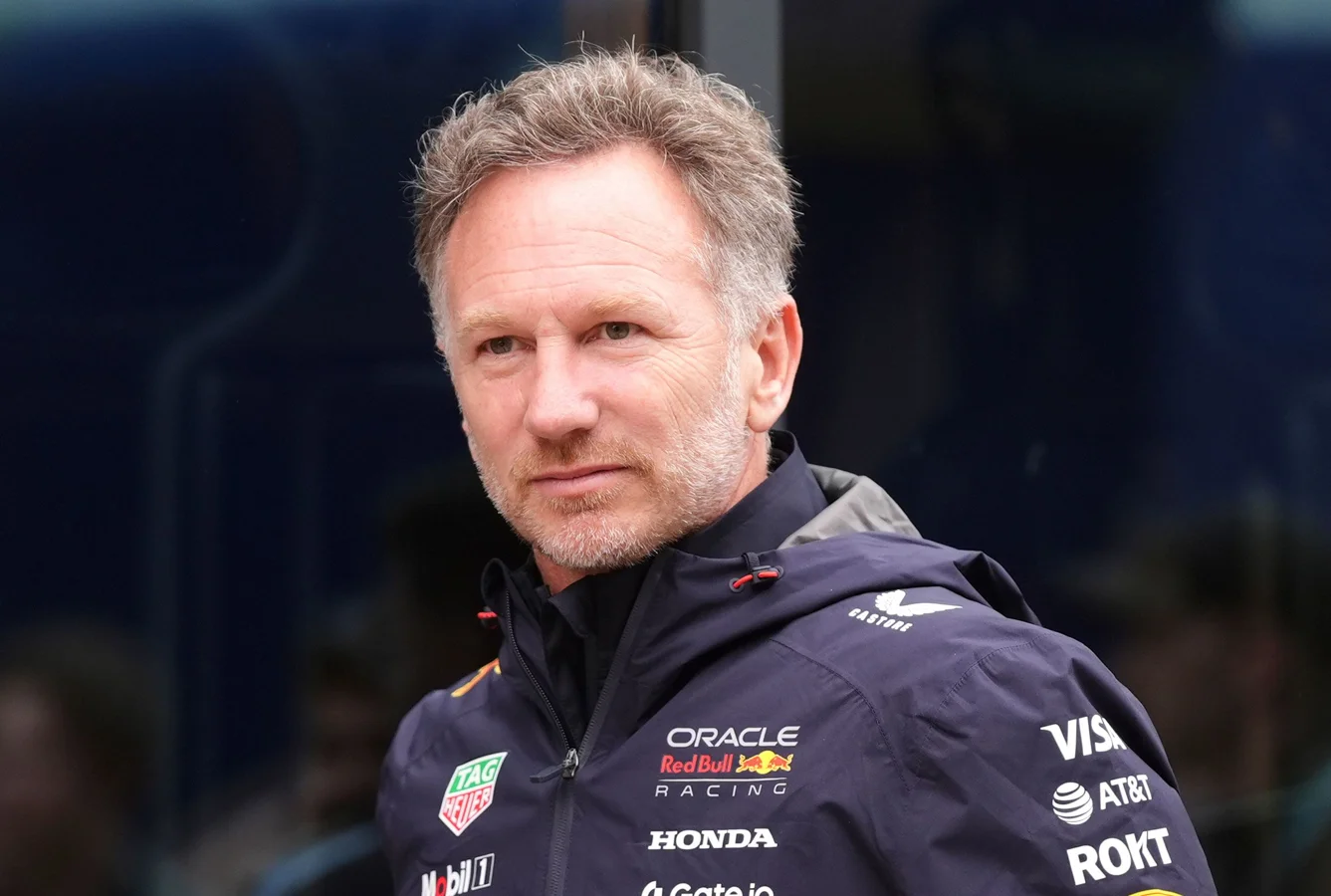

Christian Horner’s unexpected removal from his operational role at Red Bull this week echoes the harsh realities he first encountered upon joining the team in 2004. The long-serving team principal’s exit highlights the often ruthless nature of Formula 1 management, despite his important role in Red Bull’s recent success.
Horner was initially handed the reins of Red Bull Racing on January 7, 2005, becoming the youngest team principal in F1 at just 31 years old. Coincidentally, his arrival then was marked by an abrupt dismissal of the previous boss, Tony Purnell, which Horner himself witnessed firsthand while waiting in the car park. This scenario bore striking resemblance to how Horner was ousted two decades later without much warning.
The Tumultuous Beginnings of Red Bull’s F1 Journey
The transition period when Red Bull took over the struggling Jaguar Racing team was fraught with tensions between the factory in Milton Keynes and Red Bull’s headquarters in Salzburg. Tony Purnell, the original team principal, described in detail how Red Bull’s ownership initially struggled to grasp the technical side of Formula 1, causing numerous internal conflicts.
“When Red Bull took over, we were delighted,”
Purnell recalled, explaining his optimism when the takeover was announced.
“But Red Bull were a marketing company – an excellent one – but at that time, they knew nothing about engineering or building a race car. They didn’t understand how to run an F1 team.”
—Tony Purnell, Former Red Bull Team Principal
These cultural clashes led to disagreements on personnel and car development strategies. Purnell revealed Red Bull pushed for replacing key figures unjustly, including demanding the dismissal of Dave Pitchforth, the respected managing director.

“We hit stress points quickly. One was over drivers. They wanted to install some we didn’t think were good enough. But the bigger issue was their crazy ideas about how to build a car.”
—Tony Purnell, Former Red Bull Team Principal
“Dave was the best technical manager I’d ever worked with. He would later become President of Boeing Defence. But [Helmut] Marko didn’t like him because he always pushed back when he thought an action was wrong or badly handled.”
—Tony Purnell, Former Red Bull Team Principal
The relationship between the original leadership and Red Bull ultimately broke down without warning, culminating in a shock dismissal announced by Helmut Marko and legal representatives, leaving Purnell stunned.
“But they didn’t believe in us. The relationship was broken. They gave no warning that we were about to be fired. It was a shock to turn up and find Marko and a team of lawyers at the desk.”
—Tony Purnell, Former Red Bull Team Principal
Parallels with Horner’s Current Departure After Two Decades
This week in Milton Keynes, the history seemed to repeat itself amid frustrations following poor results on home soil at the Red Bull Ring and Silverstone. Horner, having led the team through 20 years of transformative success, was also taken by surprise when he was removed from his operational role without prior notice.
Under Horner’s leadership, Red Bull Racing secured 124 victories out of 405 races, an extraordinary achievement he witnessed from start to finish. Yet his exit leaves questions about the dynamics within the team’s management and future direction.
Though his contract runs until the end of 2030, Horner’s dismissal came just days after hosting a media event for Wings for Life, a spinal cord research charity co-founded by Red Bull’s late Dietrich Mateschitz and motocross world champion Heinz Kinigadner—an event that suggested business as usual rather than any impending upheaval.
Impact of Dietrich Mateschitz’s Passing on Team Leadership
The death of Dietrich Mateschitz in 2022 altered Red Bull’s internal power structures, triggering a growing divide between the Milton Keynes factory and Salzburg headquarters. Horner’s longstanding alliance with Mateschitz had shielded him from previous conflicts, but his position weakened as tensions mounted.
Early in 2024, the situation intensified following a formal complaint against Horner concerning inappropriate behaviour towards a female employee. Though he denied the allegations and was twice cleared, the investigation weighed heavily on his standing within the organisation.
The Yoovidhya family, particularly majority owner Chalerm Yoovidhya, initially supported Horner despite these controversial events. However, political friction between the family’s interests in Salzburg and the established Milton Keynes operations continued to escalate unpredictably.
The Exodus of Key Staff Raises Concerns
The growing friction coincided with the departure of several crucial team members, including chief designer Adrian Newey, who left for Aston Martin, and Jonathan Wheatley, who moved to Audi. Other exits included Max Verstappen’s chief mechanic Lee Stevenson and head of strategy Will Courtenay, both joining rival teams.
Despite these setbacks, Horner maintained confidence in the team’s ability to adapt and lead through the transition, emphasizing accountability alongside success. However, inconsistent results following Verstappen’s win in Imola—such as a DNF in Austria and disappointing performances in Spain and Britain—exerted further pressure.
New Leadership at Red Bull: The Appointment of Laurent Mekies
Red Bull’s decision to replace Horner with Laurent Mekies has spurred debate about the underlying reasons. Speculation ranges from efforts to appease Verstappen and prevent his potential defection to competitors like Aston Martin or Mercedes, to a strategic move by Red Bull’s Austrian ownership wanting to reclaim greater control over the team.
The timing of this leadership change is critical as Formula 1 approaches its most significant regulation overhaul, and Red Bull prepares to partner with Ford as its engine supplier starting in 2026—a transformative phase Horner was deeply involved in managing.
Mekies brings extensive experience as an engineer and racing manager with a background including roles at Arrows, Minardi/Toro Rosso, Ferrari, and the FIA. Nonetheless, questions remain about whether he is the ideal choice to lead Red Bull into this demanding new era.
Christian Horner’s Future Beyond Red Bull
Despite his sudden departure, Horner remains under contract with Red Bull through 2030, entitling him to considerable compensation should he leave early. Known for his dedication and hard work, he is expected to take a break to focus on family and recuperate before contemplating his next career move.
Horner’s exit has left a significant void in the paddock, with many wondering whether he might contribute to major restructuring efforts at Ferrari or assume a leadership role at Alpine. At 51 years old, his expertise and influence in Formula 1 remain highly sought after.
The Complex Persona Behind Horner’s Public Image
Fans of the “Drive to Survive” documentary series recognize Horner as a combative and sometimes divisive figure known for clashing with rivals such as Mercedes’ Toto Wolff and McLaren’s Zak Brown. Whether viewed as a villain or a shrewd operator, his presence has shaped the sport’s narrative for years.
His departure marks the loss of a major personality in Formula 1, at least temporarily, as the team and championship both enter a period of uncertainty and change.
“I was sitting in the car park and saw them come out with a cardboard box with their stuff in. I thought to myself, ‘F1 is pretty brutal,’”
—Christian Horner, Former Red Bull Team Principal
“Horner says Red Bull sacking ‘came as a shock’ in goodbye speech to staff”
—Christian Horner, Former Red Bull Team Principal
The story of Christian Horner’s exit from Red Bull is not only about a change in leadership but also reflects the cyclical and often unforgiving nature of Formula 1 governance. His F1 Red Bull Horner exit legacy is one defined by resilience, major triumphs, and a reminder that in this sport, loyalty and success do not always guarantee a permanent place.
Our Reader’s Queries
Q. Why is 17 banned in F1?
A. In Formula 1, only the number 17 has been officially retired as a tribute to Jules Bianchi. The French driver crashed severely while racing with this number at the 2014 Japanese Grand Prix.
Q. Which F1 driver has ADHD?
A. Lewis Hamilton, born in 1985, is a British driver racing in Formula One. He currently races for Mercedes and has previously driven for McLaren. Hamilton openly talks about his experiences with ADHD and explores his various interests and hobbies.
Q. Why is number 17 banned in F1?
A. In 2015, the racing number 17 was retired in honor of Jules Bianchi. He died from injuries after a crash during the 2014 Japanese Grand Prix while using that number.
Q. Is number 69 allowed in F1?
A. Drivers can pick any number from 0 to 99, except for 1, which is reserved. Only the World Drivers’ Champion can use No. 1 if they wish, but it’s optional.